
If you are buying garden soil, potting mix, or topsoil, one common question is: 1.5 cubic feet soil covers how many square feet?
The answer depends mostly on one thing—depth.
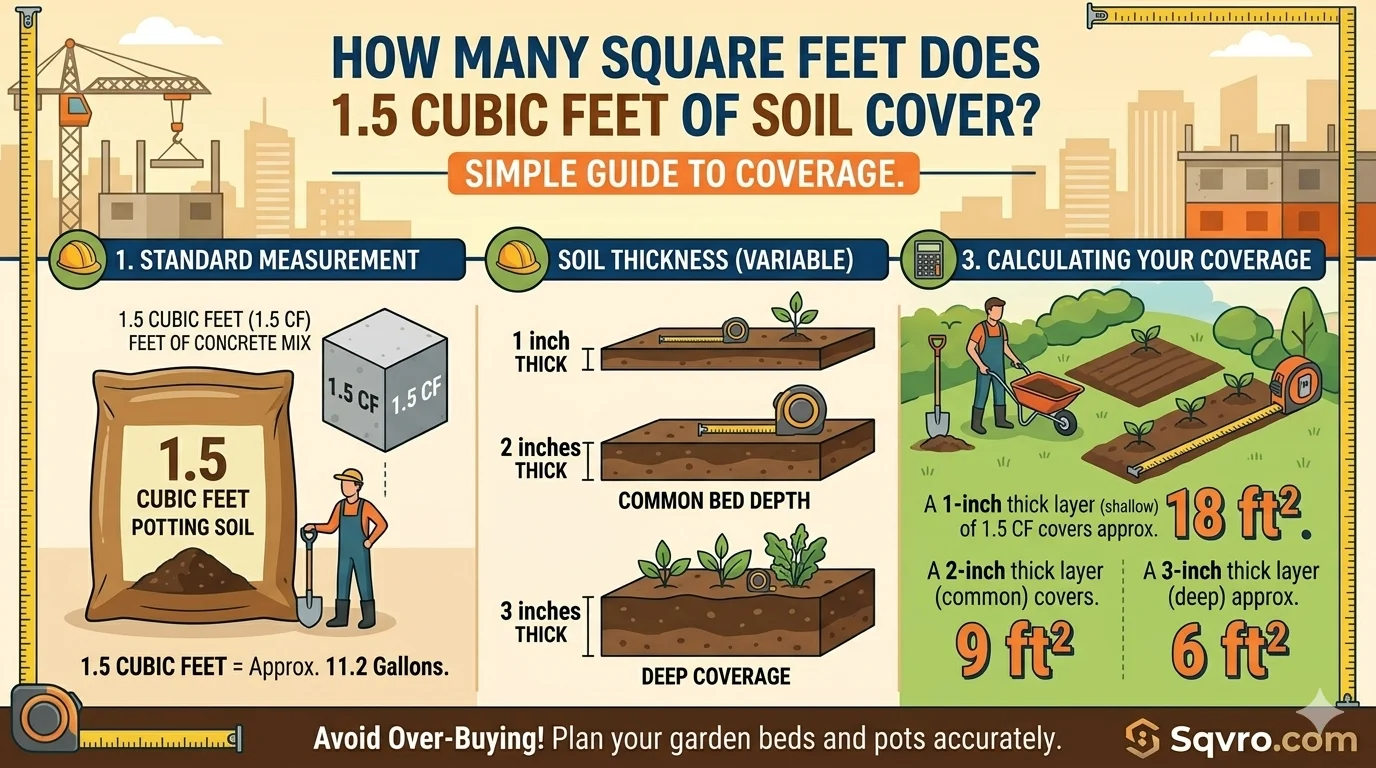
In simple terms, 1.5 cubic feet of soil can cover:
- 18 square feet at 1 inch deep
- 9 square feet at 2 inches deep
- 6 square feet at 3 inches deep
- 4.5 square feet at 4 inches deep
This is why knowing your project depth is important before buying soil. A flower bed needs a different depth than a raised vegetable garden.
In this guide, you’ll learn the exact formula, practical examples, and an easy chart to help you calculate soil coverage correctly.
Understanding Cubic Feet and Square Feet
Before calculating coverage, it helps to understand the difference between cubic feet and square feet.
What Is a Cubic Foot?
A cubic foot measures volume.
It tells you how much three-dimensional space something fills.
For example:
- soil
- mulch
- compost
- sand
- concrete
A bag labeled 1.5 cubic feet means it contains that amount of material by volume.
Think of it like this:
1 foot × 1 foot × 1 foot = 1 cubic foot
What Is a Square Foot?
A square foot measures area.
It tells you the size of a flat surface.
For example:
- garden beds
- lawns
- patios
- planting spaces
Example:
3 feet × 4 feet = 12 square feet
Why Depth Matters
This is the most important part.
You cannot convert cubic feet to square feet without knowing depth.
Why?
Because spreading soil thinly covers more area, while spreading it deeply covers less area.
For example:
- 1 inch deep = more coverage
- 4 inches deep = less coverage
So when asking 1.5 cubic feet soil covers how many square feet, depth changes the answer.
1.5 Cubic Feet Soil Covers How Many Square Feet
Here is the quick answer based on common gardening depths.
Coverage at 1 Inch Deep
At 1 inch deep:
1.5 cubic feet covers about 18 square feet
This is common for:
- lawn top dressing
- adding compost
- light soil refresh
Coverage at 2 Inches Deep
At 2 inches deep:
1.5 cubic feet covers about 9 square feet
This works well for:
- flower beds
- vegetable gardens
- soil improvement
This is one of the most common garden depths.
Coverage at 3 Inches Deep
At 3 inches deep:
1.5 cubic feet covers about 6 square feet
Good for:
- new planting beds
- raised bed improvement
- root support
Coverage at 4 Inches Deep
At 4 inches deep:
1.5 cubic feet covers about 4.5 square feet
Best for:
- deep planting
- raised garden beds
- heavy soil replacement
Quick Soil Coverage Chart
| Soil Depth | Coverage Area |
|---|---|
| 1 inch | 18 sq ft |
| 2 inches | 9 sq ft |
| 3 inches | 6 sq ft |
| 4 inches | 4.5 sq ft |
| 6 inches | 3 sq ft |
This chart helps you estimate quickly without doing math every time.
Formula to Calculate Soil Coverage
You can calculate any soil coverage using a simple formula.
Simple Formula Explained
Use this formula:
Square Feet = (Cubic Feet × 12) ÷ Depth in Inches
Why multiply by 12?
Because 1 foot = 12 inches, and depth is usually measured in inches.
Step-by-Step Example
Let’s calculate:
1.5 cubic feet at 2 inches deep
Formula:
Square Feet = (1.5 × 12) ÷ 2
Square Feet = 18 ÷ 2
Square Feet = 9 square feet
Simple and accurate.
Real-Life Gardening Examples
Let’s make this practical.
Raised Garden Beds
Suppose your raised bed is:
- 6 feet long
- 3 feet wide
Total area:
6 × 3 = 18 square feet
If you want 2 inches of new soil:
You need about:
18 ÷ 9 = 2 bags of 1.5 cubic feet soil
Always round up slightly.
So buying 2 to 3 bags is safer.
Flower Beds
Your flower bed measures:
- 9 feet long
- 2 feet wide
Area:
9 × 2 = 18 square feet
At 3 inches depth:
Each bag covers 6 sq ft
You need:
18 ÷ 6 = 3 bags
Perfect for seasonal planting.
Lawn Repair and Top Dressing
For patching lawn spots:
Area = 36 square feet
Depth = 1 inch
Each bag covers 18 sq ft
Needed:
36 ÷ 18 = 2 bags
This is ideal for topsoil and compost spreading.
Comparing Soil Depths
Choosing the right depth matters.
| Project Type | Recommended Depth |
|---|---|
| Lawn top dressing | 1 inch |
| Flower beds | 2 inches |
| Vegetable gardens | 2–4 inches |
| Raised beds | 4–6 inches |
| New planting beds | 3–4 inches |
Buying too little causes delays.
Buying too much wastes money.
Depth planning solves both problems.
Common Mistakes People Make
Many people buy the wrong amount of soil because of these mistakes.
Ignoring Depth
They calculate only square feet and forget depth.
This leads to major underbuying.
Not Measuring Properly
Guessing dimensions instead of measuring can cause expensive errors.
Always use a tape measure.
Forgetting Soil Settling
Fresh soil settles over time.
Buying 10–15% extra is often smart.
Confusing Cubic Feet and Cubic Yards
Some suppliers sell by cubic yards.
Remember:
1 cubic yard = 27 cubic feet
That is a big difference.
Expert Tips Before Buying Soil
Professionals usually follow these tips.
Buy Slightly Extra
Always buy a little more than exact calculations.
This helps with:
- settling
- uneven ground
- planting adjustments
Choose the Right Soil Type
Different jobs need different soil.
Examples:
- topsoil for lawns
- garden soil for planting
- potting mix for containers
- compost for enrichment
Do not use them interchangeably without checking.
Check Bag Labels
Not every bag is truly 1.5 cubic feet.
Some brands vary.
Always read the label.
Consider Bulk Delivery for Large Projects
For large raised beds, bulk soil may be cheaper than buying many small bags.
Compare prices first.
FAQs
How many square feet does 1.5 cubic feet of topsoil cover?
It depends on depth.
At 2 inches deep, 1.5 cubic feet covers about 9 square feet.
At 1 inch deep, it covers about 18 square feet.
How much soil do I need for a 4×8 raised bed?
A 4×8 bed has 32 square feet.
At 3 inches deep, you would need about:
32 ÷ 6 = around 6 bags of 1.5 cubic feet
Is 2 inches of soil enough for gardening?
For light planting and flowers, yes.
For vegetables and deeper roots, 3–6 inches is often better.
How many cubic feet are in a cubic yard?
There are:
27 cubic feet in 1 cubic yard
This helps when comparing bagged soil with bulk delivery.
Can I use the same formula for mulch?
Yes.
The same coverage formula works for:
- mulch
- compost
- topsoil
- gravel
- sand
As long as you know the depth.
Conclusion
So, 1.5 cubic feet soil covers how many square feet?
The simple answer is:
- 18 sq ft at 1 inch deep
- 9 sq ft at 2 inches deep
- 6 sq ft at 3 inches deep
- 4.5 sq ft at 4 inches deep
The exact coverage depends on how deep you spread the soil.
Using the right formula helps you avoid wasting money and saves extra trips to the store.
Whether you are filling a raised bed, refreshing flower beds, or repairing lawn patches, calculating correctly makes your gardening project easier and more successful.
Before buying, always measure your area, choose the right depth, and buy slightly extra for the best results.