
A penalty kick is one of the most exciting and pressure-filled moments in soccer. Fans around the world often ask a simple question: how many feet is a penalty kick?
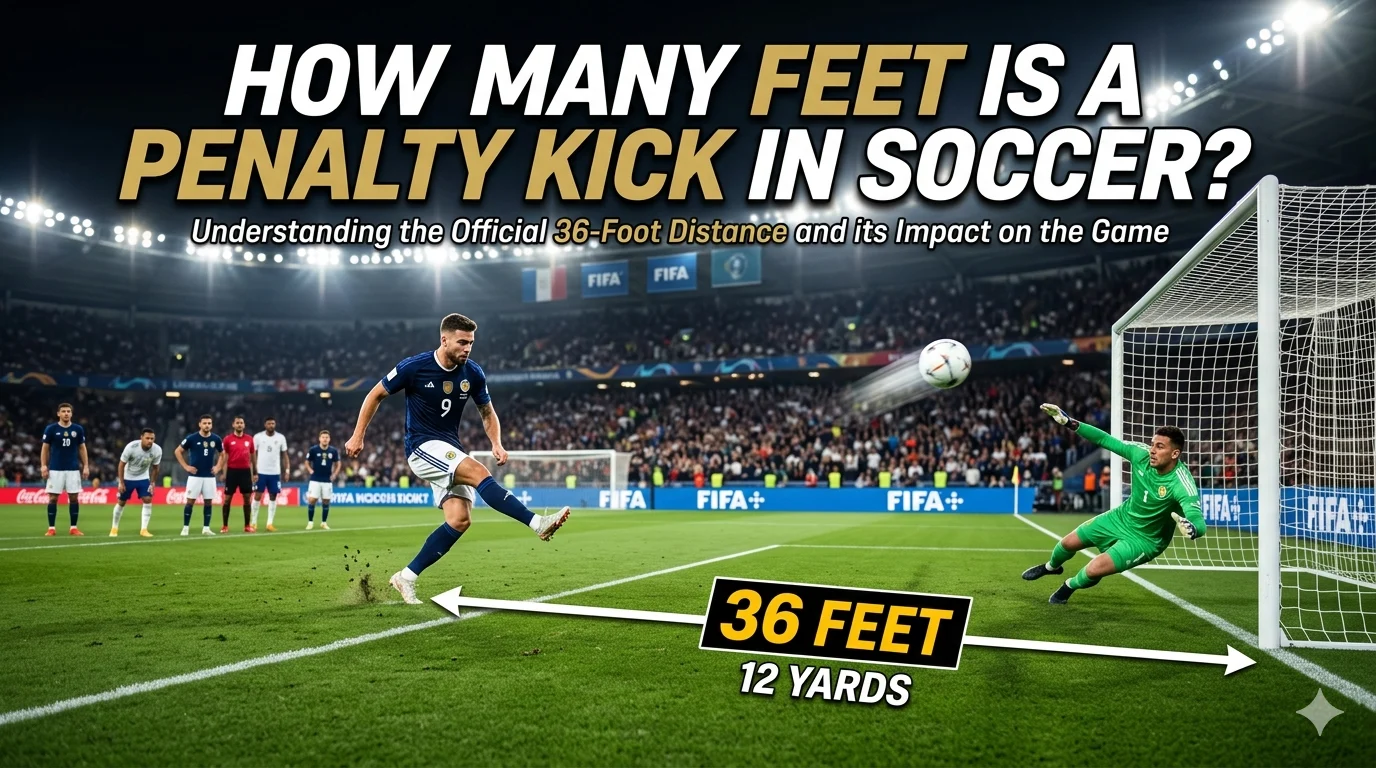
The answer is straightforward. A penalty kick in soccer is taken from 12 yards, which equals 36 feet from the goal line. This fixed distance is used in all professional matches under the rules of the game, making it one of the most standardized measurements in sports.
But there’s much more behind this number than just a conversion. In this guide, you’ll learn the exact distance, why it exists, how it affects gameplay, and everything else you need to know.
What Is a Penalty Kick in Soccer?
A penalty kick is a direct shot given to a team when a defending player commits a serious foul inside their own penalty area.
It is one of the most important scoring chances in soccer because:
- Only the goalkeeper is allowed to defend
- The shot is taken from a fixed, close range
- The attacker has a clear goal opportunity
When Is It Awarded?
A referee gives a penalty kick when:
- A player is fouled inside the penalty box
- There is a handball violation
- A dangerous tackle occurs in the penalty area
- An opponent is illegally blocked or pushed
How Many Feet Is a Penalty Kick?
Now let’s answer the main question clearly.
A penalty kick is taken from:
- 12 yards
- 36 feet
- Approximately 10.97 meters
Final Answer:
A penalty kick is 36 feet away from the goal line.
Simple Conversion:
- 1 yard = 3 feet
- 12 yards × 3 = 36 feet
This measurement is fixed worldwide under official football rules.
Why Is a Penalty Kick 12 Yards?
The distance of 12 yards was not randomly chosen. It was carefully designed to balance fairness between the attacker and the goalkeeper.
Historical Background
Penalty kicks were introduced in the late 19th century to punish serious fouls near the goal. At that time, football needed a fair system that:
- Gave attackers a real scoring chance
- Prevented defenders from unfairly stopping goals
- Maintained balance in the game
Eventually, 12 yards (36 feet) became the standard distance.
FIFA Standardization
FIFA officially regulates this rule today. It ensures that every professional match, from local leagues to the World Cup, follows the same measurement system.
Soccer Field Measurements Explained
To understand penalty kick distance better, you need to understand the field layout.
Penalty Area (18-Yard Box)
The penalty area is the large rectangle in front of the goal:
- Extends 18 yards (54 feet) from the goal line
- 44 yards wide
- Contains the penalty spot
Penalty Spot
The penalty spot is located:
- Exactly 12 yards (36 feet) from the goal line
- Centered between both goalposts
Goal Size
A standard goal measures:
- 8 feet high
- 24 feet wide
This makes the penalty kick a direct but challenging scoring chance.
Penalty Kick Rules You Should Know
Penalty kicks follow strict rules to keep the game fair.
Basic Rules:
- Only the kicker and goalkeeper are involved initially
- All other players must stay outside the penalty area
- The goalkeeper must remain on the goal line until the ball is kicked
- The kicker must shoot forward (no backward pass allowed)
Common Mistakes:
- Goalkeeper moving early
- Players entering the box too soon
- Illegal feints after the run-up
If rules are broken, the referee may order a retake.
Why the Distance Matters in Soccer
The 36-foot distance creates a perfect balance in the game.
For the Attacker:
- High chance of scoring
- Direct shot at goal
- Less defensive pressure
For the Goalkeeper:
- Very little reaction time
- Must predict direction
- Requires strong reflexes
This balance is what makes penalty kicks so dramatic.
Psychological Pressure in Penalty Kicks
Penalty kicks are not just physical—they are mental battles.
Players often experience:
- Nervousness before the shot
- Pressure from fans and stadium noise
- Fear of missing a key goal
Goalkeepers also face pressure because:
- A single mistake can decide the match
- They must guess direction in seconds
Expert Tips for Taking a Penalty Kick
If you want to understand how professionals succeed, here are key tips:
1. Stay Calm
Breathing control is very important before the shot.
2. Pick a Spot Early
Decide where you will shoot before running up.
3. Don’t Overthink
Most missed penalties come from hesitation.
4. Focus on Placement
Accuracy is more important than power.
5. Practice Regularly
Repetition builds confidence and consistency.
Common Mistakes Players Make
Even professionals sometimes fail because of:
- Changing decision at the last moment
- Weak shot placement
- Poor run-up technique
- Overpowering the shot instead of aiming
Avoiding these mistakes increases success rate significantly.
Real-World Example
In major tournaments like the World Cup, penalty kicks often decide matches. Since the distance is only 36 feet, even a small mistake in timing or direction can change the result of an entire game.
That’s why penalty shootouts are considered one of the most intense moments in soccer history.
Quick Summary Table
| Measurement Type | Value |
| Yards | 12 yards |
| Feet | 36 feet |
| Meters | 10.97 meters |
| Location | Penalty Spot |
FAQs
1. How many feet is a penalty kick in soccer?
A penalty kick is 36 feet from the goal line.
2. Why is a penalty kick 12 yards?
It was chosen to balance fairness between attacker and goalkeeper.
3. Who decides penalty kick rules?
FIFA sets and regulates the official rules.
4. Can a goalkeeper move during a penalty kick?
They must stay on the goal line until the ball is kicked.
5. Is penalty kick distance same in all soccer leagues?
Yes, it is standardized worldwide.
Conclusion
So, how many feet is a penalty kick? The clear answer is 36 feet (12 yards). This fixed distance plays a major role in soccer strategy, pressure situations, and scoring chances.
Understanding this measurement also helps you better appreciate the balance and fairness built into the game by FIFA.
Whether you’re a fan, student, or player, knowing this simple fact gives you a deeper understanding of one of soccer’s most dramatic moments.