

Running speed has always fascinated people. From Olympic sprinters breaking records to everyday runners improving their pace, many people wonder: how many feet per second can a human run?
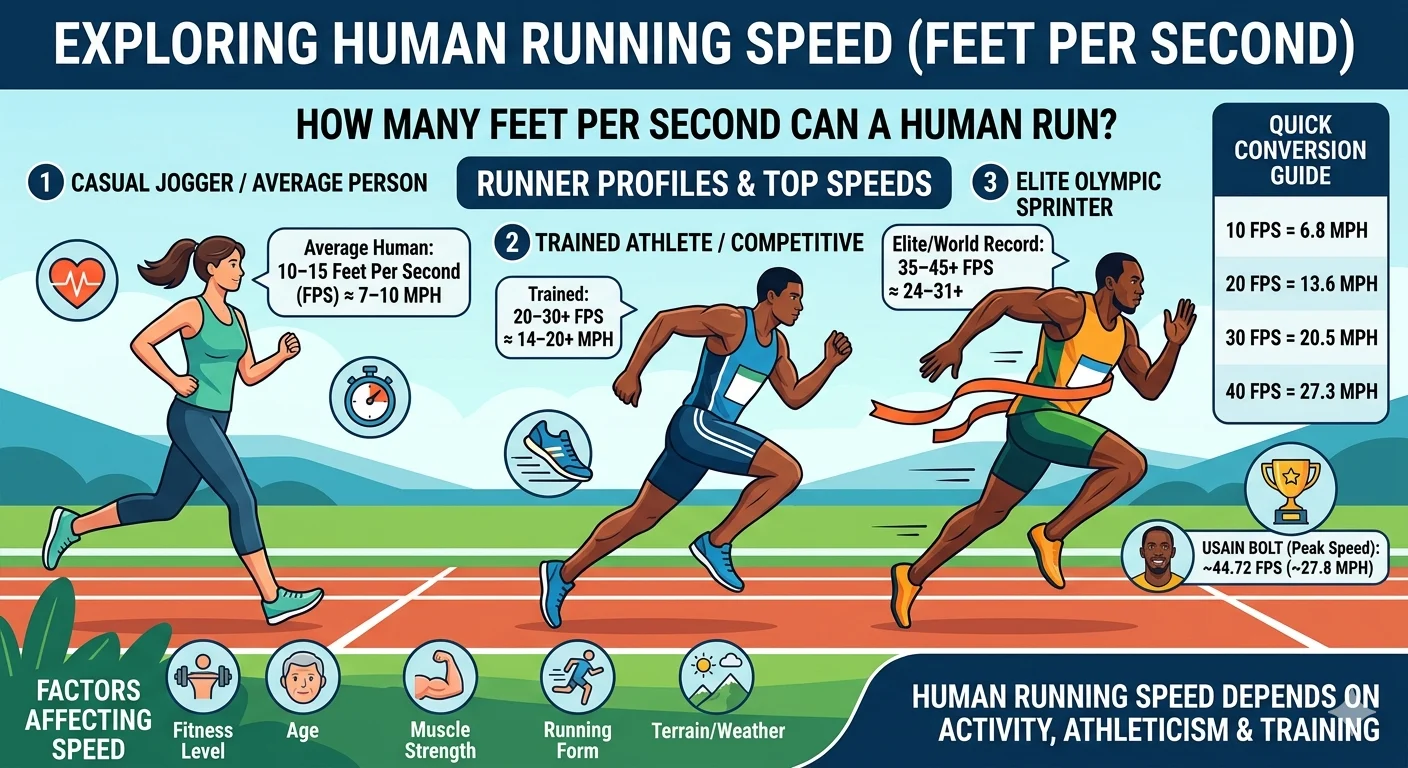
The answer depends on fitness level, age, training, and whether the person is jogging or sprinting at full speed. On average, humans can run between 10 and 15 feet per second, while elite sprinters can exceed 40 feet per second for short distances.
In this guide, you will learn how running speed is measured, average human speeds, world records, and the factors that affect how fast people can run.
Understanding Running Speed
Before discussing exact numbers, it helps to understand how running speed works.
What Does Feet Per Second Mean?
Feet per second (fps) measures how many feet a person travels in one second.
For example:
- 10 feet per second means covering 10 feet every second
- 20 feet per second means covering 20 feet every second
This unit is often used in sports science and physics because it provides a precise way to measure movement.
Why Feet Per Second Is Used
Most people use miles per hour (mph) to describe speed. However, feet per second is useful because:
- It gives more detailed measurements
- It helps compare sprint performance
- It works well for short-distance speed calculations
- It is commonly used in biomechanics and athletics
Average Human Running Speed
Human speed varies widely depending on activity level and fitness.
Walking vs Running Speed
Here is a simple comparison:
| Activity | Average Speed |
|---|---|
| Walking | 4–6 feet per second |
| Jogging | 8–12 feet per second |
| Running | 10–15 feet per second |
| Sprinting | 20–30+ feet per second |
Walking is much slower because only one foot leaves the ground at a time. Running includes moments where both feet are airborne, allowing faster movement.
Average Running Speed for Adults
The average adult runs at around 10 to 15 feet per second. This equals roughly:
- 7–10 mph
- Moderate running pace
- Recreational fitness level
People who run regularly usually stay near the higher end of this range.
Sprinting Speeds
Sprinters move much faster during short bursts.
Competitive athletes may reach 25 to 35 feet per second. Elite Olympic sprinters can go even faster for a few seconds.
How Many Feet Per Second Can a Human Run?
The exact answer depends on the type of runner.
Average Person Speed
Most adults running casually move around 12 feet per second. This speed is comfortable enough for short exercise sessions without extreme fatigue.
Trained Athlete Speed
Athletes with regular sprint training often reach 20 to 30 feet per second.
This level requires:
- Strong leg muscles
- Explosive acceleration
- Proper sprint mechanics
- High endurance
Elite Sprinter Speed
World-class sprinters can exceed 40 feet per second. However, humans can only maintain these extreme speeds briefly.
Fastest Human Running Speeds Ever Recorded
When discussing human speed, one name stands above all others: Usain Bolt.
Usain Bolt’s Record
During his famous 100-meter world record sprint in 2009, Bolt reached approximately 44.72 feet per second.
That equals:
- About 27.8 mph
- One of the fastest verified human speeds ever recorded
Bolt’s acceleration, stride length, and power helped him dominate sprinting for years.
Speed Conversion Breakdown
Here is how the calculation works:
Feet per second = (Miles per hour × 5280) ÷ 3600
Using Bolt’s top speed:
(27.8 × 5280) ÷ 3600 ≈ 40.77 feet per second
Peak moments during the race were even faster.
Human Running Speed Comparison Table
Here is a practical comparison of different running levels.
| Runner Type | Feet Per Second | Miles Per Hour |
|---|---|---|
| Average walker | 4–6 fps | 3–4 mph |
| Casual jogger | 8–12 fps | 5–8 mph |
| Recreational runner | 10–15 fps | 7–10 mph |
| Competitive athlete | 20–30 fps | 14–20 mph |
| Elite sprinter | 35–45 fps | 24–31 mph |
This table shows how dramatically training affects speed.
Factors That Affect Human Running Speed
Many variables influence how fast someone can run.
Age
Younger adults generally run faster than children or older adults because they have:
- Better muscle strength
- Faster reaction times
- Higher endurance
Peak sprint performance usually occurs between ages 20 and 30.
Gender
Men often achieve higher sprint speeds due to:
- Greater muscle mass
- Higher testosterone levels
- Longer average stride length
However, trained female athletes can still reach impressive speeds.
Fitness Level
Conditioning plays a major role. Regular training improves:
- Cardiovascular health
- Leg power
- Running efficiency
- Recovery ability
Sedentary individuals naturally run slower.
Muscle Strength
Fast runners generate strong force against the ground. Powerful muscles help create:
- Faster acceleration
- Longer strides
- Better sprint mechanics
Running Technique
Proper form can significantly increase speed.
Good runners maintain:
- Forward lean
- Relaxed shoulders
- Quick turnover
- Efficient arm movement
Poor technique wastes energy and reduces performance.
Surface and Weather
External conditions matter too.
Runners are usually faster on:
- Flat tracks
- Dry surfaces
- Mild temperatures
Rain, wind, or uneven terrain can slow people down considerably.
How Running Speed Is Calculated
You can calculate running speed using a simple formula.
Basic Formula
Speed = Distance ÷ Time
Example Calculation
Suppose someone runs 100 feet in 8 seconds.
The calculation would be:
100 ÷ 8 = 12.5 feet per second
This speed falls within the normal recreational running range.
Feet Per Second vs Miles Per Hour
People often compare fps and mph.
Here is a quick conversion guide:
| Feet Per Second | Miles Per Hour |
|---|---|
| 10 fps | 6.8 mph |
| 15 fps | 10.2 mph |
| 20 fps | 13.6 mph |
| 30 fps | 20.5 mph |
| 40 fps | 27.3 mph |
Feet per second is better for detailed athletic analysis, while mph is easier for everyday understanding.
How Humans Compare to Animals
Humans are fast compared to many animals, but not all.
| Animal | Top Speed |
|---|---|
| Human | 27–28 mph |
| Dog | 30–45 mph |
| Horse | 55 mph |
| Cheetah | 60–75 mph |
Even though humans are slower than many animals, our endurance is exceptional. Humans can maintain steady movement over long distances better than many species.
Can Humans Run Faster in the Future?
Scientists believe slight improvements are still possible.
Future speed gains may come from:
- Better training methods
- Improved nutrition
- Advanced sports science
- Enhanced recovery techniques
- Biomechanical analysis
However, the human body likely has natural speed limits.
Most experts believe breaking far beyond current sprint records will be extremely difficult.
Tips to Improve Running Speed
Anyone can become faster with consistent practice.
Sprint Training
Short sprint intervals improve explosive power.
Examples include:
- 50-meter sprints
- Hill sprints
- Resistance runs
Strength Workouts
Leg strength directly affects running speed.
Helpful exercises include:
- Squats
- Deadlifts
- Lunges
- Box jumps
Recovery and Nutrition
Muscles need time and fuel to perform well.
Focus on:
- Quality sleep
- Protein intake
- Hydration
- Stretching
Overtraining often reduces speed instead of improving it.
Common Mistakes That Slow Runners Down
Many runners unknowingly limit their performance.
Common problems include:
- Poor posture
- Overstriding
- Weak core muscles
- Skipping warmups
- Inconsistent training
- Wearing improper shoes
Fixing these issues can lead to noticeable speed improvements.
FAQs
How many feet per second can the average human run?
The average person runs around 10–15 feet per second during normal running.
What is the fastest feet per second ever recorded by a human?
Usain Bolt reached roughly 44.72 feet per second at peak speed during his world-record sprint.
Is 20 feet per second fast?
Yes. Running at 20 feet per second equals about 13.6 mph, which is considered very fast for most people.
How do you convert mph to feet per second?
Multiply mph by 1.467 to estimate feet per second.
Can humans run 50 feet per second?
Currently, no verified human has reached 50 feet per second. That would equal about 34 mph, which is beyond known human sprinting ability.
Conclusion
So, how many feet per second can a human run? Most people run between 10 and 15 feet per second, while trained athletes can exceed 20–30 feet per second. Elite sprinters like Usain Bolt have pushed human performance beyond 40 feet per second for short bursts.
Human speed depends on many factors, including fitness, technique, age, and training. While most people will never reach Olympic sprinting levels, consistent exercise and proper running mechanics can dramatically improve performance.
Understanding running speed in feet per second also provides a clearer view of how impressive the human body truly is.