

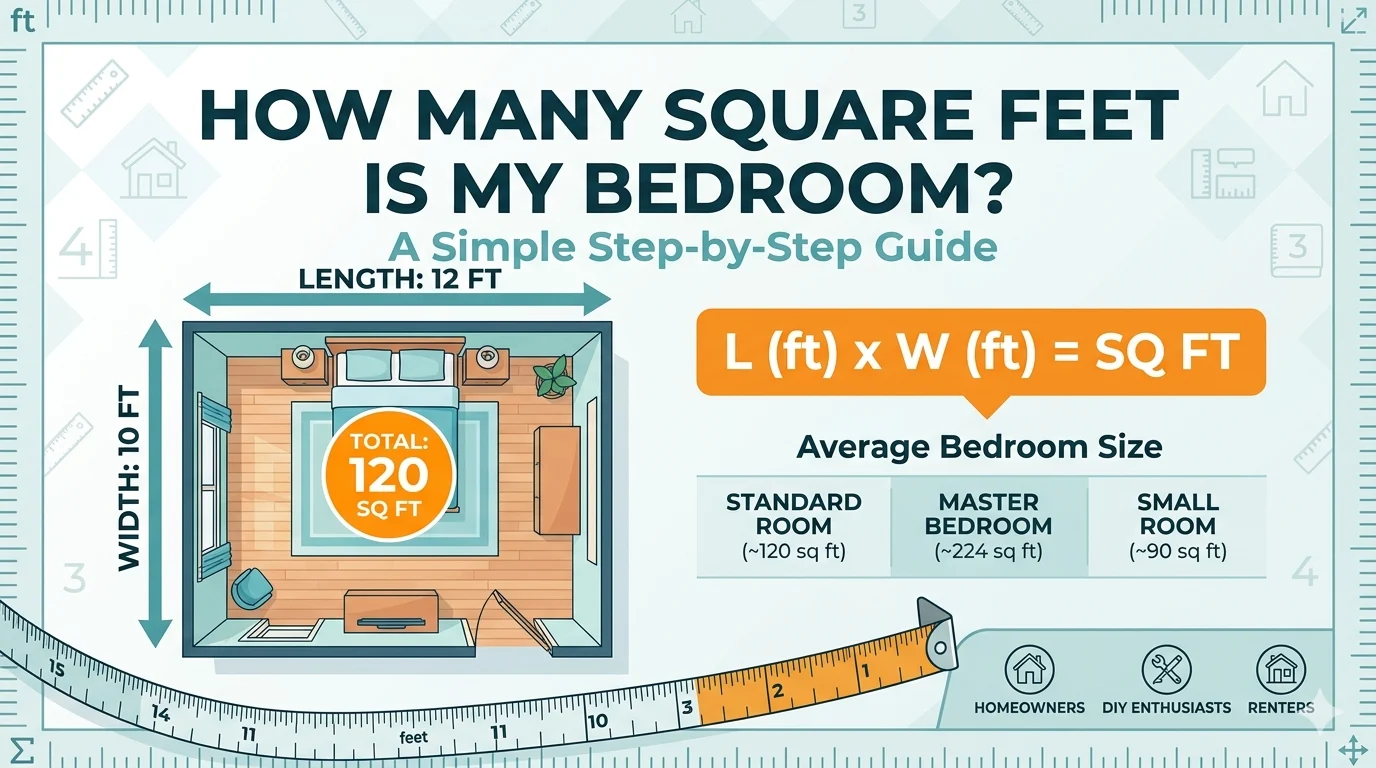
Have you ever looked around your room and wondered, “How many square feet is my bedroom?” Whether you are buying new furniture, planning a renovation, moving into a new apartment, or simply curious about your room size, knowing your bedroom’s square footage is extremely useful.
The good news is that measuring a bedroom is simple. You do not need advanced math skills or expensive tools. With just a tape measure and a basic formula, you can calculate your bedroom size accurately in minutes.
In this guide, you will learn how to calculate bedroom square footage, understand standard bedroom sizes, measure unusual room layouts, avoid common mistakes, and use your measurements for smarter home planning.
What Does Square Footage Mean?
Square footage refers to the total floor area inside a room. It is measured in square feet and tells you how much usable floor space you have.
The standard formula is:
For example, if your bedroom is:
- 12 feet long
- 10 feet wide
Then the calculation becomes:
So your bedroom is 120 square feet.
Square footage is important because it helps with:
- Furniture arrangement
- Flooring estimates
- Home value comparisons
- Interior design planning
- Space optimization
How to Calculate Bedroom Square Footage
Measuring your bedroom is easy if you follow the correct steps.
Step 1: Measure the Length
Use a tape measure to find the longest side of the room.
Example:
- Length = 14 feet
Measure from wall to wall along the floor.
Step 2: Measure the Width
Now measure the shorter side of the room.
Example:
- Width = 11 feet
Write both measurements down carefully.
Step 3: Multiply Length by Width
Now multiply the two numbers together.
Your bedroom contains 154 square feet.
This method works best for rectangular and square rooms.
Bedroom Square Footage Formula
The formula for room area is simple:
Where:
- A = Area
- l = Length
- w = Width
Here are some common bedroom examples:
| Bedroom Dimensions | Square Footage |
| 10 × 10 ft | 100 sq ft |
| 10 × 12 ft | 120 sq ft |
| 11 × 12 ft | 132 sq ft |
| 12 × 14 ft | 168 sq ft |
| 14 × 16 ft | 224 sq ft |
These examples help you estimate room size quickly.
Average Bedroom Sizes Explained
Bedrooms vary depending on the type of home, building style, and country.
Small Bedroom
A small bedroom is usually:
- 70 to 100 square feet
It often fits:
- Twin bed
- Small dresser
- Compact desk
These rooms are common in apartments and older homes.
Standard Bedroom
A standard bedroom usually ranges from:
- 120 to 150 square feet
This size comfortably fits:
- Queen-size bed
- Nightstands
- Dresser
- Closet
Most modern homes include bedrooms in this range.
Master Bedroom
Master bedrooms are larger and often measure:
- 200 to 350 square feet
They may include:
- King-size bed
- Sitting area
- Walk-in closet
- Attached bathroom
Luxury homes sometimes have even larger bedroom suites.
Bedroom Size Chart
Here is a quick comparison chart for common bedroom sizes.
| Bedroom Type | Typical Dimensions | Approximate Size |
| Tiny Bedroom | 7 × 10 ft | 70 sq ft |
| Small Bedroom | 10 × 10 ft | 100 sq ft |
| Standard Bedroom | 11 × 12 ft | 132 sq ft |
| Large Bedroom | 12 × 14 ft | 168 sq ft |
| Master Bedroom | 14 × 16 ft | 224 sq ft |
| Luxury Suite | 16 × 20 ft | 320 sq ft |
This chart helps you compare your bedroom with standard room sizes.
How to Measure Odd-Shaped Bedrooms
Not every bedroom is a perfect square or rectangle. Some rooms include corners, alcoves, or unusual layouts.
Here is how to measure them properly.
L-Shaped Bedrooms
Break the room into smaller rectangles.
Example:
- Section 1 = 10 × 10 = 100 sq ft
- Section 2 = 5 × 6 = 30 sq ft
Total:
So the room equals 130 square feet.
Bedrooms With Closets
Built-in closets are often included in total square footage calculations.
However, if you want to measure usable floor space only, you may choose to exclude closet areas.
Rooms With Slanted Walls
Attic bedrooms and loft spaces may have angled ceilings.
In these cases:
- Measure usable walking space
- Ignore extremely low ceiling sections
This gives a more realistic estimate of functional space.
Why Bedroom Square Footage Matters
Knowing your bedroom size is useful in many situations.
Furniture Planning
The right furniture depends on room size.
For example:
- A king bed may overwhelm a 100-square-foot room
- A queen bed fits better in medium-sized bedrooms
Always leave enough space to walk comfortably around furniture.
Real Estate Comparisons
Bedroom size affects:
- Property value
- Buyer interest
- Rental pricing
Larger bedrooms are often more attractive to buyers and renters.
Renovation Projects
Square footage helps estimate:
- Flooring materials
- Paint coverage
- Carpet costs
- Labor expenses
Accurate measurements prevent overspending.
Heating and Cooling
Larger rooms usually require more heating and cooling power.
Understanding room size helps improve energy efficiency.
Common Mistakes When Measuring a Bedroom
Many people make small measuring mistakes that create inaccurate results.
Avoid these common errors.
Guessing Measurements
Never estimate visually.
Always use a tape measure or laser measurer.
Forgetting Small Areas
Corners, alcoves, and wall cutouts still count toward square footage.
Measuring Furniture Instead of Floor Space
Measure wall-to-wall floor dimensions only.
Ignoring Room Shape
Odd-shaped rooms require multiple measurements.
Using Inches Incorrectly
Convert inches into decimal feet when needed.
Example:
- 6 inches = 0.5 feet
Tips to Make a Small Bedroom Feel Bigger
Even small bedrooms can feel spacious with smart design choices.
Use Light Paint Colors
White and neutral shades reflect more light and create an open feel.
Add Mirrors
Mirrors visually expand the room by reflecting light and space.
Use Multi-Functional Furniture
Examples include:
- Storage beds
- Foldable desks
- Wall-mounted shelves
These save valuable floor space.
Reduce Clutter
Too much furniture makes a room feel cramped.
Minimalism creates a cleaner and larger appearance.
Use Vertical Storage
Tall shelving units maximize wall space instead of floor space.
Bedroom Square Footage vs Usable Space
A bedroom may technically have large square footage but still feel small due to layout problems.
Usable space depends on:
- Furniture placement
- Closet size
- Ceiling height
- Room shape
For example:
A 150-square-foot room with awkward corners may feel smaller than a well-designed 120-square-foot room.
This is why layout matters just as much as total size.
Best Bedroom Sizes for Different Bed Types
Choosing the correct bed size improves comfort and room flow.
| Bedroom Size | Recommended Bed |
| 70–100 sq ft | Twin or Full |
| 100–140 sq ft | Queen |
| 140–200 sq ft | Queen or King |
| 200+ sq ft | King + Extra Furniture |
Interior designers recommend leaving at least 24 inches of walking space around the bed.
Can a Bedroom Be Too Small?
In many regions, building codes require bedrooms to meet minimum size standards.
Common requirements include:
- Around 70 square feet minimum
- Proper ceiling height
- Emergency exit window
Rooms smaller than legal requirements may not officially qualify as bedrooms.
Always check local regulations before remodeling or selling property.
Tools for Measuring Bedroom Square Footage
Several tools can make measuring easier.
Tape Measure
Affordable and easy to use.
Laser Distance Meter
Fast and highly accurate.
Smartphone Apps
Some apps use augmented reality to estimate room dimensions.
Floor Plan Software
Useful for renovations and furniture planning.
FAQs
How many square feet is a 10×12 bedroom?
A 10 × 12 bedroom equals:
So the room is 120 square feet.
What is the average bedroom size?
Most standard bedrooms range from 120 to 150 square feet.
How do I calculate my bedroom square footage?
Measure the room’s length and width in feet, then multiply them together.
Are closets included in bedroom square footage?
Built-in closets are usually included in total room measurements.
Is 100 square feet small for a bedroom?
Yes, 100 square feet is considered small, but it can still feel comfortable with proper furniture placement.
Conclusion
If you have been wondering, “how many square feet is my bedroom,” the answer is easier to find than you might think. By measuring your room’s length and width and multiplying the numbers together, you can calculate accurate square footage in just minutes.
Understanding bedroom square footage helps with furniture planning, renovations, interior design, flooring estimates, and real estate decisions. Whether your room is small, standard, or oversized, accurate measurements allow you to make smarter use of your living space.
Using the tips, formulas, and examples in this guide, you can confidently measure your bedroom and plan your room more effectively.