
Planning a new flooring project can feel exciting, but one question usually comes first: how many square feet of flooring do I need? Whether you are replacing old carpet, installing hardwood, laying vinyl plank flooring, or updating tile floors, accurate measurements are essential. Buying too little flooring can delay your project, while buying too much wastes money.
The good news is that calculating flooring needs is easier than most people think. With a few measurements and a simple formula, you can estimate exactly how much flooring to purchase for your room or entire home.
In this guide, you will learn how to calculate flooring square footage, measure different room shapes, estimate waste, and avoid common mistakes homeowners make during flooring projects.
What Does Square Footage Mean?
Square footage refers to the total floor area inside a room. Flooring materials are sold by square feet because it helps manufacturers and installers estimate how much product is required for a space.
For example, if a room measures 10 feet wide and 12 feet long, the total floor area is 120 square feet.
Understanding square footage helps you:
- Estimate flooring costs
- Compare material prices
- Avoid ordering mistakes
- Reduce flooring waste
- Plan installation accurately
Basic Formula for Flooring Calculation
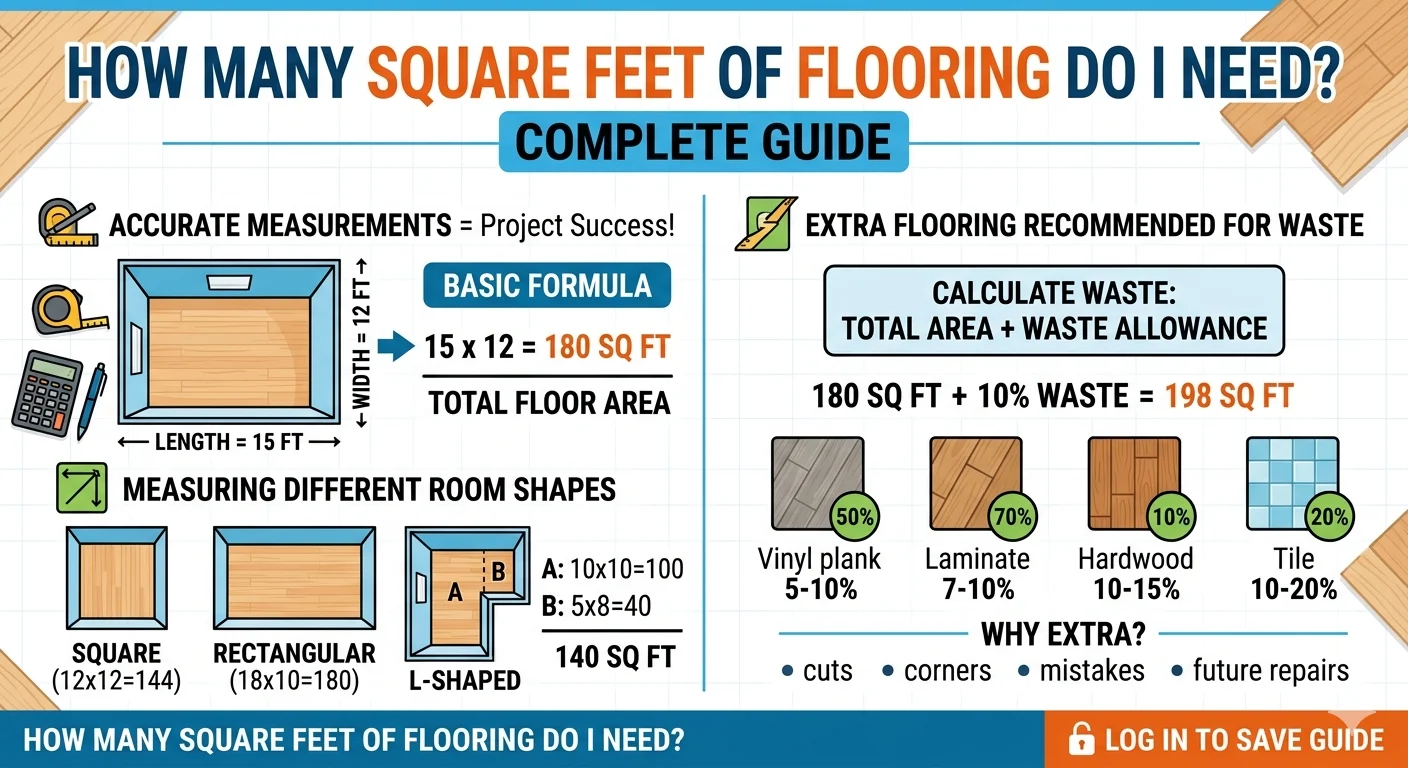
The simplest way to calculate flooring needs is by multiplying the room’s length by its width.
This formula works best for square and rectangular rooms.
Example Calculation
Imagine your living room measures:
- Length: 15 feet
- Width: 12 feet
Calculation:
You would need at least 180 square feet of flooring before adding extra material for waste.
How to Measure a Room Properly
Accurate measurements are the key to successful flooring installation. Here is a simple step-by-step process.
Step 1: Gather Your Tools
You will need:
- Measuring tape
- Calculator
- Pen and paper
- Smartphone calculator app (optional)
Step 2: Measure the Length
Measure the longest side of the room from wall to wall.
Step 3: Measure the Width
Measure the shorter side of the room.
Step 4: Multiply the Numbers
Multiply the length by the width to find the square footage.
Step 5: Add Waste Allowance
Always purchase extra flooring to cover cuts, mistakes, and future repairs.
How to Measure Different Room Shapes
Not every room is a perfect rectangle. Some spaces have unusual layouts that require extra calculations.
Square Rooms
Square rooms are the easiest to measure.
Example:
- 12 ft × 12 ft
Rectangular Rooms
Rectangular rooms use the same formula.
Example:
- 18 ft × 10 ft
L-Shaped Rooms
Divide the room into two rectangles.
Example:
- Section A: 10 × 10 = 100 sq ft
- Section B: 5 × 8 = 40 sq ft
Total:
- 140 sq ft
Circular Rooms
For round spaces, use the area formula for circles.
If the radius is 5 feet:
Irregular Rooms
Break irregular rooms into smaller sections. Measure each part separately, then add the totals together.
This method improves accuracy and helps reduce wasted flooring materials.
Why You Need Extra Flooring
Many homeowners make the mistake of buying the exact amount of flooring they calculate. Unfortunately, installation always creates waste.
Extra flooring is needed because of:
- Cutting around corners
- Doorways
- Floor vents
- Pattern alignment
- Installation mistakes
- Future repairs
Most professionals recommend adding 5% to 15% extra flooring depending on the material.
Recommended Waste Percentages
| Flooring Type | Extra Flooring Recommended |
|---|---|
| Vinyl plank flooring | 5%–10% |
| Laminate flooring | 7%–10% |
| Hardwood flooring | 10%–15% |
| Tile flooring | 10%–20% |
Example Waste Calculation
If your room is 200 square feet and you add 10% waste:
You should purchase approximately 220 square feet of flooring.
Flooring Examples by Room Size
Here are common room sizes and flooring estimates.
| Room Size | Square Footage | With 10% Waste |
|---|---|---|
| 8 × 10 | 80 sq ft | 88 sq ft |
| 10 × 10 | 100 sq ft | 110 sq ft |
| 10 × 12 | 120 sq ft | 132 sq ft |
| 12 × 15 | 180 sq ft | 198 sq ft |
| 15 × 20 | 300 sq ft | 330 sq ft |
| 20 × 20 | 400 sq ft | 440 sq ft |
These estimates help homeowners plan budgets before shopping for flooring materials.
Flooring Types and Their Impact on Calculations
Different flooring materials affect how much extra product you need.
Hardwood Flooring
Hardwood flooring often creates more waste because:
- Plank patterns matter
- Wood grain alignment is important
- Boards may contain defects
Experts usually recommend 10% to 15% extra material.
Laminate Flooring
Laminate flooring is easier to cut and install, but waste still occurs around walls and corners.
Recommended extra:
- 7% to 10%
Vinyl Plank Flooring
Luxury vinyl plank flooring creates less waste because it is flexible and easier to trim.
Recommended extra:
- 5% to 10%
Tile Flooring
Tile projects often require the highest waste percentage because:
- Tiles can crack
- Complex patterns create more cuts
- Diagonal layouts increase waste
Recommended extra:
- 10% to 20%
Common Flooring Measurement Mistakes
Avoiding simple mistakes can save money and frustration.
Forgetting Closets and Hallways
Closets, entryways, and hallways count toward total square footage.
Ignoring Waste
Buying exact square footage is risky and can delay installation if extra material is needed later.
Measuring Incorrectly
Always measure wall to wall, not baseboard to baseboard.
Mixing Inches and Feet
Remember:
- 12 inches = 1 foot
Convert measurements correctly before calculating.
Not Double-Checking Measurements
Even small mistakes can affect flooring estimates. Measure twice to confirm accuracy.
Expert Tips Before Buying Flooring
Professional installers follow several best practices to improve flooring projects.
Buy Extra for Future Repairs
Keeping extra flooring helps if you need repairs later due to scratches, water damage, or stains.
Purchase From the Same Batch
Flooring colors can vary slightly between manufacturing batches. Buying everything together ensures consistent appearance.
Read the Box Coverage Carefully
Flooring packages usually list:
- Coverage area
- Plank dimensions
- Installation type
Always verify coverage before purchasing.
Consider Installation Direction
The direction of planks or tiles can affect waste percentages and room appearance.
Measure Every Room Separately
Even if rooms look similar, measurements may differ slightly.
Should You Use a Flooring Calculator?
Online flooring calculators are useful for quick estimates, especially for simple rectangular rooms.
Benefits include:
- Faster calculations
- Easy budgeting
- Quick material estimates
However, manual calculations are often more accurate for:
- Irregular rooms
- Open floor plans
- Multi-room projects
The best approach is to combine manual measurements with an online flooring calculator for verification.
Practical Flooring Example for an Entire Home
Imagine you are replacing flooring in three rooms:
- Bedroom: 120 sq ft
- Living room: 300 sq ft
- Hallway: 80 sq ft
Total square footage:
Add 10% waste:
You would need approximately 550 square feet of flooring for the project.
Frequently Asked Questions
How do I calculate flooring square footage?
Measure the room length and width in feet, then multiply the numbers together.
How much extra flooring should I buy?
Most flooring projects require 5% to 15% extra material depending on the flooring type and room layout.
Does flooring include closets?
Yes. Closets, hallways, and connected spaces should all be included in your measurements.
Is flooring sold by square feet?
Yes. Most flooring materials are priced and sold by square footage coverage.
What is the easiest way to measure flooring?
Use a measuring tape, divide irregular rooms into smaller sections, and calculate each area separately.
Conclusion
If you have been asking yourself, “How many square feet of flooring do I need?” the answer depends on accurate measurements, room shape, flooring type, and waste allowance.
The process is simple:
- Measure the room
- Multiply length by width
- Add extra flooring for waste
- Double-check your numbers
Careful planning helps you avoid shortages, reduce waste, and stay within budget. Whether you are installing hardwood, laminate, tile, or vinyl plank flooring, accurate square footage calculations make the entire project smoother and more cost-effective.