

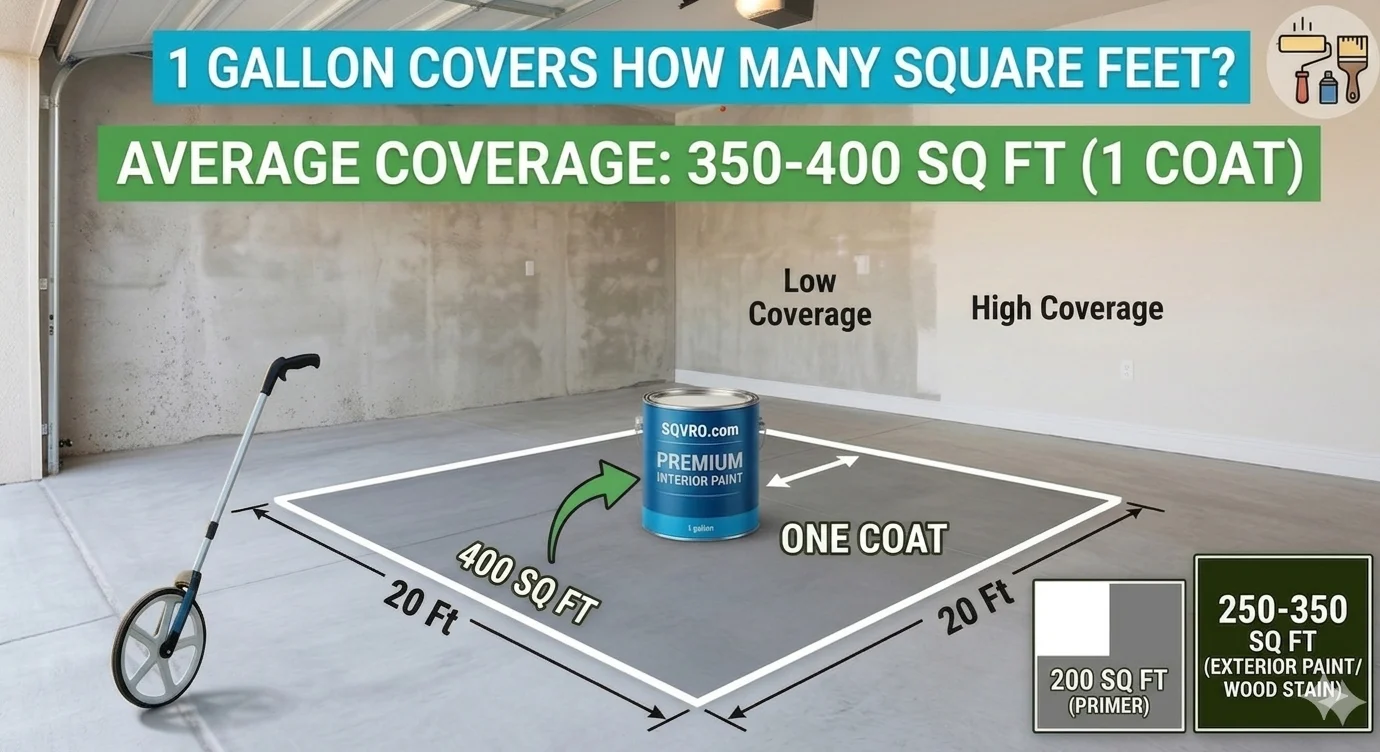
If you’re planning a painting or coating project, one of the most common questions is: 1 gallon covers how many square feet? Knowing this helps you avoid buying too much or too little material, saving both time and money.
In simple terms, a gallon of paint or coating does not cover a fixed area every time. The coverage depends on several factors such as surface type, material quality, and how the product is applied. However, there is a standard range that professionals use as a guideline.
On average, 1 gallon of paint covers about 350 to 400 square feet in one coat on a smooth surface. This estimate is widely used in the painting industry and applies to most interior walls under normal conditions. If the surface is rough or porous, the coverage will be lower.
Understanding coverage is important because most painting projects require more than one coat. If you apply two coats, the total area covered by one gallon is effectively cut in half.
What Does Coverage Per Gallon Mean?
Coverage per gallon refers to the total surface area that a gallon of paint, stain, or coating can cover in a single layer. Manufacturers usually provide this number on the product label, but it is based on ideal conditions.
In real-world situations, coverage often varies because walls and surfaces are not always perfectly smooth. Some surfaces absorb more paint, while others allow the paint to spread more easily.
Average Coverage for Different Materials
While standard wall paint covers around 350 to 400 square feet, other materials have different coverage rates.
Interior paint usually provides the highest coverage because indoor walls are smoother. Exterior paint tends to cover less area because outside surfaces are often rougher and exposed to weather. Primer covers even less because it is designed to seal and prepare the surface rather than provide a finished look.
Wood stains and concrete sealers also have lower coverage because they penetrate the surface instead of sitting on top.
Because of these differences, it’s important to always match the coverage estimate with the type of material you are using.
How Surface Type Affects Coverage
The type of surface you are painting plays a major role in determining how far a gallon will go.
Smooth surfaces like new drywall or previously painted walls allow paint to spread evenly, giving you maximum coverage. On the other hand, rough surfaces like brick, stucco, or concrete absorb more paint, reducing the total area covered.
Porous materials soak up paint quickly, which means you will need more gallons to complete the same area. This is why exterior projects often require more paint than interior ones.
Number of Coats Matters
When calculating how much paint you need, always consider the number of coats.
One gallon may cover 350 to 400 square feet for a single coat, but most projects require two coats for proper color and durability. This means you will need twice as much paint for full coverage.
If you are painting over a dark color with a lighter one, you may even need an extra coat, especially if you skip primer.
Application Method and Its Impact
How you apply the paint also affects coverage.
Using a roller is the most common method and provides balanced coverage. Brushes are useful for edges and corners but may use slightly more paint. Spray guns can cover large areas quickly but may lead to overspray and waste if not used carefully.
Applying paint too thickly can also reduce coverage. Even, thin coats are always better than heavy layers.
Step by Step Guide to Calculate Coverage
To accurately estimate how much paint you need, follow a simple process.
Start by measuring the height and width of each wall. Multiply these numbers to get the area of each wall, then add them together to find the total surface area.
Next, subtract the area of doors and windows. This gives you the actual paintable surface.
Once you have the total square footage, divide it by the coverage rate. For example, if your total area is 700 square feet and one gallon covers 350 square feet, you will need 2 gallons for one coat.
If you plan to apply two coats, multiply the result by two.
Real World Example
Imagine you have a room with four walls, each measuring 10 feet wide and 8 feet high. The total wall area would be 320 square feet.
In this case, one gallon would be enough for one coat. However, for two coats, you would need about 2 gallons.
Now consider an exterior wall with a rough surface. If the same 320 square feet area is made of brick, one gallon may only cover around 250 square feet. This means you would need more paint even for a single coat.
Comparison of Coverage Based on Surface
Smooth walls provide the best coverage and allow paint to spread evenly. Previously painted surfaces fall in the middle, depending on their condition. Wood surfaces may require primer and additional coats. Concrete and brick surfaces provide the lowest coverage because they absorb more paint.
Understanding this difference helps you plan more accurately and avoid underestimating your needs.
Tips to Improve Coverage
There are several ways to get better coverage from each gallon of paint.
Using a primer is one of the most effective methods. It seals the surface and prevents excessive absorption, allowing the paint to spread further.
Choosing high-quality paint also makes a big difference. Better paint often has higher pigment concentration, which improves coverage and reduces the need for multiple coats.
Using the right tools and applying paint evenly also helps maximize coverage. Avoid overloading your brush or roller, and work in consistent strokes.
Common Mistakes to Avoid
Many people underestimate how much paint they need because they ignore important factors.
One common mistake is not measuring the surface area correctly. Another is forgetting to account for rough or porous surfaces. Skipping primer can also lead to poor coverage and require extra coats later.
Buying too little paint can interrupt your project, while buying too much leads to waste. A balanced estimate is always the best approach.
Final Thoughts
So, 1 gallon covers how many square feet? In most cases, it covers 350 to 400 square feet per coat, but this number can change depending on the surface, material, and application method.
For accurate results, always measure your area, consider the surface condition, and plan for at least two coats. By understanding these factors, you can complete your project efficiently and achieve a smooth, professional finish without unnecessary costs.