

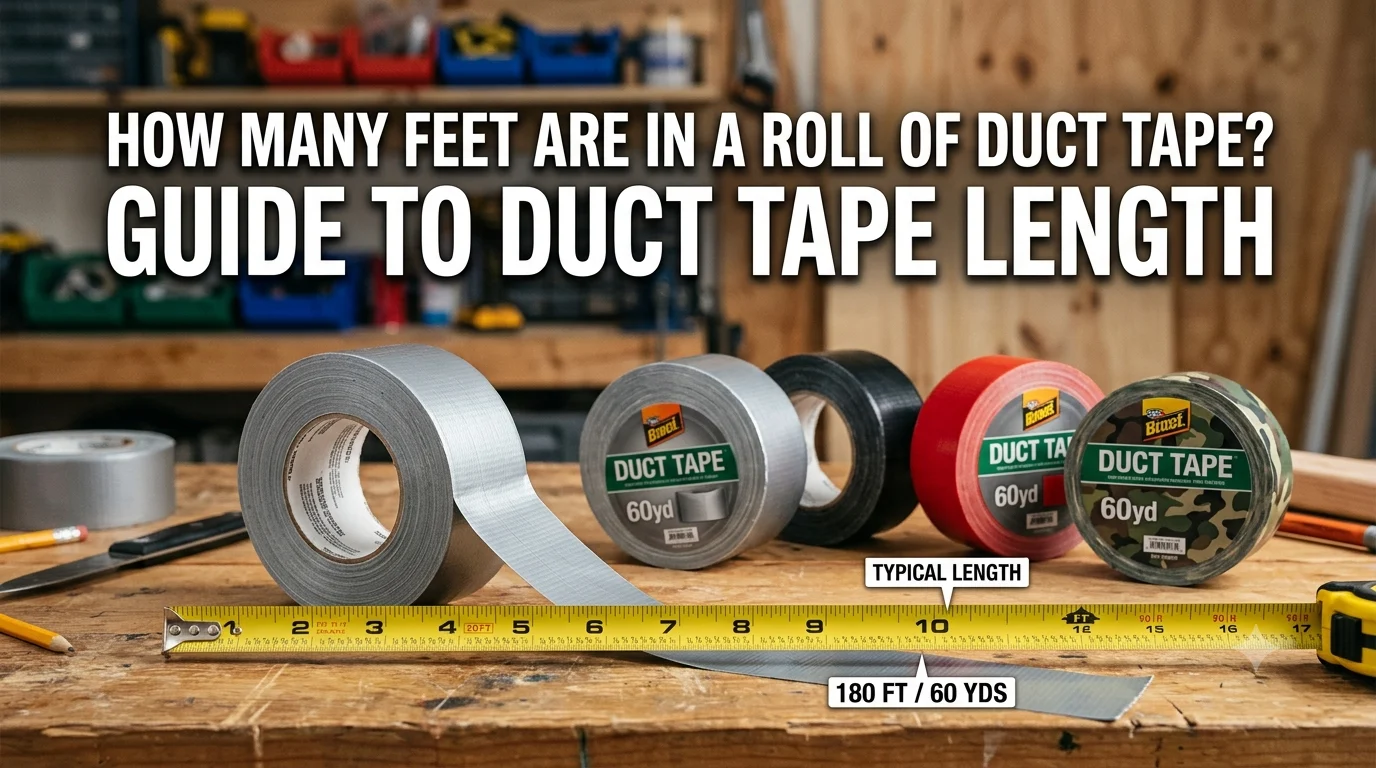
If you are working on a home repair project, construction job, craft project, or DIY task, you may wonder: how many feet are in a roll of duct tape? The answer depends on the roll size, brand, and type of duct tape you buy. While many standard duct tape rolls contain 60 yards (180 feet) of tape, smaller and larger options are also available.
Knowing the length of a duct tape roll helps you estimate how much tape you need, avoid buying too little, and plan your projects more efficiently. Whether you are sealing boxes, repairing tools, covering surfaces, or handling emergency fixes, understanding duct tape measurements can save time and money.
This guide explains duct tape roll lengths, common sizes, how many feet different rolls contain, how to calculate tape usage, and tips for choosing the right roll for your needs.
What Is Duct Tape?
Duct tape is a strong, flexible adhesive tape made with a fabric mesh layer, usually coated with polyethylene and combined with a pressure-sensitive adhesive. It is known for its durability, water resistance, and ability to stick to many different surfaces.
Originally developed for military use during World War II, duct tape became popular because it could quickly repair equipment and seal materials. Today, it is commonly used for:
- Home repairs
- HVAC applications
- Construction projects
- Packaging
- Automotive repairs
- Outdoor fixes
- Craft projects
- Temporary repairs
Duct tape comes in different widths, strengths, colors, and roll lengths. The most common measurement people look for is the total length in feet.
How Many Feet Are in a Roll of Duct Tape?
The most common answer is:
A standard roll of duct tape usually contains 180 feet of tape.
This measurement comes from a typical roll that contains 60 yards of duct tape.
Since:
1 yard = 3 feet
The calculation is:
60 yards × 3 feet = 180 feet
However, not every duct tape roll has the same amount of tape. Some rolls are much shorter for small household jobs, while industrial rolls may contain several hundred feet.
Common Duct Tape Roll Sizes and Lengths
Duct tape is sold in several standard lengths. The table below shows common roll sizes:
| Duct Tape Roll Size | Length in Yards | Length in Feet |
|---|---|---|
| Small roll | 10 yards | 30 feet |
| Medium roll | 20 yards | 60 feet |
| Standard roll | 60 yards | 180 feet |
| Large industrial roll | 100 yards | 300 feet |
| Bulk rolls | 200+ yards | 600+ feet |
The exact length depends on the manufacturer and product line. Always check the label before purchasing if you need a specific amount.
Why Are Duct Tape Rolls Measured in Yards Instead of Feet?
Many tape products, including duct tape, are commonly measured in yards because tape has historically been sold in longer continuous lengths.
Manufacturers often use yards because:
- Tape rolls are produced in large quantities
- Yard measurements are standard in the tape industry
- It makes packaging easier
- It matches other adhesive products like masking tape and electrical tape
For everyday users, converting yards into feet is often more practical.
The simple formula is:
Number of yards × 3 = number of feet
Examples:
- 10 yards × 3 = 30 feet
- 20 yards × 3 = 60 feet
- 50 yards × 3 = 150 feet
- 60 yards × 3 = 180 feet
- 100 yards × 3 = 300 feet
How Long Does a 180-Foot Roll of Duct Tape Last?
The lifespan of a duct tape roll depends on how much tape you use per project.
For example:
- Wrapping a small repair may use 1–3 feet
- Sealing boxes may use 5–10 feet per box
- Large repairs may require 20–50 feet
- Construction projects may use hundreds of feet
A standard 180-foot duct tape roll can last months for occasional household use.
For example:
If you use:
- 5 feet per project
- 2 projects per month
Your monthly usage is:
5 × 2 = 10 feet
A 180-foot roll would last:
180 ÷ 10 = 18 months
How to Calculate How Much Duct Tape You Need
Estimating duct tape usage before starting a project prevents waste and unnecessary purchases.
Follow these steps:
Step 1: Measure the Area or Object
Determine the length of the surface you need to cover.
Example:
You need to wrap a pipe that is 10 feet long.
Step 2: Estimate Layers
Decide how many layers of tape you need.
One layer may be enough for a temporary fix, while stronger repairs may require multiple layers.
Example:
10 feet of pipe × 2 layers = 20 feet of tape
Step 3: Add Extra Tape
Always include extra tape for overlaps and mistakes.
Adding 10–20% extra is usually a good estimate.
Example:
20 feet + 20% extra = 24 feet
A 60-foot roll would easily handle this project.
Standard Duct Tape Sizes Explained
The length of duct tape is not the only important factor. Width and thickness also affect performance.
Duct Tape Width
Common widths include:
- 1.88 inches
- 2 inches
- 3 inches
- 4 inches
Wider tape covers more surface area but may be harder to handle for small repairs.
Duct Tape Thickness
Thicker duct tape usually provides:
- Better strength
- Improved durability
- Higher resistance to tearing
- Better outdoor performance
Thin duct tape may work well for crafts and light repairs.
Common Uses for Different Duct Tape Roll Lengths
Different projects require different amounts of tape.
| Project | Approximate Tape Needed |
|---|---|
| Small household repair | 1–5 feet |
| Package reinforcement | 5–15 feet |
| Temporary hose repair | 5–20 feet |
| Outdoor repair | 10–50 feet |
| Large construction task | 100+ feet |
Choosing the correct roll size prevents buying too much or running out halfway through a project.
Small Roll vs Standard Roll vs Bulk Roll
Choosing the right duct tape roll depends on your needs.
| Roll Type | Best For | Advantages | Disadvantages |
|---|---|---|---|
| Small roll | Emergency repairs, crafts | Easy to carry | Runs out quickly |
| Standard roll | Home projects | Good value and common size | Larger storage size |
| Bulk roll | Professional work | Lower cost per foot | More expensive upfront |
For most homeowners, a standard 180-foot roll provides the best balance between price and usefulness.
Factors That Affect Duct Tape Length
Several factors can change how much tape you actually get from a roll.
Brand Differences
Different manufacturers may offer different lengths. Always check the package label.
Tape Thickness
A thicker tape may have fewer feet because more material is used per layer.
Roll Core Size
The cardboard or plastic center of the roll affects how much tape can fit on the roll.
Industrial vs Consumer Products
Professional-grade duct tape often comes in longer rolls designed for frequent use.
How Many Feet of Duct Tape Do You Need for Common Projects?
Here are some practical examples:
Moving Boxes
A person moving homes may use:
- 5–10 feet per box
- 20 boxes = 100–200 feet
A standard roll may be enough for small moves.
Sealing Air Ducts
HVAC work often requires specialized foil duct tape rather than regular duct tape. The amount depends on the number and size of connections.
Outdoor Repairs
Outdoor jobs may require stronger tape and multiple layers.
A 180-foot roll can handle several small repairs.
Camping and Emergency Kits
A small 10-yard roll may be enough because it takes less space and is easier to carry.
Common Mistakes When Buying Duct Tape
Many people buy duct tape without checking important details.
Mistake 1: Ignoring Roll Length
Two rolls may look similar but contain different amounts of tape.
Always check whether the roll contains:
- 10 yards
- 20 yards
- 60 yards
- 100 yards
Mistake 2: Choosing the Wrong Type
Regular duct tape may not work for every situation.
For example:
- HVAC repairs may require foil tape
- Outdoor jobs may need weather-resistant tape
- Heavy-duty repairs may need industrial duct tape
Mistake 3: Focusing Only on Price
A cheaper roll may contain less tape or have weaker adhesive.
Compare cost per foot instead of only the purchase price.
Expert Tips for Getting More Value From a Roll of Duct Tape
Follow these tips to maximize your duct tape supply:
- Store duct tape in a cool, dry place
- Keep the adhesive surface clean
- Cut tape instead of tearing unnecessarily
- Avoid exposing unused tape to dust
- Choose the correct tape strength for the job
Proper storage can help maintain adhesive quality for years.
How to Convert Duct Tape Measurements Quickly
Use these simple conversions:
| Yards | Feet |
|---|---|
| 5 yards | 15 feet |
| 10 yards | 30 feet |
| 25 yards | 75 feet |
| 50 yards | 150 feet |
| 60 yards | 180 feet |
| 100 yards | 300 feet |
This makes it easier to compare different duct tape products.
Frequently Asked Questions
How many feet are in a standard roll of duct tape?
A standard roll of duct tape usually contains 180 feet, which equals 60 yards. However, roll lengths vary by brand and product type.
Is duct tape sold by feet or yards?
Duct tape is commonly sold by yards, but many people convert the measurement to feet. One yard equals three feet.
How many feet are in a small roll of duct tape?
A small duct tape roll may contain around 30 feet (10 yards). These smaller rolls are useful for travel kits and occasional repairs.
How long does a roll of duct tape last?
A roll can last from a few weeks to several years depending on how frequently it is used and the amount needed for each project.
Is a longer duct tape roll always better?
Not always. A larger roll offers better value for frequent users, but a smaller roll may be more practical for occasional repairs or portability.
Conclusion
So, how many feet are in a roll of duct tape? The most common standard roll contains 180 feet of duct tape, but smaller rolls may contain 30 or 60 feet, while industrial rolls can contain 300 feet or more.
Understanding duct tape measurements helps you choose the right roll size for your project, estimate costs, and avoid wasting material. Whether you need tape for simple home repairs, moving boxes, outdoor fixes, or professional work, checking the length in feet ensures you get the right amount for the job.
