
Tiny homes have become a major trend in modern housing because they offer affordable living, minimalism, and flexibility. But one of the most common questions people ask is: how many square feet in a tiny home?
In general, a tiny home ranges between 100 to 400 square feet, although some can be slightly smaller or larger depending on design and purpose. Understanding the exact size helps you decide whether tiny living fits your lifestyle.
This guide explains everything about tiny home square footage, layouts, real examples, and how much space you actually need.
What Is Considered a Tiny Home?
A tiny home is a small residential space designed to maximize functionality in minimal square footage. These homes focus on efficient living rather than large open spaces.
Most experts define a tiny home as any dwelling under 400 square feet. However, the exact definition may vary depending on location and building laws.
Tiny Home vs Small House
- Tiny home: 100–400 sq ft
- Small house: 400–1,000 sq ft
- Standard house: 1,500+ sq ft
The key difference is not just size but also lifestyle. Tiny homes are designed for minimalism and efficiency.
How Many Square Feet in a Tiny Home on Average?
The average tiny home in the real world is around 200–300 square feet. This size is popular because it balances comfort and affordability.
Common size categories:
1. Very small tiny homes (80–120 sq ft)
- Usually portable or mobile units
- Best for temporary stays or solo living
- Very limited space
2. Standard tiny homes (120–300 sq ft)
- Most popular range
- Includes kitchen, bathroom, and sleeping loft
- Suitable for one person or couples
3. Larger tiny homes (300–400+ sq ft)
- More comfort and storage
- Can support couples or small families
- Often includes separate living areas
Tiny Home Size Comparison Table
| Type | Square Feet | Best For |
| Micro tiny home | 80–120 sq ft | Solo minimalist living |
| Small tiny home | 120–200 sq ft | One person |
| Standard tiny home | 200–300 sq ft | Couples |
| Large tiny home | 300–400+ sq ft | Small families |
How Much Space Do You Really Need?
Choosing the right size depends on lifestyle, not just budget.
For one person
A comfortable range is 150–250 square feet. This allows:
- Sleeping area
- Small kitchen
- Bathroom
- Storage space
For couples
A better range is 200–350 square feet. You need:
- More storage
- Shared living area
- Larger sleeping loft or bedroom
For families
Families usually need 300–500 square feet or more, depending on children and storage needs.
Common Tiny Home Layouts
1. Loft style layout
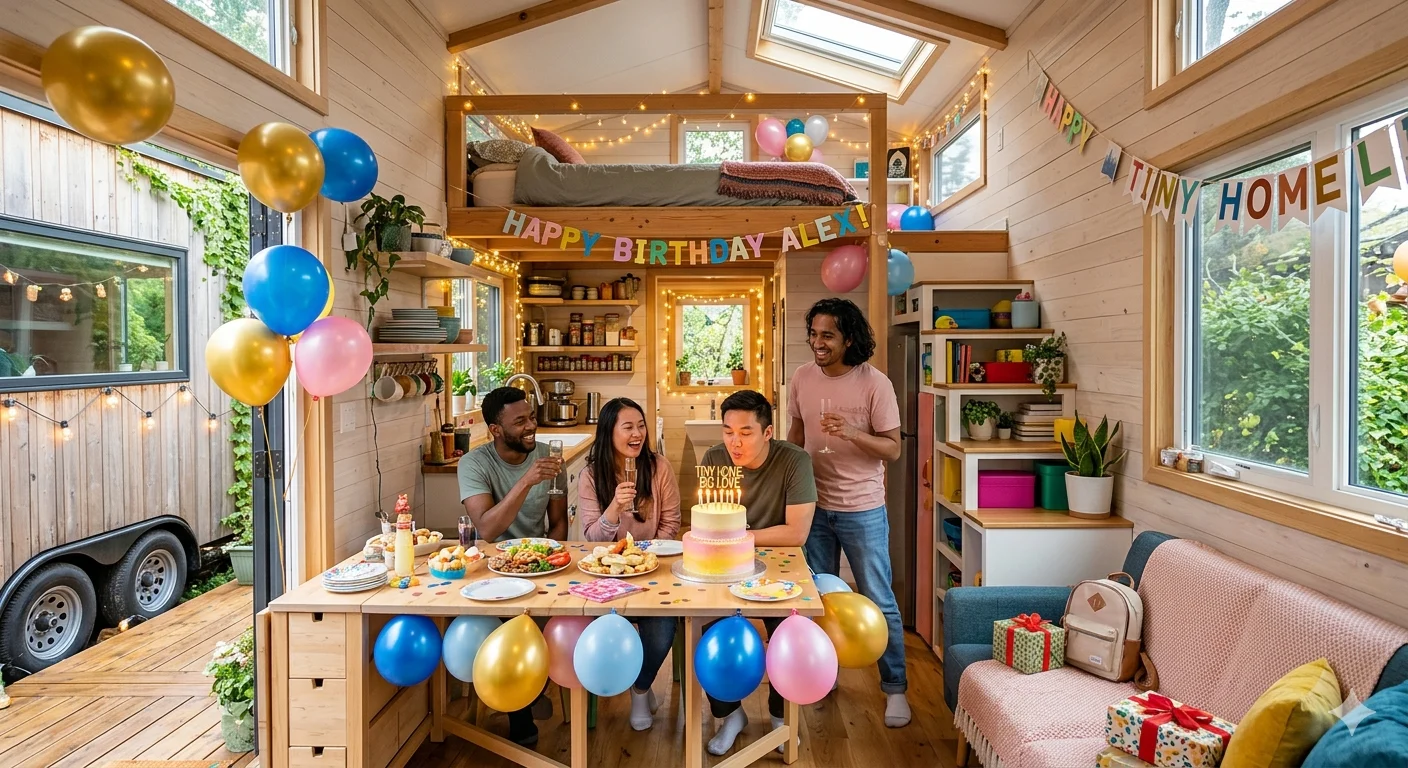
This is the most popular design. The bed is placed above the main living area to save space.
2. Open studio layout
Everything is in one open space. It feels larger due to fewer walls.
3. Multi-functional layout
Furniture serves multiple purposes, such as:
- Sofa beds
- Foldable tables
- Storage stairs
Benefits of Tiny Homes
Tiny homes offer several advantages:
Lower cost
Building and maintaining a tiny home is much cheaper than a traditional house.
Less maintenance
Smaller space means less cleaning and upkeep.
Eco-friendly living
Tiny homes use fewer materials and less energy.
Freedom and mobility
Many tiny homes are portable, allowing travel and relocation.
Drawbacks of Tiny Homes
Despite the benefits, there are also challenges:
Limited space
Storage and privacy can be difficult.
Zoning laws
Some areas restrict tiny home living.
Lifestyle adjustment
You must downsize possessions and live minimally.
Factors That Affect Tiny Home Size
1. Building regulations
Some regions require minimum square footage for permanent homes.
2. Mobility
Homes on wheels must follow transportation limits.
3. Personal needs
Your lifestyle determines how much space you truly need.
Expert Tips for Tiny Living
Use vertical space
Install shelves and loft storage.
Choose multi-use furniture
Use beds, tables, and sofas with storage options.
Keep design minimal
Avoid clutter and unnecessary items.
Maximize natural light
Large windows make small spaces feel bigger.
Common Mistakes to Avoid
- Choosing too small a space
- Ignoring storage needs
- Poor layout planning
- Not considering future lifestyle changes
Is a Tiny Home Worth It?
A tiny home can be worth it if you value:
- Low expenses
- Simple living
- Flexibility
- Minimalism
However, it may not suit people who need privacy, large storage, or multiple rooms.
FAQs
1. How many square feet is a tiny home?
A tiny home is usually between 100 and 400 square feet.
2. What is the most common tiny home size?
Most tiny homes are around 200–300 square feet.
3. Can a family live in a tiny home?
Yes, but they usually need 300–500 square feet or more.
4. Are tiny homes cheaper than normal houses?
Yes, they cost significantly less to build and maintain.
5. Do tiny homes have full kitchens and bathrooms?
Most modern tiny homes include compact kitchens and bathrooms.
Conclusion
So, how many square feet in a tiny home? The typical range is 100 to 400 square feet, with most people living comfortably in the 200–300 square feet range.
The right size depends on your lifestyle, number of occupants, and comfort needs. Tiny homes are not just about size—they are about smart design, efficient living, and simplicity.
If planned properly, even a small space can feel spacious, functional, and comfortable for everyday life.
Discover More Article
1.5 cubic feet soil covers how many square feet.
how many square feet will one yard of concrete cover
How many square feet is in a acre of land