
Cornhole is one of the most popular backyard games in the United States, known for its simplicity and competitive fun. But even though the game looks easy, proper setup is very important. One of the most common questions players ask is: how many feet apart for cornhole boards should be for correct gameplay?
The distance between the boards affects difficulty, fairness, and overall enjoyment. If the boards are placed too close, the game becomes too easy. If they are too far apart, it becomes frustrating and inconsistent. That’s why official rules clearly define the correct spacing for different types of play.
In this guide, you’ll learn the exact cornhole board distance, how to set them up correctly, differences between casual and tournament play, and expert tips to improve your setup.
What Is Cornhole and Why Board Distance Matters?
Cornhole is a tossing game where players throw bean bags toward a raised board with a hole near the top. The goal is to land the bag on the board or get it into the hole for points.
Why distance matters in cornhole
The spacing between boards impacts:
- Difficulty level of the game
- Accuracy required for throws
- Fairness between players
- Competitive balance
So when asking how many feet apart for cornhole boards, you are really asking how to balance fun and fairness.
Official Cornhole Board Distance Rules
The official rules of cornhole are standardized for tournaments and organized play.
Regulation distance (adults)
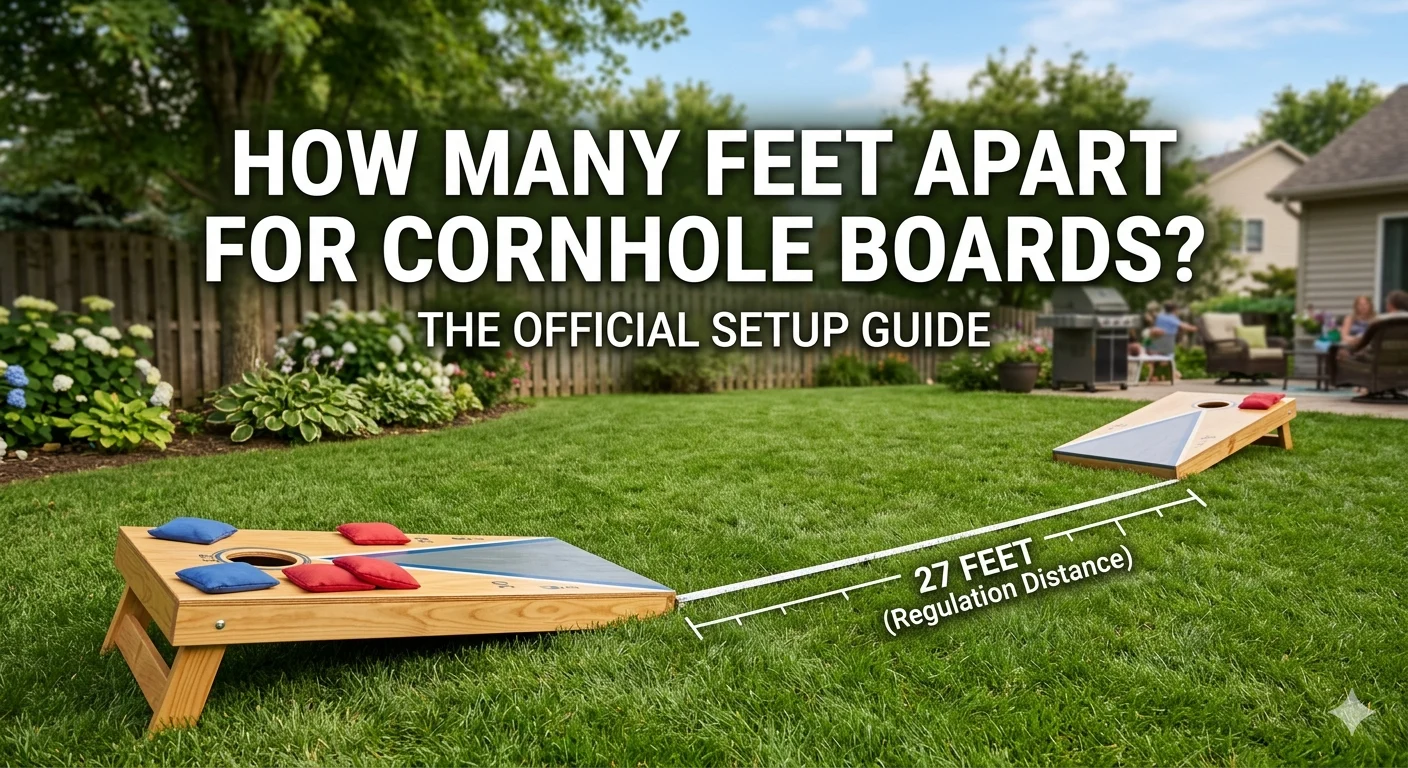
- The standard distance is 27 feet apart
- Measured from front edge to front edge of the boards
This is the official distance used in most competitive games and leagues.
Distance for casual or beginner play
For non-competitive settings:
- 20 to 25 feet apart is commonly used
- Beginners often prefer shorter distances for easier play
Junior or kids’ play
- Usually 20–22 feet
- Adjusted for strength and throwing ability
So the answer to how many feet apart for cornhole boards depends on who is playing—but 27 feet is the official standard.
Step-by-Step: How to Set Up Cornhole Boards Correctly
Proper setup ensures fair gameplay and better performance.
Step 1: Measure the distance
Use a measuring tape and mark:
- 27 feet for official play
- 20–25 feet for casual play
Always measure from the front edge of one board to the front edge of the other.
Step 2: Place boards facing each other
- Ensure both boards are directly opposite
- Keep them aligned straight
Step 3: Check leveling
- Boards should be on flat ground
- Avoid slopes or uneven surfaces
Step 4: Test distance visually
Stand behind one board and check:
- The opposite board should be centered in your throwing line
Casual Play vs Official Play Distance
Backyard or casual games
In informal settings:
- Distance is flexible
- Players can adjust based on skill level
- 20–25 feet is most common
This makes the game more relaxed and fun for families and friends.
Tournament or professional play
In official settings:
- Strict 27 feet distance is required
- No adjustments allowed
- Ensures fairness for all competitors
Common Mistakes in Cornhole Setup
Many beginners unknowingly set up the game incorrectly.
1. Incorrect distance measurement
- Measuring from center instead of front edge
- Guessing distance instead of using tape
2. Uneven board alignment
- Boards not facing each other directly
- Angled placement affects throwing accuracy
3. Uneven playing surface
- Sloped ground causes unfair bounce or slide
- Grass vs concrete can change bag behavior
4. Ignoring wind outdoors
- Wind can affect bag trajectory
- Important for outdoor setups
Expert Tips for Better Cornhole Setup
Stick to regulation distance when practicing
Even if you play casually, using 27 feet helps:
- Build real skill
- Improve accuracy
- Prepare for tournaments
Use flat surfaces
Best surfaces include:
- Concrete
- Flat grass
- Indoor wooden floors
Focus on consistent throwing
- Use the same motion every time
- Practice arc throws instead of straight throws
Adjust for environment
- Reduce distance for kids or beginners
- Increase challenge for experienced players
Cornhole Board Distance Comparison
| Game Type | Distance (Feet) | Purpose |
| Kids Play | 20–22 ft | Easier gameplay |
| Casual Play | 20–25 ft | Fun backyard games |
| Official Play | 27 ft | Tournament standard |
Why 27 Feet Is the Standard
The 27-foot distance is used because:
- It balances skill and challenge
- It prevents the game from being too easy
- It ensures consistency across competitions
- It is officially recognized in professional play
This makes it the most important number to remember when learning how many feet apart for cornhole boards.
FAQs About Cornhole Board Distance
1. How many feet apart for cornhole boards in official games?
The official distance is 27 feet from front edge to front edge.
2. Can I change the distance for backyard games?
Yes, casual games often use 20–25 feet depending on players’ skill level.
3. Why is cornhole distance important?
It affects fairness, difficulty, and overall gameplay balance.
4. What happens if boards are too close?
The game becomes too easy and not competitive.
5. Do kids use the same distance as adults?
No, kids usually play at shorter distances like 20–22 feet.
Conclusion
Understanding how many feet apart for cornhole boards is essential for setting up a fair and enjoyable game. The official standard distance is 27 feet, used in all professional and tournament-level games. However, casual play allows flexibility, usually between 20 and 25 feet depending on players’ age and skill level.
Correct spacing improves accuracy, fairness, and overall fun. Whether you are playing in your backyard or preparing for competition, using the right distance ensures a better experience every time.