
If you are setting up a dartboard at home, one of the first questions you will probably ask is: how many feet back from a dartboard should you stand?
The answer depends on the type of darts you are using. Official dart games follow specific measurements to ensure fair play, accuracy, and safety. Whether you are building a professional game room or simply hanging a dartboard in your garage, using the correct throwing distance makes a huge difference.
Many beginners place the throwing line too close or too far away. That can affect scoring, comfort, and consistency. In this guide, you will learn the official dartboard distance in feet, how to measure it correctly, ideal room dimensions, setup tips, and common mistakes to avoid.
By the end, you will know exactly how far back to stand from a dartboard for both casual and competitive play.
Official Dartboard Throwing Distance
The official throwing distance changes depending on whether you use steel tip darts or soft tip darts.
Steel Tip Dart Distance
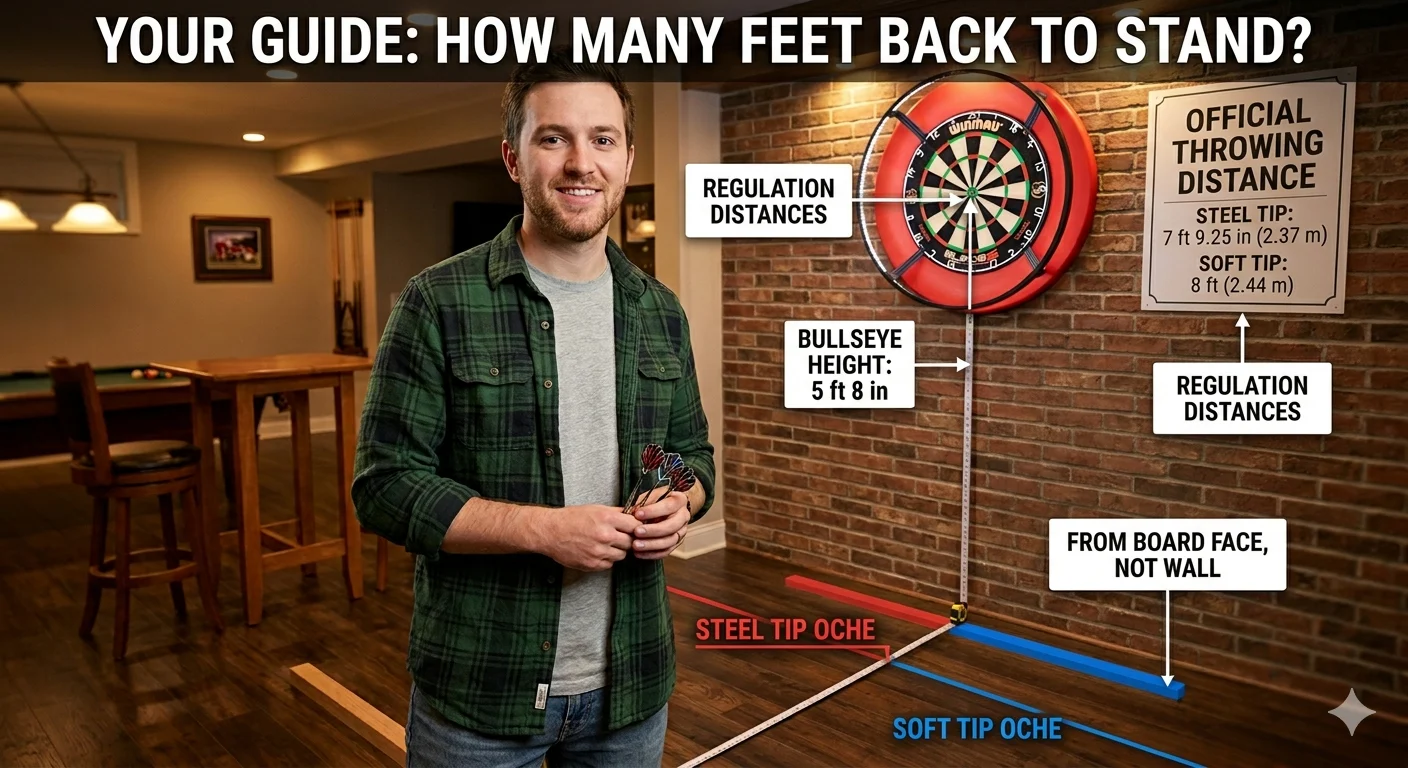
For standard steel tip darts, the official throwing distance is:
This equals:
- 93.25 inches
- 2.37 meters
The distance is measured from the front face of the dartboard to the throwing line, also called the “oche.”
This measurement is used in professional tournaments and by organizations such as the World Darts Federation.
Soft Tip Dart Distance
Soft tip darts use a slightly longer throwing distance.
This equals:
- 96 inches
- 2.44 meters
Soft tip dartboards are often electronic, which is why the official distance differs slightly from steel tip setups.
Why the Correct Dart Distance Matters
Many people underestimate how important dartboard distance really is. Standing at the correct distance improves gameplay in several ways.
Accuracy
Professional distances are designed to balance skill and challenge. If you stand too close, the game becomes too easy. Too far away, and your accuracy suffers.
Correct measurements help players develop proper throwing habits and muscle memory.
Safety
A proper setup keeps players and spectators safe. If the throw line is too close, darts may bounce unpredictably. Good spacing also prevents people from walking into the throwing lane.
Fair Competition
If you play with friends or practice for tournaments, regulation distance ensures fairness. Everyone throws from the same position, creating a level playing field.
Standard Dartboard Measurements
Throwing distance is only one part of a complete dartboard setup. You should also know the proper height and room dimensions.
Dartboard Height
The center of the dartboard, known as the bullseye, should be:
That equals:
- 68 inches
- 1.73 meters from the floor
This measurement applies to both steel tip and soft tip dartboards.
Throw Line Placement
The throw line should be clearly marked on the floor. Many players use:
- Tape
- Rubber oche strips
- Wooden throw lines
- Floor decals
A visible line helps maintain consistency during games.
Room Width and Length
A dart setup needs enough space for safe movement.
| Area | Recommended Space |
| Room Width | 5–6 feet minimum |
| Room Length | 11–13 feet |
| Ceiling Height | 8 feet or higher |
This gives players room to stand comfortably and retrieve darts safely.
How to Measure the Correct Distance
Setting up a dartboard correctly is easier than most people think.
Measuring From the Board Face
Always measure from the front surface of the dartboard, not the wall behind it.
For steel tip darts:
For soft tip darts:
Use a tape measure for accuracy.
Marking the Oche Line
Once you measure the distance:
- Place tape or an oche marker on the floor
- Ensure the line is straight
- Leave enough standing room behind the player
Many serious players install raised oche bars to prevent stepping over the line accidentally.
Common Measuring Mistakes
Here are the mistakes people make most often:
- Measuring from the wall instead of the board face
- Ignoring dartboard thickness
- Placing the bullseye too high or low
- Forgetting extra room behind the player
- Using estimated measurements instead of a tape measure
Even a few inches can affect gameplay noticeably.
Dartboard Distance Chart
Here is a quick reference chart for standard dart measurements.
| Dart Setup | Distance |
| Steel Tip Throw Distance | 7 feet 9.25 inches |
| Soft Tip Throw Distance | 8 feet |
| Bullseye Height | 5 feet 8 inches |
| Minimum Room Length | 11 feet |
| Recommended Ceiling Height | 8 feet |
This chart is useful for home game room planning.
Steel Tip vs Soft Tip Dart Distances
Many beginners wonder why steel tip and soft tip darts use different distances.
| Feature | Steel Tip | Soft Tip |
| Throw Distance | 7 ft 9.25 in | 8 ft |
| Board Type | Bristle board | Electronic board |
| Dart Material | Metal tip | Plastic tip |
| Common Use | Professional play | Casual/home use |
| Noise Level | Lower | Higher |
Steel tip darts are the standard in professional tournaments, while soft tip boards are more common in family game rooms and bars.
Best Room Size for a Dartboard Setup
Not every home has a dedicated game room. Fortunately, dartboards fit well in many spaces.
Small Rooms
If space is limited:
- Use foldable dart cabinets
- Choose wall-mounted lighting
- Keep furniture behind the throw line
- Use compact soft tip boards
A narrow hallway or spare bedroom can still work with careful planning.
Garage Game Rooms
Garages are popular for dart setups because they provide:
- Extra wall space
- Better ventilation
- Less noise disturbance
- Room for spectators
Adding rubber floor mats can also protect floors from dropped darts.
Basement Setups
Basements are ideal because they usually have:
- High ceilings
- Controlled lighting
- Minimal distractions
- Dedicated entertainment space
You can even create a full dart lane for practice.
Expert Tips for the Perfect Dartboard Setup
A professional-style setup improves both comfort and performance.
Use Proper Lighting
Good lighting prevents shadows on the board.
Popular choices include:
- LED dart rings
- Adjustable wall lights
- Ceiling spotlights
Avoid direct glare.
Protect Your Wall
Missed darts happen often, especially for beginners.
Use:
- Cork backing
- Foam surrounds
- Wooden cabinets
- Wall protectors
This keeps walls safe from damage.
Install Non-Slip Flooring
Players shift their weight constantly while throwing. Non-slip flooring improves balance and safety.
Rubber mats are especially useful for garages and basements.
Maintain Consistent Measurements
Never change your throw distance randomly. Practicing at official measurements helps build muscle memory and consistency over time.
Common Dartboard Setup Mistakes
Even experienced players sometimes make setup errors.
Hanging the Board Too High
The bullseye height matters just as much as throw distance. Incorrect height changes dart angles and affects scoring.
Using Weak Wall Anchors
Dartboards can become loose over time. Always secure the board properly to avoid wobbling.
Poor Lighting Placement
Shadows make aiming difficult. Place lights evenly around the board.
Not Leaving Enough Clearance
Players need space to throw comfortably. Tight spaces can ruin the experience.
Ignoring Safety Around Children
Always keep darts stored safely after games. Sharp steel tip darts can be dangerous for children and pets.
Benefits of Using Official Dart Distances
Following regulation measurements gives several advantages:
- Better practice habits
- Tournament-ready skills
- More accurate gameplay
- Fair competition
- Improved consistency
- Safer environment
Even casual players notice a difference when using proper measurements.
How Professionals Set Up Dartboards
Professional dart venues follow strict setup standards.
Typical tournament setups include:
- Regulation board height
- Measured oche distance
- Professional lighting systems
- Non-slip flooring
- Protective wall surrounds
- Dedicated spectator areas
Home players can copy many of these ideas on a smaller budget.
FAQs
How many feet back from a dartboard should you stand?
For steel tip darts, stand 7 feet 9.25 inches back. For soft tip darts, stand 8 feet back from the front of the dartboard.
Is dartboard distance measured from the wall?
No. The measurement is taken from the front face of the dartboard to the throw line.
What is the official dartboard height?
The bullseye should be 5 feet 8 inches from the floor.
Can I use a shorter distance for beginners?
You can, but practicing at official distance helps improve skills faster and creates better throwing habits.
How much room do I need for a dartboard?
Ideally, you need around 11–13 feet of room length and at least 5 feet of width for comfortable play.
Conclusion
Understanding how many feet back from a dartboard you should stand is essential for accurate and enjoyable gameplay. Official measurements exist for a reason—they improve fairness, safety, and consistency.
For steel tip darts, the correct throwing distance is 7 feet 9.25 inches. Soft tip darts require a slightly longer 8-foot distance. You should also ensure the bullseye is mounted at 5 feet 8 inches from the floor.
Whether you are creating a professional game room, adding entertainment to your garage, or practicing casually at home, proper dartboard setup makes a major difference. By following official measurements and setup tips, you can enjoy a better dart-playing experience while improving your accuracy over time.