
Choosing the right heater size can make a big difference in your comfort, energy bills, and overall home efficiency. If you’re wondering how many square feet will 60000 BTU heat, the simple answer is:
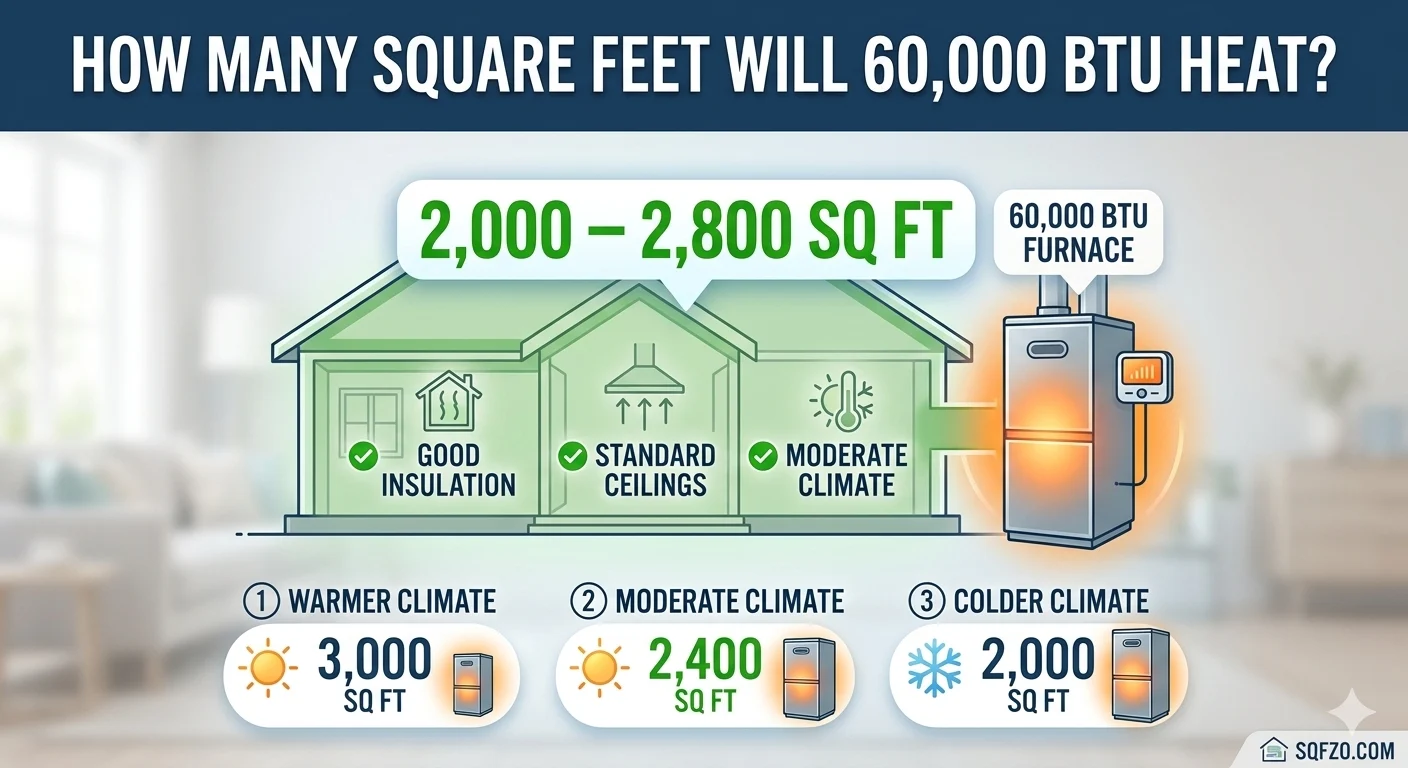
👉 A 60,000 BTU heater can typically heat 2,000 to 2,800 square feet.
However, this is only an estimate. The actual coverage depends on several real-world factors like insulation, ceiling height, and climate. Let’s break it down in detail so you can understand exactly what to expect.
What Does BTU Mean in Heating?
BTU stands for British Thermal Unit, which measures the amount of heat a heating system can produce.
In simple terms:
- Higher BTU = more heating power
- Lower BTU = less heating power
When choosing a heater, the goal is to match the BTU output with the size of your space. Too little heat will leave your home cold, while too much can waste energy and increase costs.
How Many Square Feet Can 60000 BTU Heat?
A general rule used by HVAC professionals is:
- 20 to 30 BTU per square foot
Using this rule:
- In colder climates:
60,000 ÷ 30 = 2,000 sq ft - In warmer climates:
60,000 ÷ 20 = 3,000 sq ft
👉 Realistic average:
2,000 to 2,800 square feet
This makes a 60,000 BTU heater suitable for most medium-sized homes.
BTU Heating Coverage Chart
Here’s a quick comparison to make it easier:
| Climate Type | BTU per Sq Ft | Coverage Area |
| Cold Climate | 30 BTU | ~2,000 sq ft |
| Moderate Climate | 25 BTU | ~2,400 sq ft |
| Warm Climate | 20 BTU | ~3,000 sq ft |
Key Factors That Affect Heating Coverage
The actual square footage a 60,000 BTU heater can cover depends on several important factors.
Insulation Quality
Homes with good insulation hold heat better. This means:
- Better insulation = more coverage
- Poor insulation = less coverage
In poorly insulated homes, heating efficiency can drop by 30% or more.
Ceiling Height
Standard calculations assume 8-foot ceilings.
If your ceilings are higher:
- More air needs to be heated
- Effective coverage decreases
For example, 10-foot ceilings can reduce efficiency by around 20%.
Climate Zone
Your geographic location plays a big role.
- Cold areas require more BTUs
- Warm areas require fewer BTUs
A 60,000 BTU heater performs very differently in a mild climate compared to a freezing one.
Windows and Air Leaks
Heat loss increases if your home has:
- Large windows
- Drafts
- Poor sealing
This can significantly reduce how much space your heater can effectively warm.
How to Calculate Heating Needs Step by Step
If you want a more accurate estimate, use this simple formula:
BTU Required = Square Feet × BTU per Sq Ft
Example
- Home size: 2,200 sq ft
- Climate: moderate (25 BTU per sq ft)
Calculation:
2,200 × 25 = 55,000 BTU
👉 In this case, a 60,000 BTU heater is a good fit.
Is 60000 BTU Enough for Your Home?
Small Homes (Under 1,500 sq ft)
- More than enough heating power
- May be oversized
Medium Homes (1,500–2,500 sq ft)
- Ideal match
- Efficient and balanced heating
Large Homes (2,500–3,000+ sq ft)
- May work with good insulation
- Might struggle in colder climates
Benefits of a 60000 BTU Heater
- Covers most average homes
- Provides quick and consistent heat
- Energy-efficient when properly sized
- Widely available and affordable
Limitations to Consider
- Not suitable for very large homes
- Less effective in poorly insulated spaces
- Oversizing can lead to higher energy bills
Common Mistakes When Choosing BTU Size
Avoid these common errors:
- Ignoring insulation quality
- Not considering ceiling height
- Choosing based only on square footage
- Oversizing “just to be safe”
- Forgetting climate differences
These mistakes can increase your heating costs significantly.
Expert Tips for Better Heating Efficiency
- Always measure actual living space, not total property size
- Improve insulation before upgrading heater size
- Seal air leaks around doors and windows
- Consider energy-efficient systems
- Get a professional HVAC calculation for accuracy
Real-World Examples
Example 1: Well-Insulated Home
- Size: 2,500 sq ft
- Climate: moderate
✔ A 60,000 BTU heater works efficiently
Example 2: Poor Insulation
- Size: 2,000 sq ft
- Cold climate
⚠ Heating may feel insufficient
Example 3: Small Apartment
- Size: 1,200 sq ft
⚠ Heater is oversized and may waste energy
FAQs
1. How many square feet will 60000 BTU heat?
A 60,000 BTU heater can heat approximately 2,000 to 2,800 square feet, depending on conditions.
2. Is 60000 BTU enough for a 2,500 sq ft house?
Yes, it is generally sufficient in moderate climates with good insulation.
3. What happens if the heater is too big?
Oversized heaters waste energy, cycle too frequently, and reduce efficiency.
4. How do I calculate exact BTU needs?
Multiply your home’s square footage by 20–30 BTU per square foot.
5. Does ceiling height affect heating capacity?
Yes. Higher ceilings require more heating power because of increased air volume.
Conclusion
So, how many square feet will 60000 BTU heat?
👉 The most accurate estimate is 2,000 to 2,800 square feet, depending on insulation, climate, and home design.
A 60,000 BTU heater is a solid choice for medium-sized homes and can perform very efficiently when properly matched to your space. By considering key factors like insulation and ceiling height, you can ensure better comfort, lower energy bills, and long-term efficiency.