
Introduction
If you are wondering how many cubic feet in a 25 gallon pot, the simple answer is:
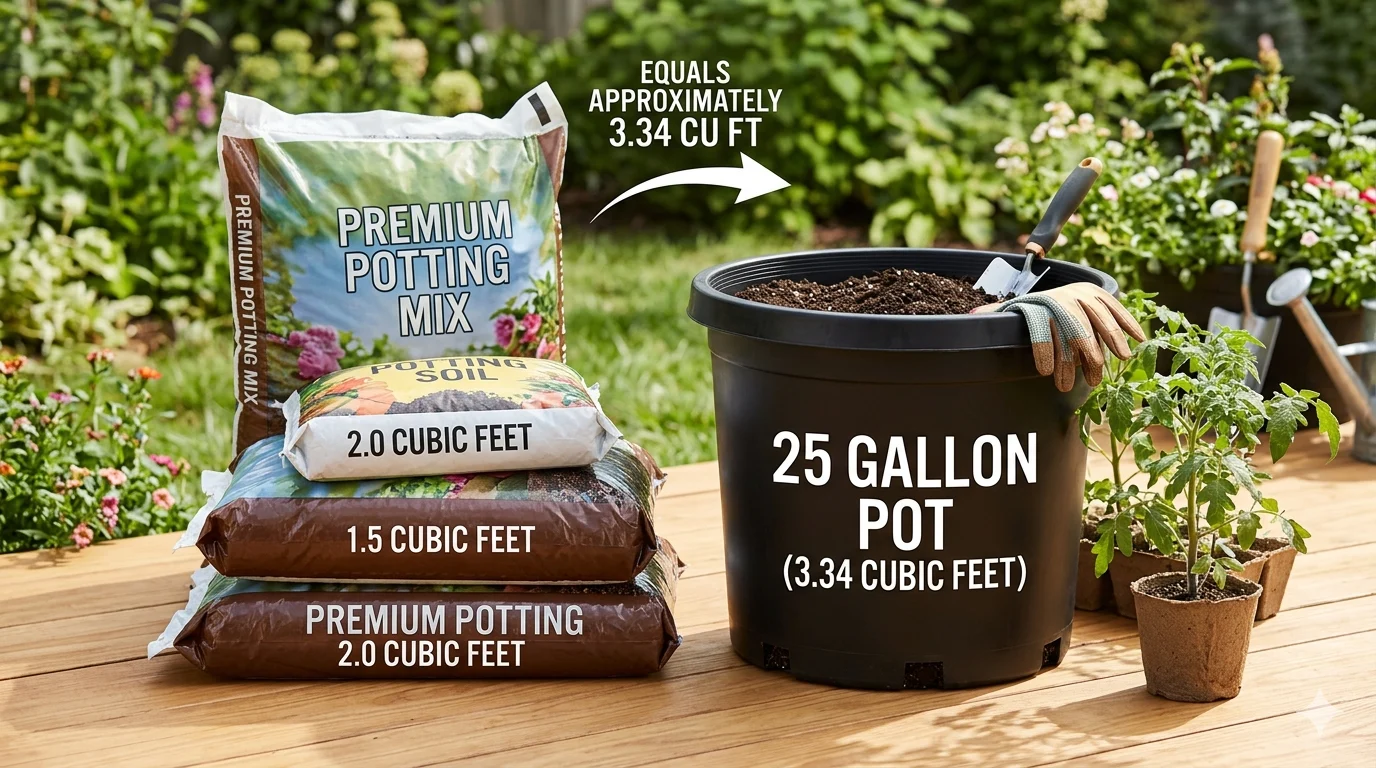
A 25 gallon pot holds approximately 3.34 cubic feet of volume. This measurement is important for gardeners, landscapers, and plant growers who need to calculate how much soil, compost, mulch, or drainage material is required for large containers.
Many soil products are sold in cubic feet instead of gallons. That is why understanding this conversion helps avoid buying too much or too little potting mix.
In this guide, you will learn:
- The exact gallon-to-cubic-feet conversion
- How much soil a 25 gallon pot needs
- Why this calculation matters
- Common uses for 25 gallon containers
- Helpful charts and examples
- Expert gardening tips
Understanding Gallons and Cubic Feet
Before calculating the volume of a container, it helps to understand what these measurements mean.
What Is a Gallon?
A gallon is a unit of volume commonly used in the United States. Garden pots and grow bags are often labeled by gallons, such as:
- 5 gallon pots
- 10 gallon grow bags
- 25 gallon containers
The gallon measurement tells you roughly how much material the pot can hold.
What Is a Cubic Foot?
A cubic foot measures three-dimensional space. It is commonly used for materials like:
- Potting soil
- Compost
- Mulch
- Sand
- Gravel
Most gardening products are sold in cubic foot bags, which makes this conversion extremely useful.
How Many Cubic Feet in a 25 Gallon Pot?
The standard conversion formula is:
To convert 25 gallons into cubic feet:
So, a 25 gallon pot equals approximately 3.34 cubic feet.
This is the total internal volume of the container.
However, the actual amount of soil used may vary slightly depending on:
- Pot shape
- Soil settling
- Drainage layers
- Manufacturer sizing
Gallons to Cubic Feet Conversion Chart
Here is a quick conversion chart that gardeners frequently use.
| Gallons | Cubic Feet |
|---|---|
| 1 gallon | 0.13 cubic feet |
| 5 gallons | 0.67 cubic feet |
| 10 gallons | 1.34 cubic feet |
| 15 gallons | 2.01 cubic feet |
| 20 gallons | 2.67 cubic feet |
| 25 gallons | 3.34 cubic feet |
| 30 gallons | 4.01 cubic feet |
| 50 gallons | 6.68 cubic feet |
This chart helps estimate soil needs for multiple containers quickly.
Why Gardeners Need This Conversion
Many people search for how many cubic feet in a 25 gallon pot because soil products are usually sold by cubic feet rather than gallons.
Understanding the conversion makes gardening easier in several ways.
Buying Potting Soil
Most potting mix bags are sold in sizes like:
- 1 cubic foot
- 1.5 cubic feet
- 2 cubic feet
Since a 25 gallon pot holds about 3.34 cubic feet, you would need:
- Two 2-cubic-foot bags, or
- Three 1.5-cubic-foot bags
This helps avoid wasting money on extra soil.
Planning Multiple Containers
Container gardeners often grow plants in several pots at once.
For example:
- 4 containers × 3.34 cubic feet = 13.36 cubic feet
That calculation helps estimate the total amount of soil required.
Estimating Drainage Material
Some gardeners add drainage materials at the bottom of large containers, such as:
- Gravel
- Clay pebbles
- Wood chips
These materials reduce the amount of potting soil needed.
How Much Soil Does a 25 Gallon Pot Need?
Technically, a 25 gallon pot holds approximately 3.34 cubic feet. However, most gardeners use slightly more soil than the exact measurement.
Why?
Because soil naturally settles after watering.
Soil Settling Explained
Fresh potting soil contains air pockets. Over time:
- Water compresses the soil
- Air pockets collapse
- Soil levels drop
This is completely normal.
Recommended Extra Soil
Experts usually recommend buying about 10% extra soil.
For a 25 gallon pot:
So it is smart to purchase around 3.5 to 3.7 cubic feet of potting soil for one container.
Common Uses for a 25 Gallon Pot
A 25 gallon pot is considered a large planter. It works well for plants with deeper root systems and long growing seasons.
Vegetables
Many vegetable gardeners use 25 gallon pots for:
- Tomatoes
- Peppers
- Cucumbers
- Potatoes
- Eggplants
The larger soil volume helps retain nutrients and moisture.
Fruit Trees
Dwarf fruit trees grow well in large containers, including:
- Lemon trees
- Olive trees
- Fig trees
- Avocado trees
A large container gives roots enough room to grow properly.
Cannabis Grow Bags
Cannabis growers commonly use 25 gallon fabric pots because they:
- Improve aeration
- Prevent root circling
- Support large plants
- Improve drainage
Decorative Plants
Landscape designers also use large containers for:
- Palms
- Bamboo
- Shrubs
- Ornamental grasses
These containers create attractive outdoor displays.
Typical Dimensions of a 25 Gallon Pot
Not all 25 gallon pots have the same dimensions.
Some are:
- Tall and narrow
- Wide and shallow
- Fabric grow bags
- Decorative planters
Typical dimensions include:
| Pot Type | Approximate Size |
|---|---|
| Nursery Pot | 21–24 inches wide |
| Fabric Grow Bag | 20–22 inches diameter |
| Decorative Planter | Varies greatly |
Even though the shapes differ, the internal volume remains close to 25 gallons.
Common Mistakes When Calculating Pot Volume
Many gardeners make simple mistakes when estimating soil needs.
Here are the most common ones.
Ignoring Soil Settling
Buying exactly 3.34 cubic feet of soil may leave the pot partially empty after watering.
Confusing Pot Sizes
Some manufacturers round container sizes, so actual capacity may vary slightly.
Forgetting Drainage Layers
Adding gravel or stones reduces soil capacity.
Packing Soil Too Tightly
Compacted soil reduces airflow and root development.
Always keep potting mix light and fluffy.
Expert Tips for Filling Large Pots
Large containers can become expensive to fill completely with premium potting soil.
These tips can help reduce costs and improve plant health.
Use Lightweight Fillers
You can place filler materials at the bottom of the container, such as:
- Empty plastic bottles
- Pine cones
- Wood chips
- Recycled nursery pots
This reduces the amount of soil needed.
Choose Quality Potting Mix
High-quality soil improves drainage and root growth.
Look for ingredients like:
- Coco coir
- Peat moss
- Compost
- Perlite
- Worm castings
Add Slow Release Fertilizer
Large containers benefit from steady nutrients throughout the growing season.
Slow-release fertilizer helps improve:
- Plant growth
- Flower production
- Fruit yield
Water Deeply
Large pots dry differently than small containers.
Deep watering encourages stronger roots and healthier plants.
Real World Example
Imagine you want to fill 6 large 25 gallon grow bags.
Each container holds approximately:
You would need around 20 cubic feet of soil total.
If soil bags contain 2 cubic feet each:
So you would need about 10 bags of potting mix.
This type of calculation helps gardeners plan projects more accurately and avoid unnecessary trips to the store.
FAQs
How many cubic feet are in a 25 gallon grow bag?
A 25 gallon grow bag holds approximately 3.34 cubic feet of material.
How much soil do I need for a 25 gallon pot?
You usually need around 3.5 to 3.7 cubic feet of soil because potting mix settles after watering.
How many bags of soil fill a 25 gallon container?
It depends on the bag size:
- Two 2-cubic-foot bags work well
- Three 1.5-cubic-foot bags also work
Is a 25 gallon pot large enough for tomatoes?
Yes. A 25 gallon pot is excellent for tomatoes because it provides plenty of room for root growth.
What plants grow well in a 25 gallon pot?
Popular choices include:
- Tomatoes
- Peppers
- Fruit trees
- Cannabis plants
- Shrubs
- Ornamental grasses
Conclusion
If you were searching for how many cubic feet in a 25 gallon pot, the answer is straightforward:
Knowing this conversion helps gardeners estimate soil requirements, compare container sizes, and plan gardening projects more efficiently.
Whether you are growing vegetables, planting fruit trees, or setting up decorative containers, understanding cubic feet measurements can save time, money, and effort.
For best results, remember to buy slightly extra soil to account for settling and drainage materials. Proper planning leads to healthier plants and more successful container gardening.