
If you are planning a landscaping, gardening, or construction project, you may wonder how many square feet does a cubic yard cover. The answer depends on one important factor: depth.
A cubic yard measures volume, while square feet measure area. Because of this, one cubic yard can cover different amounts of space depending on how thick the material is spread.
For example, one cubic yard of mulch spread at 3 inches deep covers much less area than the same cubic yard spread at 1 inch deep.
Understanding this calculation helps you:
- Buy the correct amount of material
- Avoid overspending
- Prevent project delays
- Estimate landscaping costs accurately
Whether you are using mulch, gravel, soil, sand, or concrete, this guide explains everything in simple and easy language.
Understanding Cubic Yards and Square Feet
Before calculating coverage, it is important to understand the difference between cubic yards and square feet.
What Is a Cubic Yard?
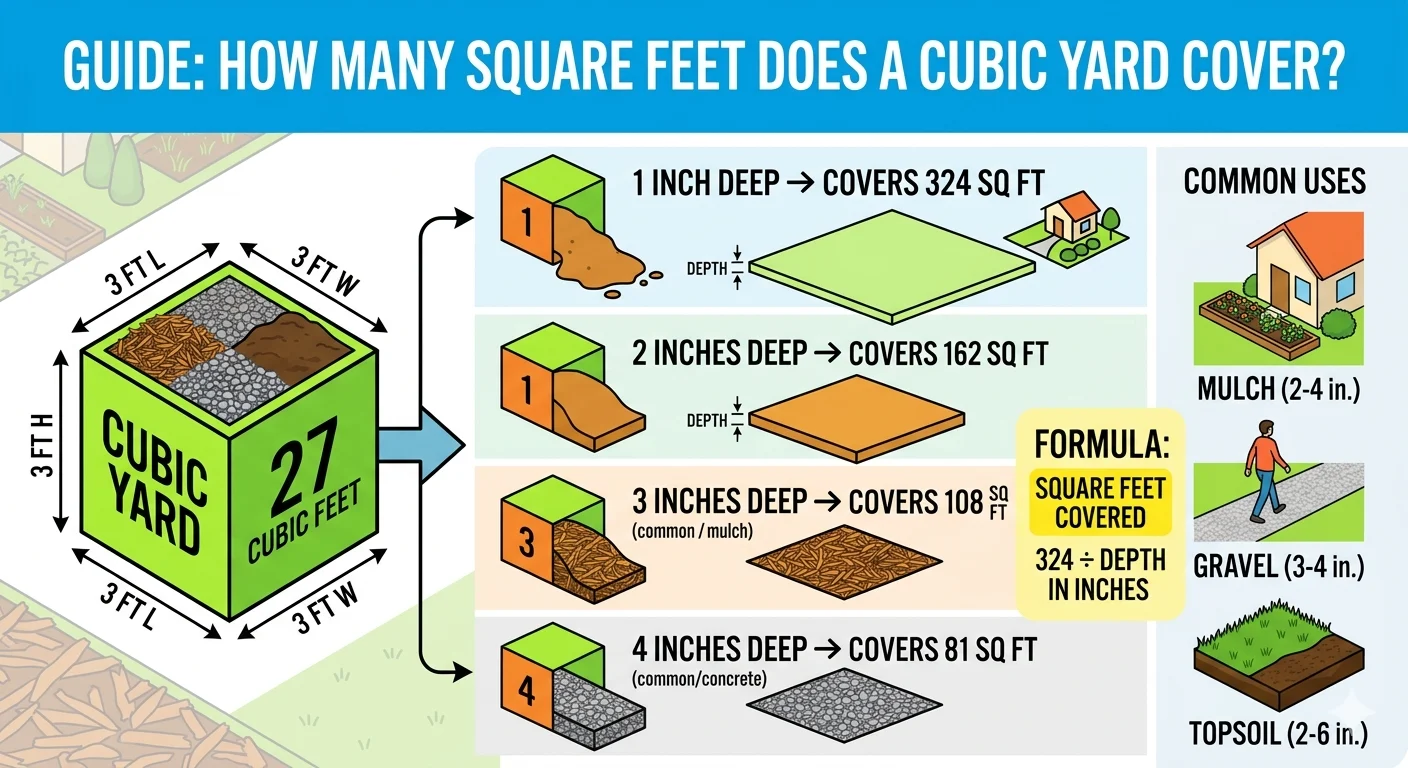
A cubic yard is a unit of volume.
It equals:
- 3 feet long
- 3 feet wide
- 3 feet high
That means:
- 1 cubic yard = 27 cubic feet
Cubic yards are commonly used for:
- Mulch
- Gravel
- Sand
- Concrete
- Topsoil
- Compost
What Is a Square Foot?
A square foot measures area.
One square foot equals:
- 1 foot long × 1 foot wide
Square footage tells you how much surface area something covers.
Why Depth Matters
Depth is the most important factor when calculating cubic yard coverage.
A thin layer covers more square feet, while a thick layer covers less square feet.
For example:
| Depth | Coverage Per Cubic Yard |
|---|---|
| 1 inch | 324 sq ft |
| 2 inches | 162 sq ft |
| 3 inches | 108 sq ft |
| 4 inches | 81 sq ft |
| 6 inches | 54 sq ft |
As depth increases, coverage decreases.
How to Calculate Cubic Yard Coverage
The easiest way to estimate coverage is by using a simple formula.
Basic Formula
Square Feet Covered = 324 ÷ Depth in Inches
This formula works because:
- 1 cubic yard = 27 cubic feet
- 27 cubic feet = 324 square feet at 1 inch deep
Quick Coverage Examples
Here are common coverage calculations:
| Material Depth | Square Feet Covered |
|---|---|
| 1 inch | 324 sq ft |
| 2 inches | 162 sq ft |
| 3 inches | 108 sq ft |
| 4 inches | 81 sq ft |
| 5 inches | 65 sq ft |
| 6 inches | 54 sq ft |
This chart is commonly used for landscaping and home improvement projects.
Cubic Yard Coverage for Different Materials
Different materials are usually installed at different depths.
Mulch Coverage
Mulch is commonly spread at 2 to 4 inches deep.
At 3 inches deep:
- 1 cubic yard covers approximately 108 square feet
Mulch helps:
- Retain moisture
- Reduce weeds
- Improve garden appearance
- Protect plant roots
Gravel Coverage
Gravel usually requires a thicker layer than mulch.
At 4 inches deep:
- 1 cubic yard covers around 81 square feet
Gravel is often used for:
- Driveways
- Walkways
- Drainage areas
- Decorative landscaping
Topsoil Coverage
Topsoil depth depends on the project.
For lawn repair, 2 inches is common.
At 2 inches deep:
- 1 cubic yard covers roughly 162 square feet
Concrete Coverage
Concrete slabs are often poured at 4 inches thick.
At 4 inches deep:
- 1 cubic yard covers about 81 square feet
This is useful for:
- Patios
- Sidewalks
- Shed foundations
Step-by-Step Calculation Examples
Here are practical examples to help you estimate material needs accurately.
Example 1: Mulch for a Garden Bed
Suppose your garden bed measures:
- 12 feet long
- 9 feet wide
First calculate the area:
12 × 9 = 108 square feet
If mulch is installed at 3 inches deep:
- 1 cubic yard covers 108 square feet
You need:
- 1 cubic yard of mulch
Example 2: Gravel for a Walkway
A walkway measures:
- 20 feet long
- 4 feet wide
Area:
20 × 4 = 80 square feet
At 4 inches deep:
- 1 cubic yard covers 81 square feet
You need approximately:
- 1 cubic yard of gravel
Example 3: Topsoil for a Lawn
A lawn area measures:
- 500 square feet
You want 2 inches of topsoil.
At 2 inches deep:
- 1 cubic yard covers 162 square feet
Calculation:
500 ÷ 162 = 3.08
You need about:
- 3.1 cubic yards of topsoil
Most professionals recommend rounding up slightly to avoid shortages.
Recommended Depths for Common Materials
Using the correct depth improves both appearance and performance.
| Material | Recommended Depth |
|---|---|
| Mulch | 2–4 inches |
| Gravel | 3–4 inches |
| Topsoil | 2–6 inches |
| Sand | 1–2 inches |
| Concrete | 4–6 inches |
Choosing the wrong depth can create problems.
For example:
- Too little mulch may not stop weeds
- Thin gravel layers may shift easily
- Thin concrete slabs may crack faster
Common Mistakes to Avoid
Many homeowners and DIY beginners make simple calculation mistakes when ordering materials.
Ignoring Depth
Never estimate coverage without knowing the installation depth.
Depth changes everything.
Mixing Area and Volume Measurements
Square feet measure area.
Cubic yards measure volume.
These measurements are not the same.
Forgetting Material Compaction
Some materials settle over time.
Examples include:
- Mulch
- Soil
- Gravel
Ordering slightly extra material helps compensate for settling.
Not Ordering Enough
Running out of material can delay your project and increase delivery costs.
Many professionals order 5–10% extra material.
Expert Tips for Accurate Material Estimation
Professionals use several strategies to improve accuracy.
Measure Carefully
Use a tape measure for exact dimensions.
Small mistakes can affect your total estimate significantly.
Use Consistent Units
Keep all measurements in feet and inches consistently.
Avoid mixing measurement units.
Account for Waste
Extra material helps cover:
- Uneven surfaces
- Spillage
- Compaction
- Future touch-ups
Understand Material Differences
Different materials behave differently.
For example:
- Mulch compresses more than gravel
- Wet soil becomes heavier
- Decorative stone may shift after installation
Buy From Trusted Suppliers
Experienced suppliers often help confirm your calculations before delivery.
Why Understanding Cubic Yard Coverage Matters
Knowing how many square feet a cubic yard covers helps you:
- Save money
- Reduce waste
- Prevent project delays
- Improve project planning
- Estimate landscaping costs accurately
Whether you are spreading mulch, laying gravel, adding soil, or pouring concrete, understanding cubic yard coverage makes every project easier and more efficient.
FAQs
How many square feet does 1 cubic yard cover at 3 inches deep?
One cubic yard covers approximately 108 square feet at 3 inches deep.
How many square feet does a cubic yard of mulch cover?
It depends on the depth:
- 2 inches deep = 162 sq ft
- 3 inches deep = 108 sq ft
- 4 inches deep = 81 sq ft
How many cubic yards do I need for 500 square feet?
That depends on the material depth.
At 3 inches deep:
- 500 ÷ 108 = about 4.6 cubic yards
Is cubic yard coverage the same for all materials?
Mathematically, yes. However, materials compact differently, which may slightly affect real-world coverage.
What is the fastest way to estimate cubic yard coverage?
Use this formula:
Square Feet Covered = 324 ÷ Depth in Inches
It provides quick estimates for most landscaping projects.
Conclusion
So, how many square feet does a cubic yard cover? The answer depends entirely on depth.
Here is a quick reference:
- 1 inch deep = 324 square feet
- 2 inches deep = 162 square feet
- 3 inches deep = 108 square feet
- 4 inches deep = 81 square feet
Understanding cubic yard coverage helps you estimate mulch, gravel, soil, sand, and concrete more accurately. It also helps prevent overspending and material shortages.
Before starting your next landscaping or construction project, measure your area carefully, choose the correct material depth, and calculate your cubic yard coverage accurately for the best results.