
A common question for DIY projects, repairs, construction work, and home improvement tasks is how many feet in a roll of duct tape. The answer depends on the roll size, brand, tape width, and intended use. While many people assume every duct tape roll has the same length, manufacturers produce different sizes to meet different needs.
Most standard duct tape rolls contain 50 feet, 60 yards (180 feet), or 100 feet of tape, but larger professional rolls can contain much more. Understanding duct tape measurements helps you choose the right roll, estimate project requirements, avoid waste, and save money.
Whether you are sealing air ducts, repairing household items, wrapping cables, creating temporary fixes, or completing a construction project, knowing the tape length before buying makes the job easier.
What Is Duct Tape?
Duct tape is a strong adhesive tape made with a cloth or fabric mesh layer covered by a waterproof coating and a strong pressure-sensitive adhesive. It is known for its durability, flexibility, and ability to stick to many surfaces.
Although its name suggests it was created mainly for air ducts, modern duct tape is used for many purposes, including:
- Home repairs
- Packaging and moving
- Electrical cable organization
- Automotive fixes
- Outdoor projects
- Craft applications
- Construction work
- Emergency repairs
Duct tape rolls are measured by two main factors:
- Length – How much tape is on the roll, usually measured in feet or yards.
- Width – How wide each strip of tape is, commonly measured in inches.
The length determines how much area you can cover, while the width affects coverage and strength.
How Many Feet Are in a Roll of Duct Tape?
The number of feet in a roll of duct tape varies by size and brand. There is no single standard length for every roll.
Here are common duct tape roll sizes:
| Duct Tape Roll Size | Length in Feet | Common Uses |
|---|---|---|
| Small roll | 30–50 feet | Small repairs, household use |
| Standard roll | 50–60 feet | General DIY projects |
| Medium roll | 100 feet | Frequent repairs and maintenance |
| Professional roll | 180 feet (60 yards) | Construction and commercial use |
| Large industrial roll | 300+ feet | Heavy-duty applications |
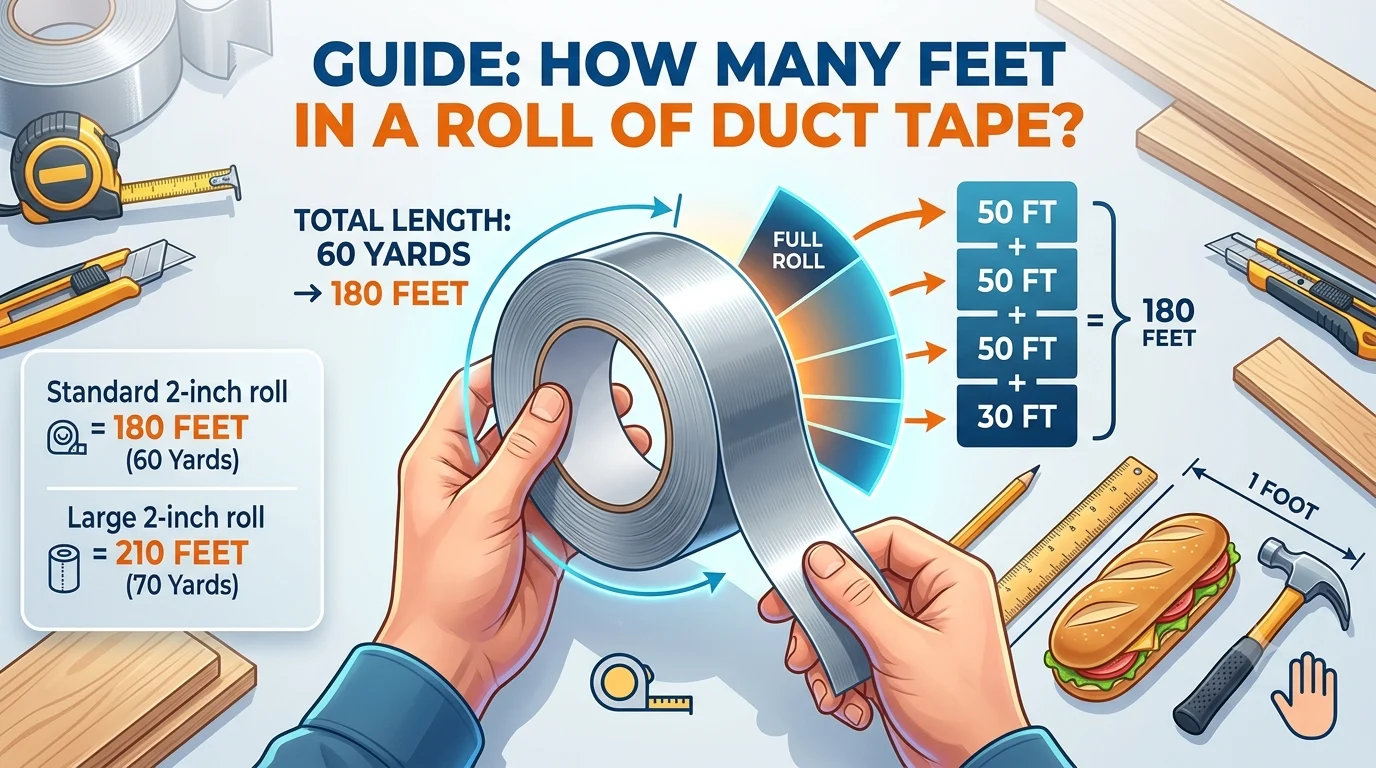
A typical household duct tape roll often contains 50 feet of tape. However, many professional-grade rolls contain 60 yards, which equals 180 feet.
How Many Feet Are in a Standard Roll of Duct Tape?
A standard duct tape roll usually contains between 50 and 60 feet of tape.
For everyday home use, a 50-foot roll is often enough for:
- Fixing small tears
- Temporary repairs
- Securing loose items
- Sealing boxes
- Craft projects
If you regularly use duct tape for maintenance or construction, a longer roll is usually more economical.
For example:
- A 50-foot roll gives you about 50 feet of usable tape.
- A 60-yard roll gives you 180 feet of tape.
- A 100-foot roll provides twice the length of many basic rolls.
The best choice depends on how often you use duct tape and how large your projects are.
Understanding Duct Tape Measurements: Feet vs Yards
One reason people get confused about duct tape length is that some manufacturers measure tape in feet while others use yards.
The conversion is simple:
1 yard = 3 feet
Examples:
- 10 yards of duct tape = 30 feet
- 20 yards of duct tape = 60 feet
- 50 yards of duct tape = 150 feet
- 60 yards of duct tape = 180 feet
If a duct tape package says it contains 60 yards, it actually has 180 feet of tape.
This measurement difference is important when comparing products because a roll labeled “60 yards” may appear smaller but contains much more tape than a 50-foot roll.
Common Duct Tape Roll Sizes Compared
Different projects require different amounts of tape. Choosing the right roll size can prevent buying too little or spending extra money on unnecessary tape.
| Roll Length | Best For | Approximate Projects |
|---|---|---|
| 30 feet | Occasional use | Small fixes |
| 50 feet | Homeowners | General repairs |
| 100 feet | Regular users | Multiple projects |
| 180 feet | Professionals | Construction and maintenance |
| 300+ feet | Businesses | Large-scale applications |
A homeowner who only uses duct tape occasionally may never need a 300-foot roll. However, contractors and repair professionals often choose larger rolls because they reduce replacement costs.
How Long Does a Roll of Duct Tape Last?
The lifespan of a duct tape roll depends on how frequently you use it and how much tape each project requires.
For example:
A 50-foot roll can last:
- Several months for occasional household repairs
- A few weeks for frequent DIY work
- Only a few days on a large construction project
Storage conditions also affect duct tape quality. Heat, moisture, and direct sunlight can reduce adhesive performance over time.
To extend the life of your duct tape:
- Store it in a cool, dry place.
- Keep it away from direct sunlight.
- Avoid exposing it to extreme temperatures.
- Keep the roll covered when not in use.
How Much Area Can a Roll of Duct Tape Cover?
The coverage area depends on both the length and width of the tape.
Most duct tape rolls are:
- 1.88 inches wide
- 2 inches wide
- 3 inches wide
A wider tape roll covers more surface area with fewer strips.
For example:
A 50-foot roll of 2-inch duct tape provides:
- 600 square inches of tape coverage approximately.
Calculation:
50 feet × 12 inches = 600 inches of length
600 inches × 2 inches width = 1,200 square inches
This measurement helps estimate how much tape you need for larger projects.
How Many Feet of Duct Tape Do You Need for Common Projects?
The amount of duct tape required depends on the task.
Small Household Repairs
Examples:
- Repairing a torn item
- Holding broken plastic temporarily
- Sealing small gaps
Usually requires:
1–10 feet of tape
A standard 50-foot roll can handle many small repairs.
Moving and Packing
When sealing boxes, you may use:
5–15 feet per box
The number depends on box size and how many times you reinforce the package.
Outdoor Repairs
Outdoor projects may require:
10–50 feet or more
Examples include:
- Temporary equipment repairs
- Covering damaged surfaces
- Securing outdoor materials
Construction Projects
Professional jobs may require:
Hundreds of feet of duct tape
Large rolls are preferred because workers need continuous supply without frequently replacing rolls.
Factors That Affect Duct Tape Length
When buying duct tape, length is not the only factor to consider.
1. Tape Width
A wider roll covers more area but may cost more.
Common widths include:
- 1 inch
- 1.88 inches
- 2 inches
- 3 inches
2. Tape Thickness
Thicker duct tape is usually stronger and more durable but may contain fewer feet per roll.
3. Brand and Quality
Different brands offer different roll sizes. Premium duct tapes may cost more but provide stronger adhesion and longer-lasting repairs.
4. Intended Use
Heavy-duty construction tape and general-purpose household tape are designed differently.
Choose:
- Standard tape for basic repairs.
- Heavy-duty tape for outdoor or industrial applications.
How to Calculate How Much Duct Tape You Need
To estimate your tape requirements:
- Measure the area you need to cover.
- Determine the tape width.
- Calculate the total length required.
- Add extra tape for overlap and mistakes.
For example:
If you need to cover a 10-foot-long area with 2-inch tape, you may need slightly more than 10 feet because overlapping layers improve strength.
Adding 10–20% extra tape is a good safety margin.
Common Mistakes When Buying Duct Tape
Many people buy duct tape without checking the roll size. This can lead to problems.
Mistake 1: Assuming Every Roll Has the Same Length
Not all duct tape rolls contain the same number of feet. Always check the packaging.
Mistake 2: Confusing Feet and Yards
A roll labeled in yards may contain much more tape than one labeled in feet.
Remember:
60 yards = 180 feet
Mistake 3: Choosing Cheap Tape for Important Repairs
Low-quality duct tape may lose adhesion quickly.
For important repairs, choose a reliable heavy-duty option.
Mistake 4: Ignoring Tape Width
A narrow roll may require more layers to complete a job.
Tips for Choosing the Right Duct Tape Roll
Before buying duct tape, consider these factors:
- Project size: Larger projects need longer rolls.
- Surface type: Some tapes stick better to certain materials.
- Indoor or outdoor use: Outdoor projects require weather-resistant tape.
- Frequency of use: Regular users benefit from bulk rolls.
- Strength requirements: Heavy-duty tape is better for demanding repairs.
Buying the correct roll size saves both time and money.
Frequently Asked Questions About How Many Feet in a Roll of Duct Tape
How many feet are usually in a roll of duct tape?
A typical roll of duct tape contains about 50 to 60 feet, but larger professional rolls can contain 100 feet, 180 feet, or more.
Is a 60-yard duct tape roll the same as 60 feet?
No. A 60-yard roll contains 180 feet because one yard equals three feet.
How many feet are in a small duct tape roll?
Small duct tape rolls usually contain around 30 to 50 feet of tape.
How many feet of duct tape do I need for home repairs?
For most household repairs, a 50-foot roll is enough. Larger projects may require 100 feet or more.
Does duct tape expire?
Duct tape does not have a strict expiration date, but its adhesive can weaken over time, especially if stored in heat or moisture.
Conclusion
Knowing how many feet in a roll of duct tape helps you choose the right product for your repair, construction, or DIY project. While many standard rolls contain around 50 feet, duct tape lengths can range from small 30-foot rolls to large industrial rolls exceeding 300 feet.
Before purchasing, always check the roll length, tape width, quality, and intended use. A small household repair may only need a basic 50-foot roll, while professional projects benefit from longer 100-foot or 180-foot options.
Understanding duct tape measurements makes planning easier, reduces waste, and ensures you always have enough tape when you need it.