

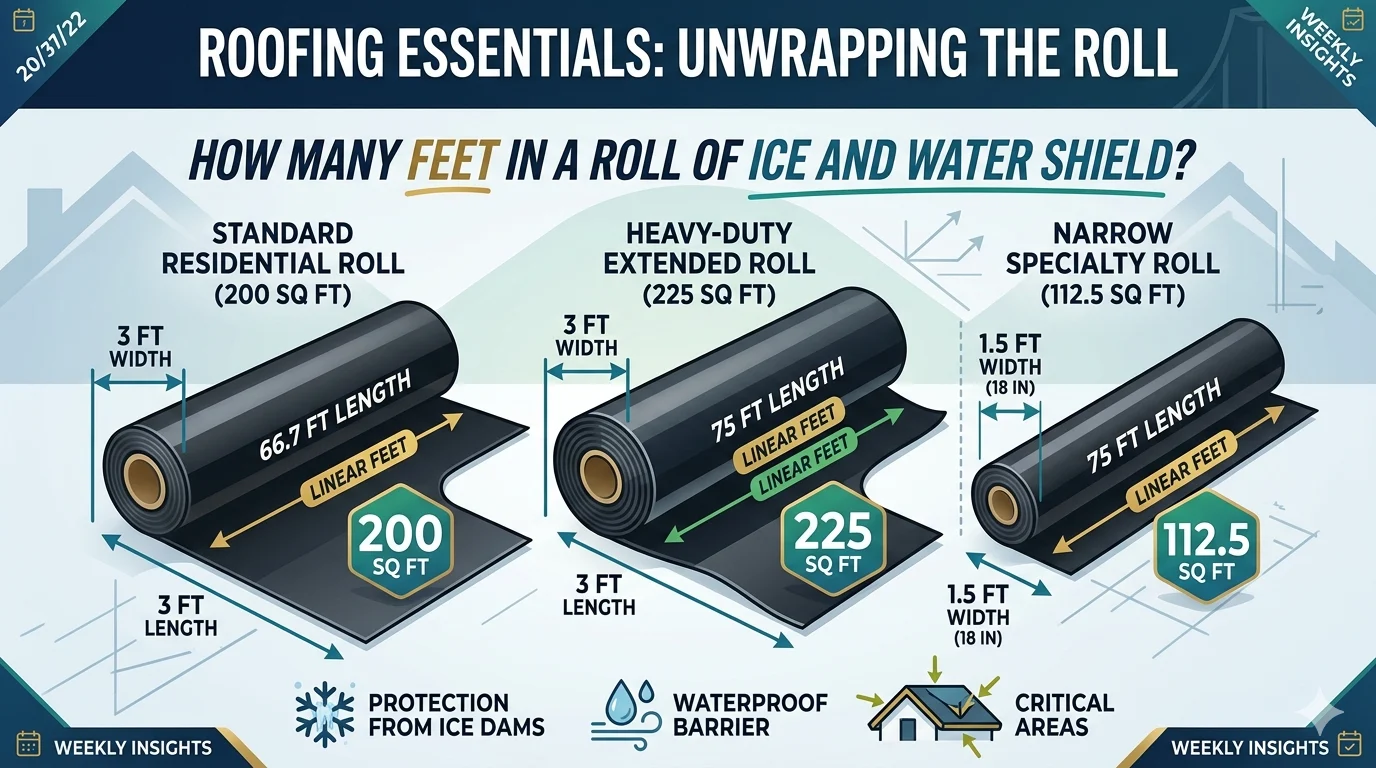
When planning a roofing project, one of the most common questions homeowners and contractors ask is: how many feet in a roll of ice and water shield? Knowing the answer helps you estimate costs, avoid material shortages, and complete installation correctly.
Ice and water shield is a waterproof roofing membrane designed to protect roofs from leaks caused by ice dams, heavy rain, snow, and wind-driven moisture. Since it comes in rolls, understanding the roll dimensions and coverage is essential before starting any roofing work.
Most rolls are sold by square footage, but many people also want to know the linear feet included in a roll. The exact amount depends on the manufacturer and product type. In this guide, you will learn the standard roll sizes, how coverage is measured, how to calculate your roofing needs, and what factors affect installation.
What Is Ice and Water Shield?
Ice and water shield is a self-adhesive roofing underlayment installed beneath shingles or other roofing materials. It creates a waterproof barrier that seals around nails and helps prevent leaks.
Unlike traditional felt underlayment, this membrane sticks directly to the roof deck. That strong bond provides extra protection in areas exposed to severe weather.
Definition and Purpose
The main purpose of ice and water shield is to stop water from entering the roof structure. It is especially useful in cold climates where ice dams form along roof edges.
Common functions include:
- Preventing water infiltration
- Protecting roof decking
- Sealing around fasteners
- Reducing moisture damage
- Extending roof lifespan
Where It Is Used on a Roof
Roofers typically install ice and water shield in vulnerable areas such as:
- Roof eaves
- Valleys
- Around chimneys
- Around skylights
- Roof penetrations
- Low-slope roof sections
Building codes in colder regions often require it near the roof edge.
Standard Roll Sizes of Ice and Water Shield
The size of an ice and water shield roll can vary by manufacturer, but several standard dimensions are commonly used across the roofing industry.
Typical Roll Dimensions
Most rolls are approximately:
| Roll Width | Roll Length | Approximate Coverage |
|---|---|---|
| 3 feet | 65–75 feet | 195–225 sq ft |
| 3 feet | 66.7 feet | 200 sq ft |
| 3 feet | 75 feet | 225 sq ft |
The most common width is 3 feet because it fits standard roofing installation practices.
Common Widths and Lengths
Many manufacturers produce rolls with these measurements:
- 36 inches wide × 66.7 feet long
- 36 inches wide × 75 feet long
- 18 inches wide for specialty areas
- Wider commercial roofing rolls for flat roofs
The width is usually measured in inches, while the length is measured in feet.
Square Foot Coverage Explained
Coverage is calculated by multiplying width by length.
For example:
- A 3-foot-wide roll × 66.7 feet long = about 200 square feet
- A 3-foot-wide roll × 75 feet long = 225 square feet
This is why roofing products are often marketed by total square footage rather than just linear feet.
How Many Feet in a Roll of Ice and Water Shield?
The answer depends on the specific roll size. However, most residential roofing rolls contain between 65 and 75 linear feet.
The most common roll lengths are:
- 66.7 feet
- 70 feet
- 75 feet
A standard residential roll usually covers around 200 square feet.
Most Common Roll Lengths
Here are the most typical measurements found in roofing supply stores:
| Product Type | Linear Feet | Width | Total Coverage |
|---|---|---|---|
| Standard Residential Roll | 66.7 ft | 3 ft | 200 sq ft |
| Heavy-Duty Roll | 75 ft | 3 ft | 225 sq ft |
| Compact Roll | 65 ft | 3 ft | 195 sq ft |
If someone asks how many feet are in a roll of ice and water shield, they are usually referring to the linear length of the roll.
Coverage Examples
Here are practical examples:
- One 75-foot roll can cover a long roof valley or eave section.
- Two 200-square-foot rolls can protect many residential roof edges.
- Larger homes may require multiple rolls depending on roof complexity.
Manufacturer Variations
Different brands produce slightly different roll dimensions. Always check the packaging label before purchasing.
Factors that affect roll size include:
- Membrane thickness
- Material weight
- Intended climate use
- Commercial vs residential applications
Some premium products are thicker and shorter because they contain more material.
Ice and Water Shield Roll Size Comparison Table
Below is a simple comparison of common roofing membrane roll sizes.
| Roll Type | Width | Length | Coverage |
|---|---|---|---|
| Standard Roll | 36 in | 66.7 ft | 200 sq ft |
| Extended Roll | 36 in | 75 ft | 225 sq ft |
| Narrow Roll | 18 in | 75 ft | 112.5 sq ft |
| Commercial Roll | 39 in | 61.5 ft | 200 sq ft |
This table helps homeowners compare roofing underlayment coverage more easily.
How to Calculate Roofing Coverage
Buying the correct amount of material is critical for avoiding delays and waste.
Step-by-Step Formula
Use this simple formula:
Roof area ÷ roll coverage = number of rolls needed
For example:
- Roof section = 600 sq ft
- Roll coverage = 200 sq ft
600 ÷ 200 = 3 rolls needed
Measuring Roof Areas
Measure the length and width of each roof section.
Then:
- Multiply length × width
- Add all roof sections together
- Include valleys and overhangs
- Add extra material for overlaps
Accurate measurements reduce waste and improve installation efficiency.
Waste Factor Considerations
Roofers typically add 10% to 15% extra material because of:
- Roof angles
- Valleys
- Cutting waste
- Overlapping seams
- Complex roof shapes
For example:
- Required area = 600 sq ft
- Add 10% waste = 660 sq ft total
You would then purchase enough rolls to cover the adjusted area.
Where Ice and Water Shield Should Be Installed
Not every part of a roof requires full membrane coverage. However, some areas are highly vulnerable to leaks.
Roof Eaves
Eaves are the most common installation area because melting snow can refreeze there and create ice dams.
The membrane protects the roof deck from trapped water.
Valleys
Roof valleys collect heavy water runoff during storms. These areas are prone to leaks if left unprotected.
Most contractors install a full-width ice and water shield layer in valleys.
Around Chimneys and Skylights
Roof penetrations are major leak points. Installing waterproof roofing membrane around them creates additional protection.
Low-Slope Roof Areas
Roofs with lower slopes drain water more slowly. This increases the risk of standing water and moisture intrusion.
Ice and water shield helps prevent water penetration in these sections.
Benefits of Using Ice and Water Shield
Although it costs more than basic felt underlayment, it offers several major advantages.
Leak Prevention
The self-sealing membrane blocks water from entering around nails and fasteners.
This greatly reduces roof leaks.
Weather Resistance
Ice and water shield performs well against:
- Heavy rain
- Snow
- Ice dams
- Wind-driven moisture
- Freeze-thaw cycles
Long-Term Roof Protection
The membrane helps extend roof life by protecting wooden decking from moisture damage and rot.
It also reduces expensive repair costs later.
Common Mistakes When Buying Rolls
Many homeowners make simple purchasing mistakes that lead to wasted money or installation problems.
Confusing Linear Feet With Square Feet
A roll may be 75 feet long, but coverage depends on width too.
For example:
- 75 linear feet × 3 feet wide = 225 square feet
Always check both dimensions.
Ignoring Roof Pitch
Steeper roofs often require more material because the actual surface area increases.
Flat measurements alone may not be accurate.
Buying Too Little Material
Underestimating roofing coverage can delay the project and increase labor costs.
It is usually better to buy slightly extra material.
Tips for Choosing the Right Ice and Water Shield
Not all roofing membranes are the same. Choosing the right one depends on climate, roof type, and budget.
Climate Considerations
Cold regions require stronger protection against ice dams.
Hot climates may need heat-resistant membranes that perform well under high temperatures.
Material Thickness
Thicker membranes generally provide:
- Better durability
- Stronger waterproofing
- Improved puncture resistance
However, they may cost more.
Brand Quality
Trusted roofing brands often provide:
- Better adhesive performance
- Longer warranties
- Easier installation
- Higher weather resistance
Reading product specifications carefully helps ensure good results.
FAQs
How many square feet are in a roll of ice and water shield?
Most standard residential rolls cover around 200 square feet, although some larger rolls cover up to 225 square feet.
What is the standard size of an ice and water shield roll?
The most common size is 36 inches wide by approximately 66.7 feet long.
How many linear feet are in a typical roll?
Most rolls contain between 65 and 75 linear feet depending on the manufacturer.
Do I need ice and water shield on the entire roof?
Not always. It is usually installed on eaves, valleys, and vulnerable roof areas. Some climates or building codes may require wider coverage.
How do I calculate how many rolls I need?
Measure the roof area in square feet, divide by the coverage per roll, and add 10% to 15% extra for waste and overlaps.
Conclusion
Understanding how many feet in a roll of ice and water shield is important for any roofing project. Most standard rolls contain between 65 and 75 linear feet and cover approximately 200 to 225 square feet depending on width and product type.
Before purchasing materials, always check the manufacturer specifications, calculate your roof area carefully, and include extra coverage for overlaps and waste. Proper planning helps prevent shortages, improves installation efficiency, and protects your roof from costly water damage.
Whether you are a homeowner handling a DIY project or a professional roofer estimating materials, knowing the correct ice and water shield roll dimensions ensures better results and long-lasting roof protection.