

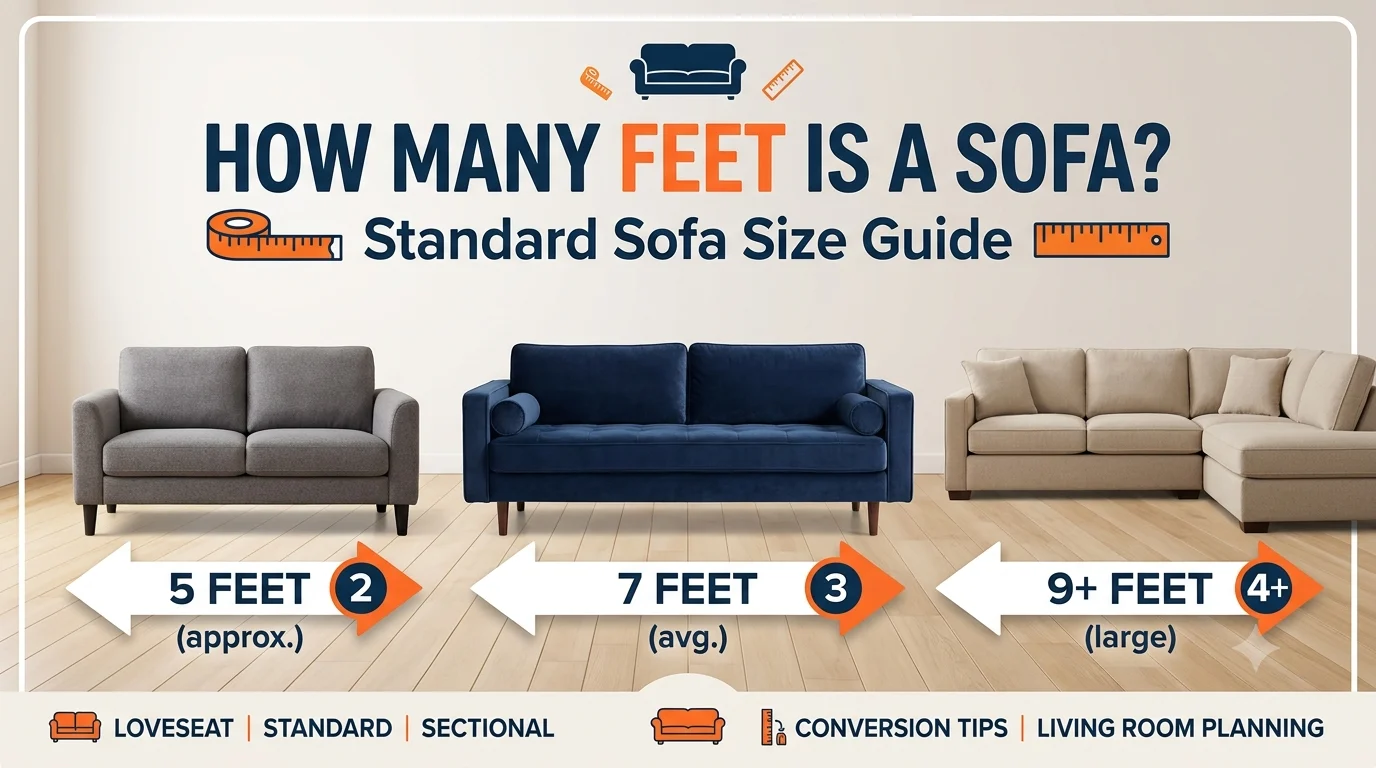
When planning a living room, shopping for furniture, or measuring a space for a new couch, one common question arises: how many feet is a sofa? While there is no single answer that applies to every sofa, most standard sofas measure between 6 and 8 feet long. The exact size depends on the style, design, and seating capacity.
Knowing standard sofa dimensions can help you choose furniture that fits comfortably in your room while providing enough seating for family members and guests. Whether you’re furnishing a new home, upgrading your current furniture, or simply curious about sofa measurements, understanding common sofa sizes is essential.
This guide covers average sofa lengths, standard dimensions, measurement methods, room-planning tips, and everything else you need to know about sofa sizing.
Understanding Standard Sofa Dimensions
Furniture manufacturers typically describe sofa dimensions using three key measurements:
- Length (width)
- Depth
- Height
When people ask, “How many feet is a sofa?” they are usually referring to its overall length from one armrest to the other.
The average sofa dimensions are:
| Measurement | Typical Range |
|---|---|
| Length | 6–8 feet |
| Depth | 2.5–3.5 feet |
| Height | 2.5–3 feet |
These measurements may vary depending on the sofa style, but they represent the most common dimensions available in furniture stores today.
How Many Feet Is a Sofa on Average?
The average sofa length is approximately 7 feet, which equals about 84 inches. However, sofas come in several categories, each with different dimensions.
Small Sofas
Small sofas are designed for apartments, condos, offices, and compact living rooms.
Typical size:
- 5 to 6 feet long
- 60 to 72 inches
These sofas generally accommodate two people comfortably and are ideal for spaces where every square foot matters.
Standard Sofas
Standard sofas are the most common choice for homeowners.
Typical size:
- 6.5 to 7.5 feet long
- 78 to 90 inches
These sofas usually seat three adults and fit well in most living rooms.
Large Sofas
Large sofas provide additional seating and often create a luxurious appearance.
Typical size:
- 8 to 9 feet long
- 96 to 108 inches
They work best in spacious homes and open-concept floor plans.
Sectional Sofas
Sectionals vary significantly in size because they come in different configurations.
Typical size:
- 8 to 14 feet across sections
Some custom sectionals can exceed 15 feet, making them suitable for large entertainment spaces and family rooms.
Sofa Length Comparison Chart
The following chart provides a quick comparison of common sofa sizes.
| Sofa Type | Length (Feet) | Length (Inches) |
|---|---|---|
| Loveseat | 4–5 feet | 48–60 inches |
| Small Sofa | 5–6 feet | 60–72 inches |
| Standard Sofa | 6.5–7.5 feet | 78–90 inches |
| Large Sofa | 8–9 feet | 96–108 inches |
| Sectional Sofa | 8–14 feet | 96–168 inches |
For most households, a standard 7-foot sofa offers the best balance of seating capacity and space efficiency.
Why Sofa Size Matters
Selecting the correct sofa size affects both comfort and room functionality.
A properly sized sofa can:
- Improve room flow
- Enhance visual balance
- Provide adequate seating
- Prevent overcrowding
- Make the room feel more spacious
On the other hand, choosing a sofa that is too large can make a room feel cramped. A sofa that is too small may look out of place and fail to provide enough seating.
Proper planning ensures that your furniture complements your space instead of overwhelming it.
Typical Sofa Sizes by Seating Capacity
Another useful way to estimate sofa dimensions is by looking at seating capacity.
Two-Seater Sofa
Also known as a loveseat, a two-seater sofa is one of the most compact options.
Typical size:
- 4 to 6 feet long
Best for:
- Apartments
- Bedrooms
- Small offices
- Reading corners
Three-Seater Sofa
The three-seater is the most popular sofa style.
Typical size:
- 6 to 8 feet long
Best for:
- Families
- Standard living rooms
- Everyday use
Four-Seater Sofa
Four-seater sofas offer additional seating and a more substantial appearance.
Typical size:
- 8 to 10 feet long
Best for:
- Large households
- Entertainment rooms
- Open-concept spaces
How to Measure a Sofa Correctly
Before purchasing a sofa, it’s important to understand how furniture dimensions are measured.
Measuring Length
Measure from the outer edge of one armrest to the outer edge of the other armrest.
For example:
- 72 inches = 6 feet
- 84 inches = 7 feet
- 96 inches = 8 feet
This measurement determines whether the sofa will fit your room layout.
Measuring Depth
Depth is measured from the front edge of the seat to the back of the sofa.
Typical depth:
- 30 to 42 inches
Deeper sofas provide more lounging comfort, while shallower sofas offer better posture support.
Measuring Height
Height is measured from the floor to the highest point of the backrest.
Typical height:
- 30 to 40 inches
This measurement can influence how open or enclosed a room feels.
Common Sofa Styles and Their Dimensions
Different sofa styles often have different dimensions.
Traditional Sofas
Traditional sofas usually measure:
- 7 to 8 feet long
They feature rolled arms, plush cushions, and classic designs.
Modern Sofas
Modern sofas often have slim arms and streamlined silhouettes.
Typical length:
- 6 to 7 feet
Their compact design makes them suitable for smaller rooms.
Sleeper Sofas
Sleeper sofas contain a hidden mattress and tend to be slightly larger.
Typical size:
- 7 to 8 feet long
They are ideal for guest rooms and multipurpose spaces.
Reclining Sofas
Reclining sofas require extra space when fully extended.
Typical size:
- 7 to 9 feet long
They offer superior comfort but need additional clearance.
Choosing the Right Sofa Size for Your Room
Selecting the correct sofa involves more than measuring available wall space.
Consider Room Size
Small rooms generally benefit from sofas under 7 feet long.
Large rooms can comfortably accommodate sofas measuring 8 feet or more.
Leave Adequate Walking Space
Interior designers typically recommend:
- 18 inches between a sofa and a coffee table
- 30 to 36 inches for walking paths
These clearances improve comfort and accessibility.
Balance Other Furniture
Think about how the sofa will fit alongside:
- Coffee tables
- Side tables
- Entertainment centers
- Accent chairs
- Storage furniture
A balanced room feels more inviting and functional.
Check Entry Points
Many buyers forget to measure:
- Doorways
- Hallways
- Staircases
- Elevators
Always confirm that the sofa can be delivered into your home before purchasing.
Real-World Examples of Sofa Sizes
To better understand sofa dimensions, consider these practical examples.
Studio Apartment
A studio apartment may use a sofa measuring:
- 5.5 feet long
This size provides comfortable seating without consuming excessive floor space.
Average Living Room
Most living rooms can accommodate a sofa measuring:
- 7 feet long
This is the most common size found in homes.
Large Family Room
A spacious family room may include:
- An 8-foot sofa
- A sectional measuring 12 feet or more
These larger options maximize seating capacity.
Common Mistakes When Buying a Sofa
Avoiding common mistakes can save both time and money.
Ignoring Measurements
Never assume a sofa will fit based on photos alone.
Always verify dimensions.
Forgetting Delivery Access
A sofa may fit the room but not fit through the front door.
Measure all access points beforehand.
Prioritizing Appearance Over Comfort
Style matters, but comfort is equally important.
Test seat depth, back support, and cushion firmness whenever possible.
Choosing an Oversized Sofa
A sofa that dominates the room can make the space feel cramped and uncomfortable.
Balance size with functionality.
Expert Tips for Sofa Shopping
Professionals often recommend the following strategies.
Use Painter’s Tape
Outline the sofa dimensions on the floor using painter’s tape.
This gives a realistic preview of how much space the sofa will occupy.
Think About Future Needs
Consider:
- Growing families
- Frequent guests
- Future home renovations
A sofa is a long-term investment.
Match the Sofa to Your Lifestyle
Families with children may prioritize durability.
Those who entertain often may prefer larger seating arrangements.
Focus on Proportion
The best sofa is not necessarily the largest one.
A well-proportioned sofa improves both comfort and aesthetics.
Frequently Asked Questions
Is a sofa usually 6 feet or 8 feet?
Most sofas range from 6 to 8 feet long, with approximately 7 feet being the average.
How many feet long is a three-seater sofa?
A typical three-seater sofa measures between 6 and 8 feet in length.
What is the average size of a living room sofa?
The average living room sofa is about 7 feet long, 3 feet deep, and 3 feet high.
How do I know if a sofa will fit my room?
Measure your room, leave space for walking paths, and compare those dimensions with the sofa’s specifications.
What is the difference between a loveseat and a sofa?
A loveseat usually seats two people and measures 4 to 5 feet long, while a standard sofa seats three or more people and typically measures 6 to 8 feet long.
Conclusion
If you’re wondering how many feet is a sofa, the answer depends on the type and design. Most standard sofas measure between 6 and 8 feet long, with the average sofa being approximately 7 feet in length. Smaller loveseats may be as short as 4 feet, while large sectionals can exceed 12 feet.
Understanding sofa dimensions is essential when planning a room layout, buying new furniture, or moving into a new home. By measuring your space carefully, considering seating needs, and comparing standard sofa sizes, you can choose a sofa that delivers both comfort and functionality for years to come.