

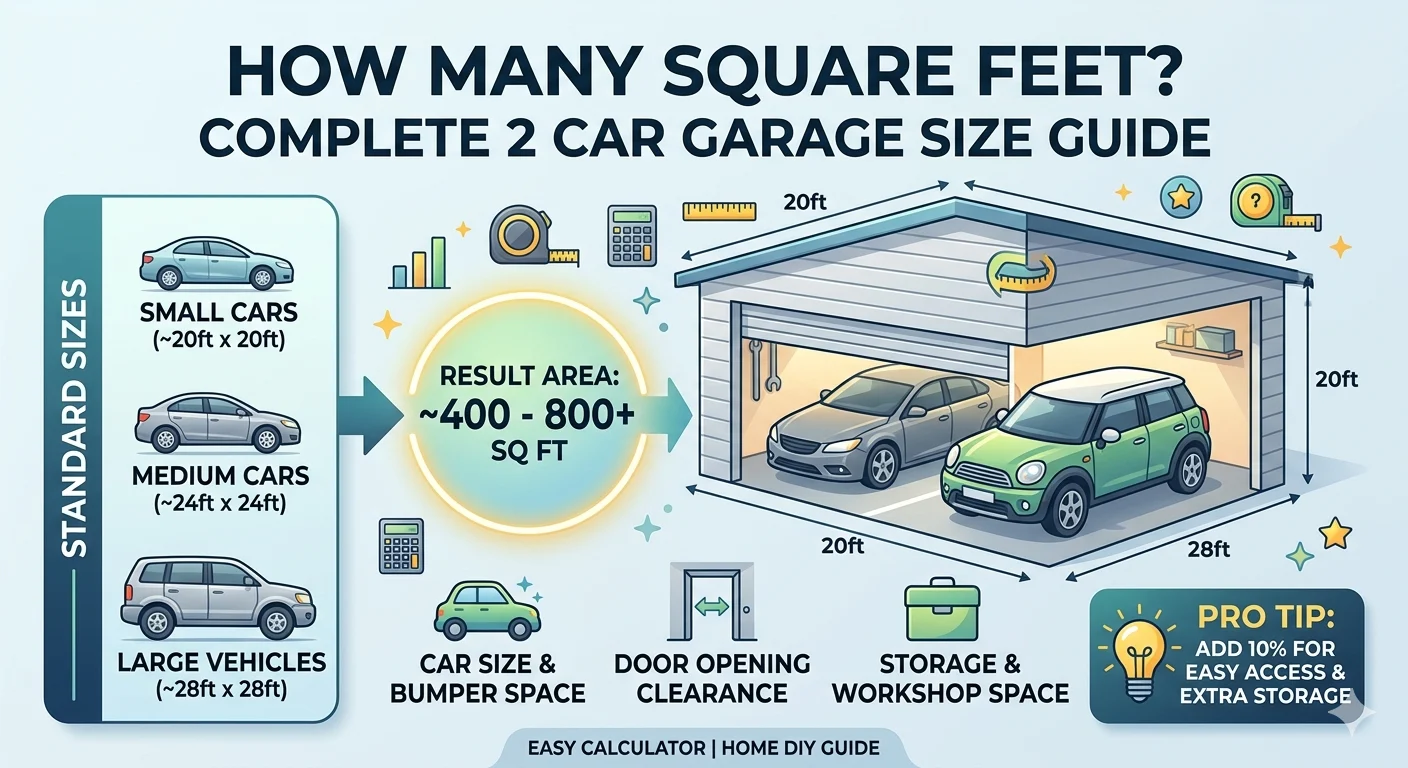
When planning a new garage, renovating an existing one, or buying a home, many people ask the same question: 2 car garage how many square feet do I need? The answer depends on several factors, including the size of your vehicles, storage requirements, and how you intend to use the space.
A two-car garage is one of the most popular garage configurations because it provides enough room for two vehicles while still offering space for storage and other household needs. However, not all two-car garages are the same size. Some are designed only for parking, while others include room for workbenches, tools, bicycles, and outdoor equipment.
This guide explains standard dimensions, square footage ranges, planning considerations, and practical tips to help you determine the ideal garage size for your needs.
What Is a 2 Car Garage?
A 2-car garage is designed to accommodate two vehicles parked side by side. It may have one large garage door or two separate doors, depending on the design.
While the term “2-car garage” sounds straightforward, the actual dimensions can vary significantly. Some garages provide only enough room for two compact cars, while others offer extra space for storage, workshops, or recreational equipment.
Because of these differences, the square footage of a two-car garage can range from approximately 360 square feet to more than 700 square feet.
Standard 2 Car Garage Dimensions
Most builders use common dimensions when constructing a two-car garage. These dimensions provide a good balance between vehicle storage and usable space.
Common Garage Sizes
| Garage Dimensions | Square Feet |
|---|---|
| 18 ft × 20 ft | 360 sq ft |
| 20 ft × 20 ft | 400 sq ft |
| 20 ft × 22 ft | 440 sq ft |
| 22 ft × 22 ft | 484 sq ft |
| 24 ft × 24 ft | 576 sq ft |
| 24 ft × 30 ft | 720 sq ft |
Among these options, the most common residential two-car garage size is between 400 and 576 square feet.
How Many Square Feet Is a Typical 2 Car Garage?
A typical two-car garage usually measures between 400 and 600 square feet.
The average homeowner chooses a garage size within this range because it provides:
- Space for two vehicles
- Comfortable door clearance
- Room for basic storage
- Better maneuverability
A 20×20 garage offers the minimum practical space for two cars, while a 24×24 garage provides a more comfortable experience for larger vehicles and additional storage needs.
Minimum Size for a 2 Car Garage
The smallest practical size for a two-car garage is generally considered to be 20 feet by 20 feet, which equals 400 square feet.
Some builders may construct garages as small as 18×20 feet, but these often create challenges such as:
- Limited walking space
- Tight parking conditions
- Difficulty opening vehicle doors
- Lack of storage space
For homeowners who drive compact vehicles and have limited lot space, a smaller garage may be sufficient. However, most experts recommend building slightly larger whenever possible.
Recommended Size for Modern Vehicles
Vehicle dimensions have increased over the years. Many families now own SUVs, crossovers, or pickup trucks that require more room than traditional sedans.
Recommended Garage Sizes by Vehicle Type
| Vehicle Type | Recommended Garage Size |
|---|---|
| Compact Cars | 20×20 ft |
| Sedans | 20×22 ft |
| Small SUVs | 22×22 ft |
| Large SUVs | 24×24 ft |
| Pickup Trucks | 24×24 ft or larger |
If your household owns larger vehicles, investing in additional square footage can greatly improve convenience and accessibility.
Why Garage Square Footage Matters
Many homeowners focus only on whether two vehicles can physically fit inside the garage. However, square footage impacts much more than parking.
Easier Vehicle Access
Additional space allows drivers and passengers to open doors comfortably without worrying about hitting walls or neighboring vehicles.
Better Storage Capacity
A larger garage provides room for:
- Shelving units
- Tool cabinets
- Lawn equipment
- Seasonal decorations
- Sports gear
- Bicycles
Increased Home Value
Buyers often view spacious garages as a valuable feature, especially in areas where storage space is limited.
Future Flexibility
A larger garage can adapt to changing needs, such as owning larger vehicles or creating a workshop area.
Can Two SUVs Fit in a Standard 2 Car Garage?
Yes, two SUVs can fit inside many standard two-car garages, but comfort levels vary.
In a 20×20 garage, two SUVs may fit, but there will be limited room for movement.
A 22×22 or 24×24 garage offers several advantages:
- Easier parking
- More door-opening clearance
- Extra storage space
- Better accessibility
For families with larger vehicles, choosing a garage larger than the minimum size is usually worthwhile.
Storage Space Considerations
One of the biggest mistakes homeowners make is underestimating their storage needs.
Most garages eventually become home to:
- Garden tools
- Lawn mowers
- Power equipment
- Camping gear
- Sports equipment
- Holiday decorations
- Household overflow storage
Even a few additional feet can significantly increase storage capacity.
For example:
- 20×20 garage = 400 square feet
- 24×24 garage = 576 square feet
The larger option provides 176 extra square feet, which is nearly the size of a small bedroom.
Popular 2 Car Garage Layouts
Basic Parking Layout
This layout focuses primarily on vehicle storage.
Benefits include:
- Lower construction cost
- Simpler design
- Efficient use of space
Storage-Oriented Layout
This design incorporates storage along one or more walls.
Features often include:
- Shelving systems
- Cabinets
- Tool storage
Workshop Layout
Many homeowners dedicate part of the garage to hobbies or projects.
Common additions include:
- Workbenches
- Tool stations
- Utility sinks
- Electrical outlets
A workshop layout generally requires a larger garage of at least 500–600 square feet.
Construction Costs Based on Garage Size
Construction costs vary depending on location, materials, labor rates, and finishes.
Estimated Cost Ranges
| Garage Size | Approximate Cost |
|---|---|
| 400 sq ft | $12,000–$24,000 |
| 484 sq ft | $15,000–$30,000 |
| 576 sq ft | $18,000–$40,000+ |
| 720 sq ft | $25,000–$50,000+ |
Factors that can increase costs include:
- Insulation
- Electrical systems
- Plumbing
- Heating and cooling
- Premium garage doors
- Finished interiors
Expert Tips for Choosing the Right Garage Size
Think Long-Term
Choose a garage size that accommodates future vehicle purchases rather than only your current vehicles.
Prioritize Storage
Storage needs almost always grow over time. Extra space now can prevent costly expansions later.
Consider Ceiling Height
Higher ceilings allow:
- Overhead storage racks
- Vehicle lifts
- Better ventilation
Plan Electrical Access
Install sufficient outlets for:
- Power tools
- Battery chargers
- Electric vehicles
Maximize Organization
Built-in shelving and storage systems help make better use of available square footage.
Common Mistakes to Avoid
Choosing the Minimum Size
While smaller garages cost less initially, they often become inconvenient over time.
Ignoring Storage Needs
Many homeowners forget to account for non-vehicle items.
Overlooking Vehicle Growth
Future vehicles may be larger than current ones.
Poor Layout Planning
A poorly designed garage can waste valuable space even if the square footage is adequate.
Not Considering Resale Value
A larger, well-designed garage can be a strong selling point when listing a home.
Is a Larger Garage Worth the Investment?
For many homeowners, the answer is yes.
Benefits of a larger garage include:
- More comfortable parking
- Better organization
- Increased storage
- Higher property value
- Greater flexibility
Although construction costs rise with square footage, the long-term advantages often justify the additional investment.
Conclusion
If you’re wondering “2 car garage how many square feet?”, the typical answer is between 400 and 600 square feet, with larger garages reaching 700 square feet or more. While a 20×20 garage may be sufficient for basic parking needs, many homeowners prefer a 22×22 or 24×24 garage for greater comfort and storage capacity.
The ideal garage size depends on your vehicles, storage requirements, budget, and future plans. By carefully considering these factors before construction, you can create a garage that remains functional, organized, and valuable for years to come.