

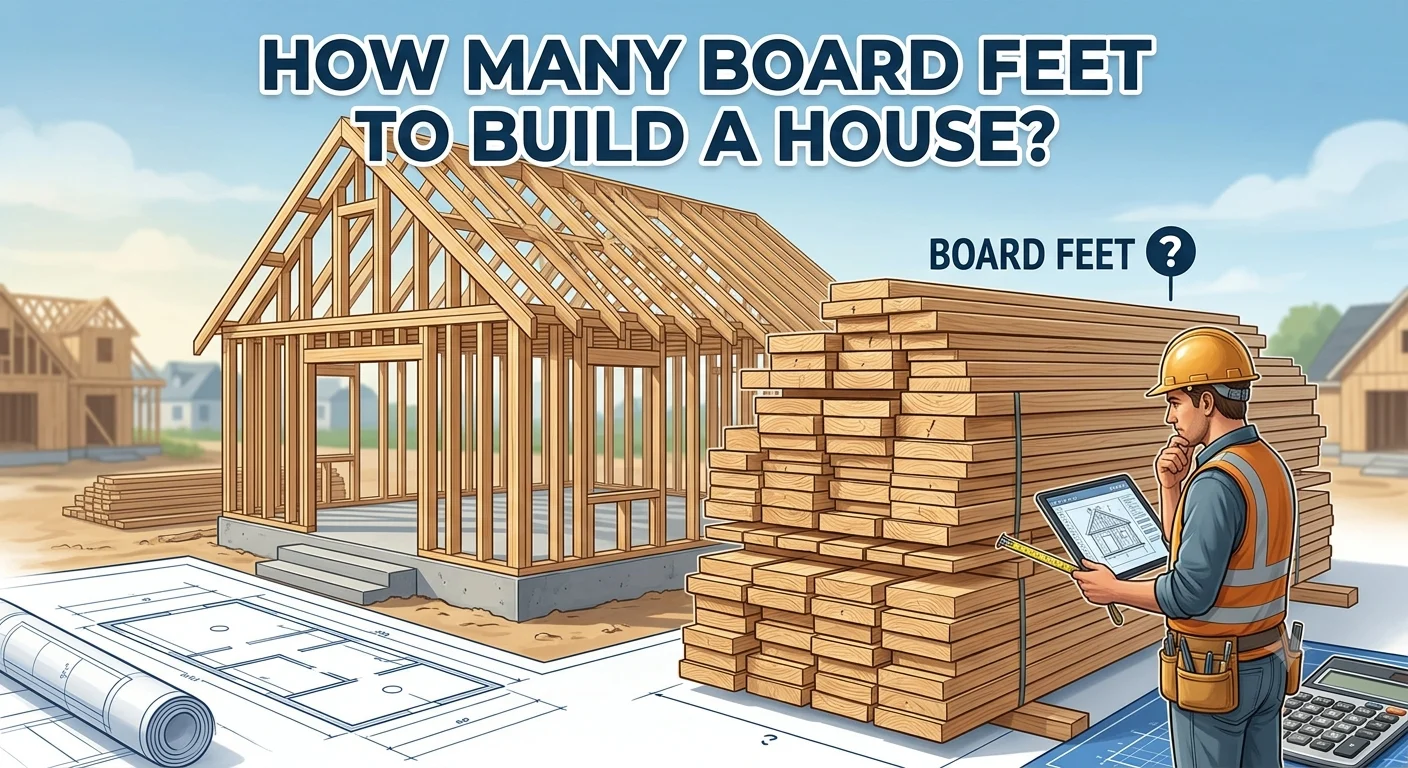
Building a house is one of the largest construction projects most people will ever undertake. Whether you’re a homeowner planning a custom build, a contractor preparing estimates, or a DIY enthusiast researching materials, understanding lumber requirements is essential. One of the most common questions asked during the planning stage is: how many board feet to build a house?
The answer depends on several factors, including the size of the home, the number of stories, the complexity of the design, and the type of framing used. While there is no universal number that applies to every house, there are reliable methods for estimating lumber needs and determining the total board feet required for construction.
This guide explains what a board foot is, how it is calculated, average board-foot requirements for different house sizes, and practical tips for making accurate lumber estimates.
What Is a Board Foot?
A board foot is a standard unit of measurement used in the lumber industry. It measures the volume of wood rather than its length.
One board foot equals:
- 1 inch thick
- 12 inches wide
- 12 inches long
This measurement represents 144 cubic inches of wood.
Builders, contractors, and lumber suppliers use board feet to estimate material quantities and pricing. Understanding this unit is important because lumber is often sold and quoted based on board-foot calculations.
Board Foot Formula
The formula for calculating board feet is:
Board Feet = (Thickness × Width × Length) ÷ 144
All measurements should be converted to inches before performing the calculation.
For example, a board measuring 2 inches thick, 6 inches wide, and 10 feet long contains:
(2 × 6 × 120) ÷ 144 = 10 board feet
This simple formula forms the basis of all lumber estimation calculations.
How Many Board Feet to Build a House?
The amount of lumber needed to build a house varies significantly. However, a commonly accepted rule of thumb is that a typical wood-framed house requires between 12 and 18 board feet per square foot of living space.
Using this guideline, you can estimate lumber requirements based on the home’s size.
| House Size | Estimated Board Feet |
|---|---|
| 1,000 sq ft | 12,000–18,000 |
| 1,500 sq ft | 18,000–27,000 |
| 2,000 sq ft | 24,000–36,000 |
| 2,500 sq ft | 30,000–45,000 |
| 3,000 sq ft | 36,000–54,000 |
These estimates apply primarily to conventional wood-framed residential construction and may vary depending on the home’s design and local building requirements.
Factors That Affect Lumber Requirements
Many variables influence the total number of board feet required to build a house.
House Size
The most obvious factor is square footage. Larger homes require more wall framing, roof framing, floor systems, and structural supports.
A 3,000-square-foot home naturally requires significantly more lumber than a 1,200-square-foot home.
Number of Stories
Single-story and two-story homes often use lumber differently.
A two-story home may require:
- Additional floor framing
- Support beams
- Stair framing
- Structural reinforcements
These components increase total board-foot requirements.
Roof Design
Roof complexity has a major impact on lumber usage.
Simple roof styles typically use less lumber than:
- Hip roofs
- Cross-gable roofs
- Roofs with dormers
- Vaulted ceiling structures
The more complex the roof, the greater the lumber demand.
Interior Layout
A home with many bedrooms, bathrooms, and interior partitions requires more framing than an open-concept design.
Additional walls mean:
- More studs
- More headers
- More plates
- More framing lumber overall
Building Codes
Local building codes may require:
- Larger framing members
- Additional bracing
- Wind-resistant construction
- Seismic reinforcement
These requirements can increase lumber quantities.
Waste Allowance
Every construction project produces waste.
Common sources include:
- Cutting scraps
- Damaged boards
- Installation mistakes
- Design modifications
Most builders add 10% to 15% extra lumber to account for waste.
Lumber Usage Throughout the House
To understand why houses require so many board feet, it helps to examine where lumber is used.
Wall Framing
Wall framing typically includes:
- Studs
- Top plates
- Bottom plates
- Headers
- Corner framing
Exterior and interior walls consume a large percentage of the total lumber package.
Floor Systems
Floor framing commonly includes:
- Floor joists
- Rim joists
- Blocking
- Beams
The size and span of floor systems significantly affect lumber usage.
Roof Framing
Roof structures often require:
- Rafters
- Trusses
- Ridge boards
- Collar ties
- Blocking
Complex roof designs can add thousands of board feet to a project.
Interior Structures
Additional lumber is used for:
- Staircases
- Closets
- Utility rooms
- Mechanical chases
- Built-in framing features
These components contribute to the overall board-foot total.
Board Foot Estimates by House Size
Although every project differs, the following estimates provide a realistic starting point.
1,000-Square-Foot House
A small home generally requires between 12,000 and 18,000 board feet.
These homes often feature:
- Simple layouts
- Basic roof designs
- Minimal interior walls
1,500-Square-Foot House
A typical 1,500-square-foot house may require 18,000 to 27,000 board feet.
This size is common for starter homes and small family residences.
2,000-Square-Foot House
Many modern homes fall into this category.
Estimated lumber requirements range from 24,000 to 36,000 board feet.
2,500-Square-Foot House
A larger family home often requires 30,000 to 45,000 board feet.
Additional rooms and more complex layouts increase framing needs.
3,000-Square-Foot House
A large custom home may require between 36,000 and 54,000 board feet.
Luxury features and architectural details can push lumber requirements even higher.
How to Calculate Board Feet for a House
Accurate lumber estimation involves performing a lumber takeoff.
A lumber takeoff identifies every framing component and calculates its board-foot volume.
Step 1: Review Construction Plans
Start with detailed architectural drawings.
Identify:
- Wall lengths
- Floor systems
- Roof framing
- Structural elements
Step 2: List All Lumber Components
Create a comprehensive list including:
- Studs
- Joists
- Rafters
- Headers
- Plates
- Beams
Step 3: Calculate Board Feet for Each Component
Use the board-foot formula:
Board Feet = (Thickness × Width × Length) ÷ 144
Calculate each lumber size separately.
Step 4: Add Totals Together
Combine all component totals to determine the overall board-foot requirement.
Step 5: Include Waste Factor
Add 10–15% extra material to account for waste and unexpected needs.
Example Lumber Estimate
Suppose a project requires:
- 500 pieces of 2×4×8 lumber
Each board contains:
(2 × 4 × 96) ÷ 144
= 5.33 board feet
Multiply by 500 boards:
500 × 5.33
= 2,665 board feet
Repeat this process for every lumber type used in the project and then total the results.
Common Mistakes When Estimating Lumber
Many first-time builders underestimate material needs.
Here are some common errors to avoid.
Ignoring Waste
Failing to include extra lumber often leads to shortages and project delays.
Forgetting Structural Components
Many estimates overlook:
- Headers
- Blocking
- Bracing
- Beams
These elements can represent a significant amount of lumber.
Relying Only on Square-Foot Rules
General rules are useful for planning but should not replace detailed calculations.
Underestimating Roof Framing
Complex roofs often require much more lumber than expected.
Failing to Review Building Codes
Local requirements can dramatically alter lumber quantities.
Benefits of Accurate Lumber Estimation
Precise estimates offer several advantages.
Better Budget Planning
Accurate calculations help prevent unexpected expenses.
Reduced Material Waste
Ordering the correct amount minimizes waste and storage issues.
Fewer Construction Delays
Running out of materials can halt construction and increase labor costs.
Improved Supplier Negotiations
Knowing your exact requirements allows you to obtain more competitive pricing.
Cost Considerations
Board-foot calculations help estimate lumber costs, but actual pricing depends on market conditions.
Lumber prices fluctuate due to:
- Supply and demand
- Economic conditions
- Transportation costs
- Seasonal trends
For example:
If lumber costs $1 per board foot and a home requires 30,000 board feet, the lumber budget would be approximately $30,000.
If prices rise to $1.25 per board foot, the same lumber package would cost $37,500.
Because lumber markets can change rapidly, obtaining current supplier quotes is always recommended.
Expert Tips for Estimating Lumber
Professionals often follow these best practices:
- Start with detailed plans.
- Perform a complete lumber takeoff.
- Add a 10–15% waste factor