

If you are planning to paint a room, fence, ceiling, or even the exterior of your house, one of the most important questions is: how many square feet does 1 gallon of paint cover?
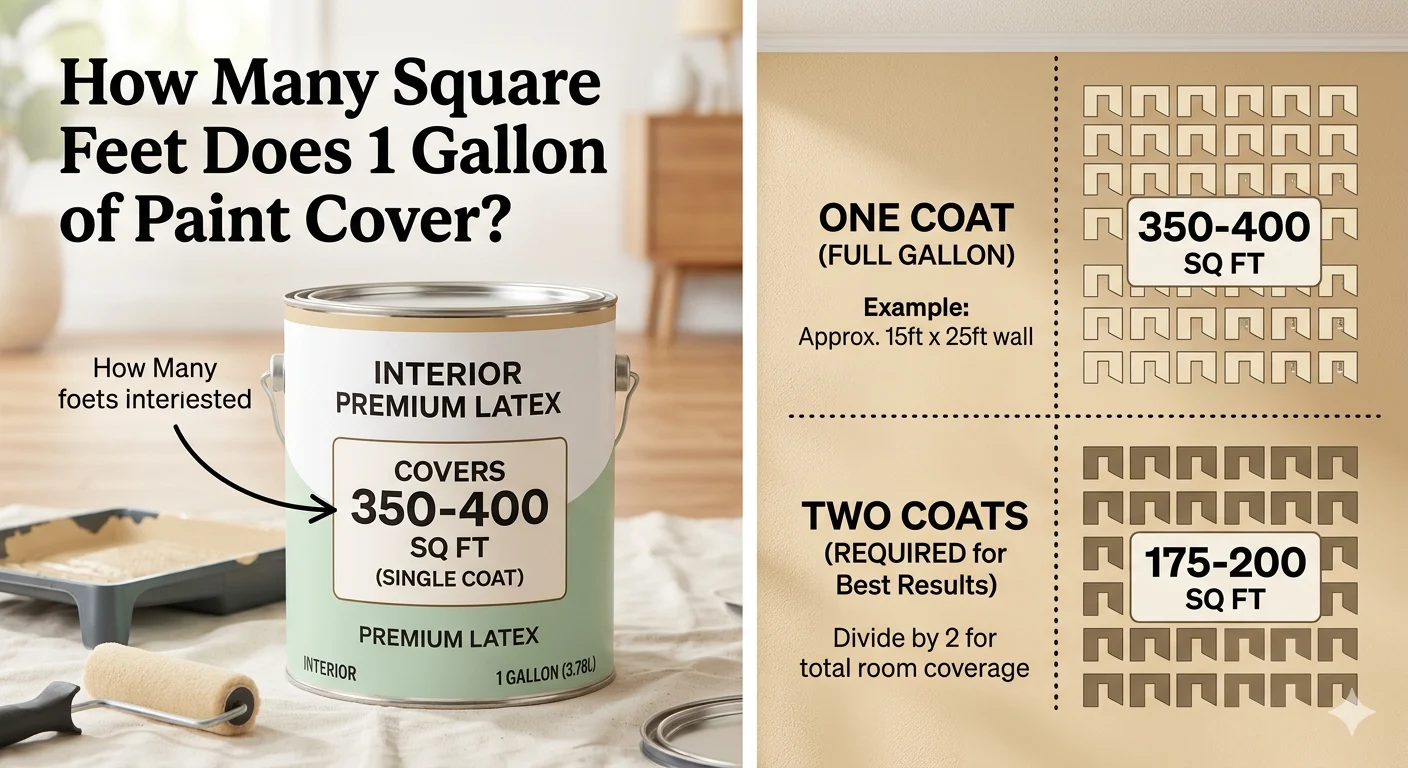
In most situations, 1 gallon of paint covers around 350 to 400 square feet with a single coat on a smooth surface. However, the actual coverage can vary depending on the surface texture, paint quality, application method, and whether you need one or two coats.
Knowing how much paint you need helps you:
- Save money
- Avoid buying too much paint
- Prevent running out during the project
- Estimate painting costs accurately
- Reduce paint waste
This guide explains paint coverage in detail, including calculation methods, coverage charts, common mistakes, and expert tips to help you estimate paint like a professional.
Average Paint Coverage Per Gallon
Most paint manufacturers state that one gallon of paint typically covers:
| Paint Amount | Average Coverage |
|---|---|
| 1 gallon | 350–400 sq ft |
| 2 gallons | 700–800 sq ft |
| 5 gallons | 1,750–2,000 sq ft |
This estimate usually applies to:
- Smooth interior walls
- Properly primed surfaces
- One coat of paint
- Standard latex paint
For rough or porous surfaces, coverage may drop significantly.
For example, a wall that measures:
- 20 feet long
- 10 feet high
Equals:
That wall is 200 square feet, meaning one gallon of paint could easily cover it with one coat.
Factors That Affect Paint Coverage
Paint coverage is not always the same. Several important factors influence how much area one gallon can cover.
Surface Texture
Smooth surfaces require less paint compared to rough or textured surfaces.
Smooth Surfaces
Examples include:
- Drywall
- Finished wood
- Metal
- Previously painted walls
Coverage can reach:
- 350–400 sq ft per gallon
Rough Surfaces
Examples include:
- Stucco
- Brick
- Concrete
- Popcorn ceilings
Coverage may drop to:
- 200–300 sq ft per gallon
Rough materials absorb more paint and create extra surface area.
Paint Quality
High-quality paint usually offers better coverage because it contains:
- Better pigments
- Stronger binders
- Higher solids content
Cheap paint often requires:
- Extra coats
- More labor
- More gallons
Premium paint may cost more upfront but can save money overall.
Number of Coats
Many homeowners forget that most projects require two coats.
If one gallon covers:
- 400 sq ft with one coat
It effectively covers:
- Around 200 sq ft with two coats
This is especially important when:
- Painting over dark colors
- Covering stains
- Switching paint finishes
Paint Color Changes
Changing colors dramatically often increases paint usage.
Examples:
- White over dark blue
- Beige over red
- Light gray over black
These changes may require:
- Primer
- Multiple coats
Application Method
Different painting tools affect paint consumption.
| Tool | Paint Usage |
|---|---|
| Brush | Highest usage |
| Roller | Balanced usage |
| Sprayer | Fast but wastes more paint |
Paint sprayers create overspray, which can increase paint use.
Paint Coverage Chart by Surface Type
Here is a general paint coverage chart for different surfaces.
| Surface Type | Coverage Per Gallon |
|---|---|
| Smooth drywall | 350–400 sq ft |
| Textured walls | 250–350 sq ft |
| Stucco siding | 200–300 sq ft |
| Brick surfaces | 200–300 sq ft |
| Wood siding | 250–350 sq ft |
| Ceilings | 300–400 sq ft |
Always check the paint can label because coverage varies by manufacturer.
How to Calculate Paint Needed
Estimating paint is simple if you follow the right steps.
Step 1: Measure Wall Dimensions
Measure:
- Width
- Height
Then multiply them.
Example:
A wall:
- 15 feet wide
- 10 feet high
That wall equals 150 square feet.
Step 2: Add Total Wall Area
Suppose a room has four walls:
- 150 sq ft
- 150 sq ft
- 120 sq ft
- 120 sq ft
Total:
The room has:
- 540 square feet of paintable wall space
Step 3: Subtract Doors and Windows
Average sizes:
- Door: about 20 sq ft
- Window: about 15 sq ft
Subtract these areas from the total wall size.
Step 4: Divide by Paint Coverage
If your paint covers 400 sq ft per gallon:
You would need:
- Around 2 gallons for one coat
- About 3 gallons for two coats
Always round up instead of down.
Interior vs Exterior Paint Coverage
Exterior paint usually covers less area than interior paint because outdoor surfaces are rougher and exposed to weather damage.
| Paint Type | Typical Coverage |
|---|---|
| Interior paint | 350–400 sq ft |
| Exterior paint | 250–350 sq ft |
Exterior surfaces often absorb more paint due to:
- Sun exposure
- Cracks
- Moisture damage
- Rough siding
Most exterior jobs also require primer.
Paint Finish and Coverage Differences
The type of paint finish also affects coverage and appearance.
Flat Paint
- Hides wall imperfections
- Absorbs more paint
- Less washable
Eggshell Paint
- Slight sheen
- Popular for living rooms
- Balanced durability
Satin Paint
- More durable
- Easy to clean
- Common in kitchens and bathrooms
Semi-Gloss Paint
- Reflective finish
- Great for trim and doors
- Shows surface flaws more clearly
Glossy paints often require more surface preparation.
Real-World Paint Coverage Examples
Small Bedroom
Room size:
- 10 × 10 feet
Estimated wall area:
- 320–350 sq ft
Paint needed:
- 1 gallon for one coat
- 2 gallons for two coats
Living Room
Room size:
- 15 × 20 feet
Estimated wall area:
- 600–700 sq ft
Paint needed:
- 2 gallons for one coat
- 3–4 gallons for two coats
House Exterior
Paintable exterior:
- 1,500 sq ft
Paint needed:
- 4–6 gallons depending on texture
Common Paint Estimation Mistakes
Many people underestimate how much paint they actually need.
Ignoring the Second Coat
One coat rarely delivers a professional finish.
Always estimate for:
- Two coats unless the paint specifically guarantees one-coat coverage
Skipping Primer
Without primer:
- Paint absorbs unevenly
- Coverage decreases
- Extra coats become necessary
Primer improves adhesion and creates smoother results.
Forgetting About Texture
Textured surfaces require much more paint than smooth drywall.
This includes:
- Stucco
- Brick
- Popcorn ceilings
- Rough wood
Buying Exact Amounts
Buying the exact estimated amount can create problems if:
- You spill paint
- Need touch-ups
- Apply thicker coats
It is safer to buy slightly extra paint.
Expert Tips to Maximize Paint Coverage
Professional painters use several techniques to reduce waste and improve results.
Clean Walls Before Painting
Dust and grease reduce paint adhesion.
Before painting:
- Wash surfaces
- Remove dust
- Repair holes and cracks
Use Quality Rollers
Cheap rollers:
- Waste paint
- Leave uneven textures
Better rollers provide smoother and more efficient coverage.
Prime Dark Colors
Primer reduces the number of finish coats required when:
- Covering dark paint
- Painting new drywall
- Hiding stains
Mix Multiple Paint Cans Together
Combining paint cans into one bucket helps avoid:
- Color variation
- Uneven finish
This process is called “boxing paint.”
When Should You Buy Extra Paint?
Buying extra paint is smart when:
- Walls are textured
- You expect future touch-ups
- You are painting outdoors
- The color change is dramatic
- You need multiple coats
Extra paint also helps with future repairs.
FAQs
How many square feet does one gallon of paint cover with two coats?
One gallon usually covers around 175–200 square feet when applying two coats.
Does primer have the same coverage as paint?
No. Primer and paint often have different coverage rates depending on the product.
How much paint do I need for a 12×12 room?
Most 12×12 rooms require:
- 1–2 gallons for one coat
- 2–3 gallons for two coats
Does expensive paint cover better?
Yes, premium paints often provide:
- Better coverage
- Stronger durability
- Richer color
- Fewer coats
Can one gallon paint an entire room?
Yes, one gallon can paint a small room with one coat if the walls are smooth and properly prepared.
Conclusion
So, how many square feet is 1 gallon of paint cover?
In general, 1 gallon of paint covers approximately 350 to 400 square feet on smooth surfaces with a single coat. However, actual coverage depends on factors like wall texture, paint quality, number of coats, and surface preparation.
To estimate paint accurately:
- Measure carefully
- Consider texture
- Plan for two coats
- Use primer when necessary
- Buy slightly extra paint
Understanding paint coverage helps you complete your painting project more efficiently while saving time, money, and effort.