

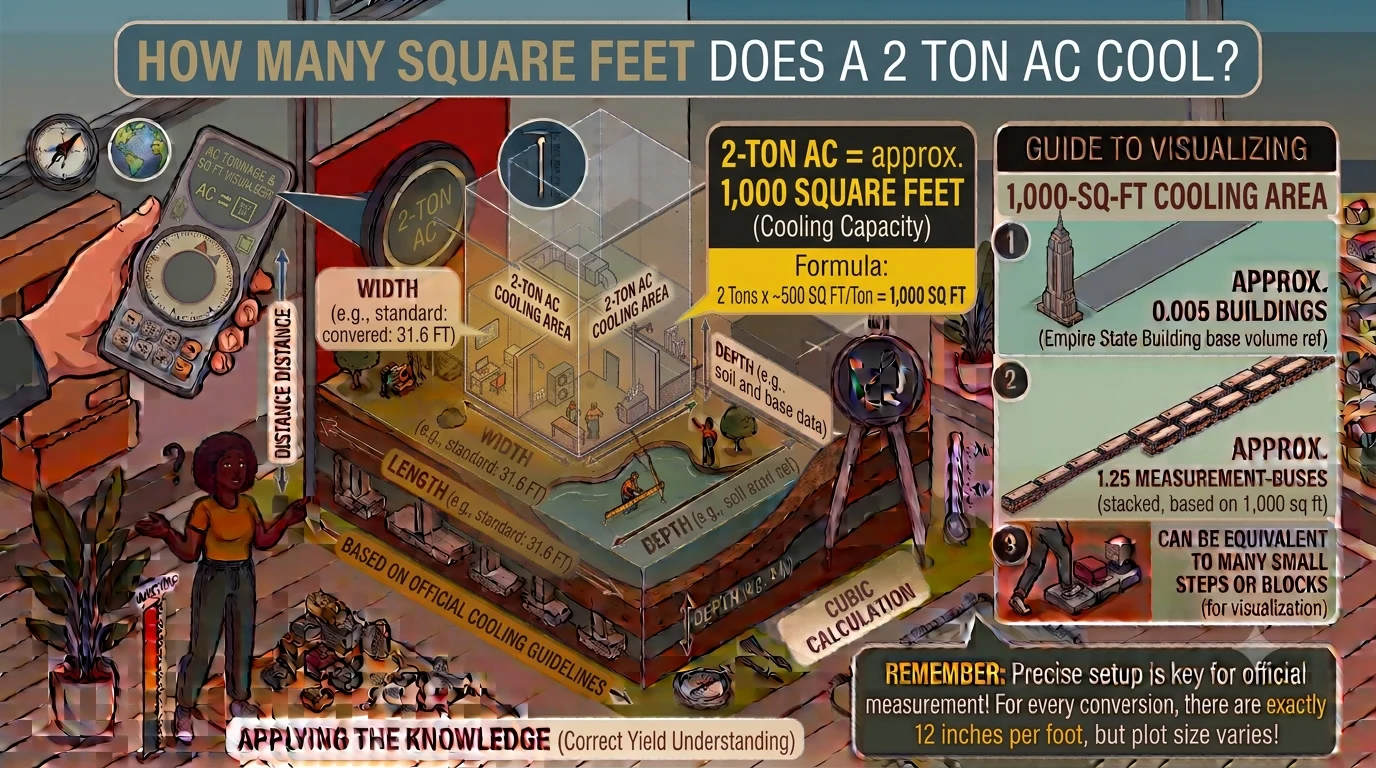
Choosing the right air conditioner size is essential for keeping your home comfortable while controlling energy costs. One of the most common questions homeowners ask is: how many square feet per ton of air conditioning can one ton of cooling handle?
As a general rule, one ton of air conditioning can cool approximately 400 to 600 square feet of living space. However, the exact coverage depends on several factors, including your climate, insulation quality, ceiling height, windows, and the amount of heat entering your home.
Selecting the correct AC tonnage is important because an undersized system may struggle to cool your space, while an oversized system can waste electricity and reduce comfort. This guide explains AC tonnage, square feet coverage, calculation methods, examples, and expert tips to help you choose the right cooling capacity.
Understanding Air Conditioning Tons
Before calculating how many square feet per ton of air conditioning you need, it is important to understand what an AC ton means.
In HVAC terms, a “ton” does not describe the weight of the air conditioner. Instead, it refers to the cooling capacity of the unit.
One ton of air conditioning equals 12,000 BTUs of cooling capacity per hour.
BTU (British Thermal Unit) measures how much heat an air conditioner can remove from a room in one hour.
Common AC sizes include:
- 1 ton AC = 12,000 BTUs
- 1.5 ton AC = 18,000 BTUs
- 2 ton AC = 24,000 BTUs
- 3 ton AC = 36,000 BTUs
- 5 ton AC = 60,000 BTUs
The higher the tonnage, the more heat the air conditioner can remove.
How Many Square Feet Per Ton of Air Conditioning?
The average guideline is:
1 ton of air conditioning can cool around 400 to 600 square feet.
For most residential properties, HVAC experts often use an estimate of:
1 ton per 400–500 square feet
because homes can have different heat conditions.
Here is a general AC sizing chart:
| Air Conditioner Size | Cooling Capacity | Approximate Square Feet Coverage |
|---|---|---|
| 1 Ton | 12,000 BTU | 400–600 sq ft |
| 1.5 Ton | 18,000 BTU | 600–900 sq ft |
| 2 Ton | 24,000 BTU | 800–1,200 sq ft |
| 2.5 Ton | 30,000 BTU | 1,000–1,500 sq ft |
| 3 Ton | 36,000 BTU | 1,200–1,800 sq ft |
| 4 Ton | 48,000 BTU | 1,600–2,400 sq ft |
| 5 Ton | 60,000 BTU | 2,000–3,000 sq ft |
These numbers are general estimates. The actual AC requirement may change depending on your home’s design and location.
Why Square Feet Alone Does Not Determine AC Size
Many people think they can select an air conditioner only by measuring their home’s square footage. While size matters, it is only one part of the calculation.
Two homes with the same square footage may require different AC sizes because of:
- Climate conditions
- Insulation levels
- Window size and placement
- Number of people living in the home
- Appliance heat
- Ceiling height
- Sun exposure
For example, a 1,500-square-foot home in a mild climate may need a smaller AC compared with a 1,500-square-foot home in a hot region with poor insulation.
Factors That Affect AC Coverage Per Ton
Climate and Temperature
The outdoor temperature plays a major role in AC performance.
Homes located in extremely hot areas usually need more cooling capacity because the air conditioner has to remove more heat.
A home in a hot climate may only get:
- 300–400 square feet per ton
while a well-insulated home in a moderate climate may achieve:
- 500–600 square feet per ton
Insulation Quality
Insulation helps prevent heat from entering your home.
A properly insulated house:
- Maintains indoor temperature better
- Requires less cooling power
- Reduces electricity consumption
Poor insulation allows heat to enter quickly, forcing the AC to run longer.
Ceiling Height
Most AC calculations assume standard ceiling heights of around 8 feet.
Homes with higher ceilings contain more air volume, which means they may require additional cooling capacity.
For example, a room with a 12-foot ceiling may need more cooling than a room with the same floor area but an 8-foot ceiling.
Windows and Sun Exposure
Windows can significantly increase heat gain.
Factors that increase cooling requirements include:
- Large windows
- Direct sunlight
- Poor window insulation
- Lack of curtains or shades
Energy-efficient windows and proper shading can reduce the cooling load.
How to Calculate AC Tonnage for Your Space
You can estimate your AC size using a simple calculation.
Step 1: Measure Your Area
Calculate the total square footage of the area you want to cool.
Formula:
Length × Width = Square Feet
Example:
A room that is:
20 feet long × 25 feet wide
equals:
500 square feet
Step 2: Divide by Square Feet Per Ton
Using the average estimate:
500 square feet ÷ 500 = 1 ton
This means a 1 ton AC may be suitable for that space under average conditions.
Example:
A 2,000-square-foot home:
2,000 ÷ 500 = 4 tons
A 4 ton AC may be required.
Step 3: Adjust for Real Conditions
Increase the estimated capacity if your home has:
- Hot weather
- Poor insulation
- Large windows
- High ceilings
Reduce the requirement if your home has:
- Good insulation
- Energy-efficient windows
- Limited sunlight exposure
AC Size Examples for Different Home Sizes
Small Room
A 300-square-foot bedroom may require:
- Around 0.75 to 1 ton AC
depending on heat conditions.
Medium Apartment
A 1,000-square-foot apartment may need:
- Around 2 tons of AC
under average conditions.
Large Home
A 2,500-square-foot house may require:
- Around 5 tons of AC
but a professional cooling calculation is recommended.
Benefits of Choosing the Correct AC Size
Selecting the right air conditioner size provides several benefits.
Better Energy Efficiency
A properly sized AC does not need to work harder than necessary, helping reduce electricity bills.
Improved Comfort
The right system maintains a stable indoor temperature without frequent temperature changes.
Longer Equipment Life
An accurately sized AC experiences less stress, which can increase its lifespan.
Better Humidity Control
Oversized units often cool quickly but fail to remove enough humidity. Proper sizing improves indoor comfort.
Common Mistakes When Choosing AC Capacity
Buying a Bigger AC Than Needed
Many homeowners believe a larger AC will always provide better cooling.
However, an oversized system can:
- Turn on and off frequently
- Waste energy
- Create uneven cooling
- Increase maintenance problems
Choosing an AC Based Only on Room Size
Square footage is important, but ignoring other factors can result in incorrect sizing.
Always consider:
- Climate
- Insulation
- Windows
- Room usage
Ignoring Energy Efficiency
A low-efficiency AC may cost more to operate even if it has the correct size.
Look for energy-efficient models with good performance ratings.
Expert Tips for Selecting the Right Air Conditioner
Follow these tips before buying an AC:
- Calculate your cooling requirements first.
- Consider your local climate.
- Improve insulation to reduce cooling needs.
- Use curtains or blinds to reduce heat from sunlight.
- Clean AC filters regularly.
- Seal air leaks around doors and windows.
- Choose inverter technology for better efficiency.
- Get professional advice for large homes.
A properly sized air conditioner provides better cooling performance and saves money over time.
Frequently Asked Questions
How many square feet does a 1 ton AC cool?
A 1 ton AC can usually cool around 400 to 600 square feet. The exact coverage depends on climate, insulation, and room conditions.
How many tons of AC do I need for a 2,000 square foot house?
A 2,000-square-foot house may require around 4 tons of AC using the average estimate of 500 square feet per ton. However, the final size depends on heat conditions.
Is a 1 ton AC enough for one bedroom?
A 1 ton AC is commonly suitable for small to medium bedrooms, especially those between 400 and 600 square feet.
Can an oversized AC cause problems?
Yes. An oversized AC can waste energy, cycle frequently, and provide poor humidity control.
What is the most accurate way to calculate AC size?
The most accurate method is a professional cooling load calculation that considers all factors affecting heat gain and cooling requirements.
Conclusion
Knowing how many square feet per ton of air conditioning helps you estimate the right AC size for your home. Generally, one ton of air conditioning can cool about 400 to 600 square feet, but actual performance depends on climate, insulation, windows, and home design.
Using square footage as a starting point is helpful, but choosing the perfect AC size requires considering your home’s unique conditions. A correctly sized air conditioner provides better comfort, lower energy costs, and longer system life.