

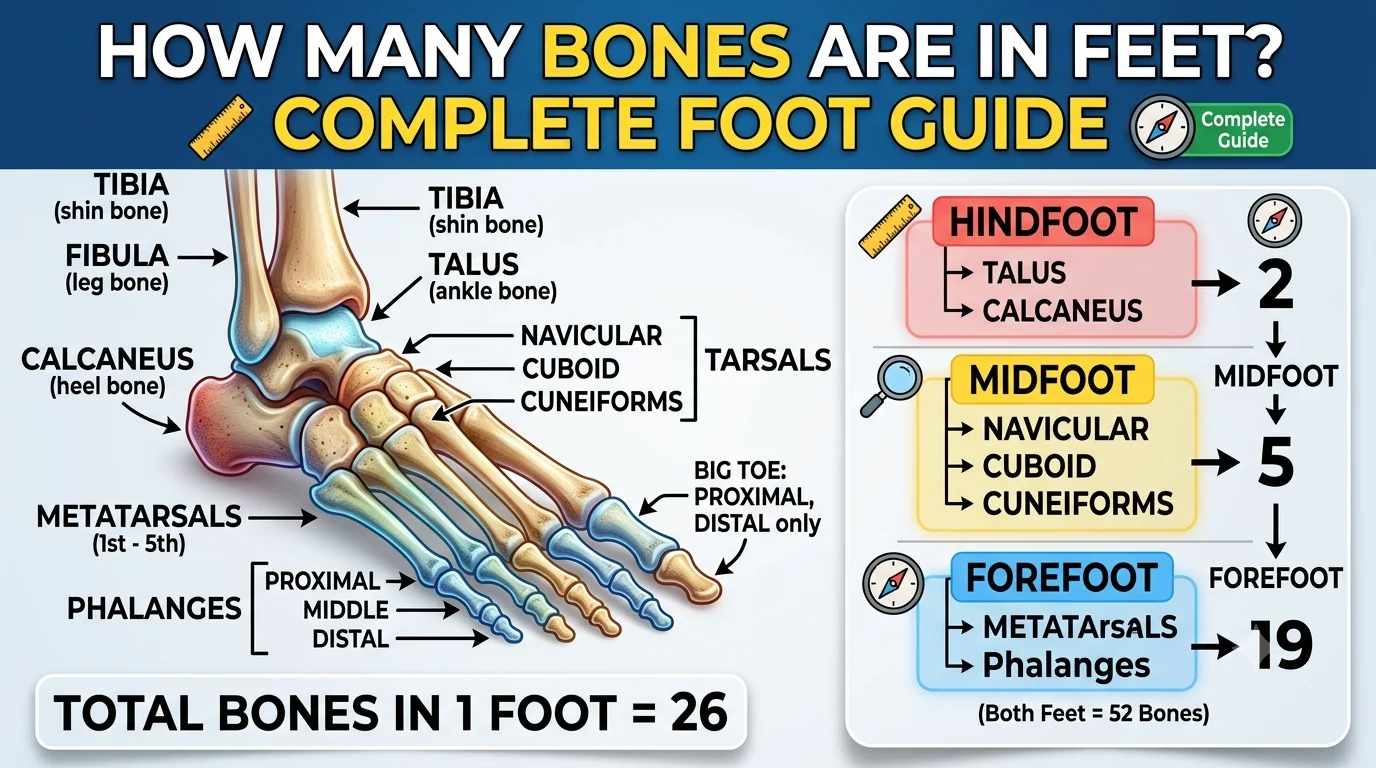
Have you ever wondered how many bones are in feet and why the human foot is designed with so many small parts? The answer is fascinating. Each human foot contains 26 bones, which means both feet together have 52 bones. These bones work with muscles, tendons, ligaments, and joints to help you stand, walk, run, jump, and maintain balance.
The human foot is one of the most complex structures in the body. Although it may appear simple from the outside, the foot contains many carefully arranged bones that provide strength, flexibility, and stability.
Understanding how many bones are in feet can help you appreciate the importance of foot health. A problem with even one small bone can affect your movement, posture, and comfort.
In this complete guide, you will learn about the 26 bones in each foot, their names, functions, how they work together, common foot bone problems, and tips to keep your feet healthy.
Understanding How Many Bones Are in Feet
The answer to how many bones are in feet is 26 bones in each foot. These bones are divided into three main sections:
- 7 tarsal bones
- 5 metatarsal bones
- 14 phalanges (toe bones)
Together, these bones create a strong but flexible structure that supports your entire body.
Since humans have two feet:
26 bones × 2 feet = 52 bones
This means the feet contain more than one-quarter of all the bones in the human body.
The feet are designed to handle a huge amount of pressure every day. When you walk, your feet absorb shock and carry your body weight while allowing smooth movement.
Why Do Feet Have So Many Bones?
Many people think the foot is just one solid structure, but it is actually made up of many smaller bones connected by joints.
Having multiple bones provides several advantages:
- Better flexibility
- Improved balance
- Shock absorption
- Easier movement on different surfaces
- Greater strength and stability
If the foot were made of one large bone, it would not be able to bend, adjust, or support movement effectively.
The combination of small bones allows the foot to perform complicated movements while keeping the body balanced.
The Three Main Groups of Foot Bones
The 26 bones in each foot are separated into three major groups: tarsal bones, metatarsal bones, and phalanges.
Tarsal Bones
The tarsal bones are the seven bones located in the back and middle part of the foot. They connect the foot to the ankle and provide support during standing and walking.
The seven tarsal bones are:
- Talus
- Calcaneus
- Navicular
- Cuboid
- Medial cuneiform
- Intermediate cuneiform
- Lateral cuneiform
Talus
The talus is an important ankle bone that connects the foot with the lower leg bones. It helps transfer body weight from the legs to the feet.
Calcaneus
The calcaneus is also known as the heel bone. It is the largest bone in the foot and absorbs much of the pressure created while walking and running.
Navicular and Cuneiform Bones
These bones help create the structure of the foot arch and connect different sections of the foot together.
Metatarsal Bones
The foot contains five metatarsal bones. These are long bones located between the tarsal bones and toe bones.
They are numbered from one to five:
- First metatarsal connects to the big toe
- Second metatarsal connects to the second toe
- Third metatarsal connects to the middle toe
- Fourth metatarsal connects to the fourth toe
- Fifth metatarsal connects to the little toe
The metatarsals help distribute body weight and provide stability while walking.
The fifth metatarsal is commonly injured because it is located on the outer side of the foot.
Phalanges (Toe Bones)
The toes contain 14 bones called phalanges.
Each foot has:
- 3 bones in each of the four smaller toes
- 2 bones in the big toe
The toe bones help with:
- Balance
- Walking
- Pushing the body forward
- Maintaining stability
Although toe bones are small, they play an important role in movement.
Complete List of the 26 Bones in Each Foot
Here is a simple breakdown of the bones in one human foot:
| Foot Bone Group | Number of Bones | Main Function |
|---|---|---|
| Tarsal Bones | 7 | Support ankle and rear foot |
| Metatarsal Bones | 5 | Provide structure and weight support |
| Phalanges | 14 | Help balance and movement |
| Total | 26 | Complete foot structure |
How Foot Bones Work Together
The bones in your feet do not work alone. They work with muscles, tendons, ligaments, and joints to create movement.
Supporting Body Weight
Your feet carry your entire body weight every day. When standing, walking, or running, pressure is distributed across different bones.
The arches of the feet act like natural springs that absorb shock.
The three main foot arches include:
- Medial longitudinal arch
- Lateral longitudinal arch
- Transverse arch
These arches help maintain balance and reduce stress on the bones.
Creating Movement and Balance
The bones in the feet allow you to perform everyday activities such as:
- Walking
- Running
- Climbing stairs
- Jumping
- Standing
- Changing direction
The small bones in the toes provide extra control and balance when moving.
Foot Bone Anatomy Comparison Chart
| Section | Number of Bones | Location | Purpose |
|---|---|---|---|
| Tarsals | 7 | Back of foot | Connect ankle and support weight |
| Metatarsals | 5 | Middle of foot | Provide structure and stability |
| Phalanges | 14 | Toes | Help with balance and movement |
Common Problems Affecting Foot Bones
Because feet handle constant pressure, their bones can develop injuries and conditions.
Foot Fractures
A fracture occurs when a bone cracks or breaks.
Common causes include:
- Sports injuries
- Falls
- Accidents
- Heavy impact
- Repeated stress
Commonly affected bones include the toes, metatarsals, and heel bone.
Stress Fractures
Stress fractures are small cracks caused by repeated pressure over time.
They are common among:
- Athletes
- Runners
- People who suddenly increase exercise intensity
Symptoms may include:
- Pain during activity
- Swelling
- Tenderness
- Discomfort while walking
Bunions
A bunion is a bony bump that forms near the base of the big toe.
It happens when the big toe joint becomes misaligned. Bunions can cause:
- Pain
- Swelling
- Difficulty wearing shoes
Flat Feet
Flat feet occur when the arches of the feet become lower than normal.
Some people have no symptoms, while others may experience:
- Foot pain
- Tired feet
- Leg discomfort
Arthritis in Foot Bones
Arthritis affects joints and may cause:
- Stiffness
- Swelling
- Pain
- Reduced movement
Since the feet contain many joints, arthritis can significantly affect mobility.
Tips for Keeping Foot Bones Healthy
Taking care of your feet can protect the 26 bones in each foot.
Wear Supportive Shoes
Choose shoes that:
- Fit properly
- Provide arch support
- Have enough room for toes
- Offer proper cushioning
Poor footwear can increase stress on foot bones.
Maintain a Healthy Weight
Extra body weight increases pressure on your feet. Maintaining a healthy weight helps reduce stress on bones and joints.
Exercise Your Feet
Foot exercises can improve strength and flexibility.
Helpful activities include:
- Walking
- Stretching
- Balance exercises
- Toe strengthening exercises
Increase Activity Slowly
Avoid sudden increases in exercise intensity. Gradual changes reduce the risk of stress fractures.
Do Not Ignore Foot Pain
Persistent pain may indicate a problem with bones, joints, or soft tissues. Early attention can prevent more serious issues.
Common Mistakes About Foot Bones
Mistake 1: Thinking Feet Have Only a Few Bones
The foot is not a single bone. It contains 26 separate bones working together.
Mistake 2: Ignoring Small Foot Injuries
Small injuries can become bigger problems if they are not treated properly.
Mistake 3: Wearing Uncomfortable Shoes
Shoes that are too tight or lack support can put unnecessary pressure on foot bones.
Frequently Asked Questions
1. How many bones are in feet?
Each human foot contains 26 bones. Both feet together contain 52 bones.
2. What are the 26 bones in the foot called?
The 26 bones include 7 tarsal bones, 5 metatarsal bones, and 14 phalanges.
3. How many bones are in each toe?
The big toe has two bones, while the other four toes have three bones each.
4. What is the largest bone in the foot?
The calcaneus, or heel bone, is the largest bone in the foot.
5. Why are foot bones important?
Foot bones provide support, balance, movement, and help absorb shock during daily activities.
Conclusion
The answer to how many bones are in feet is 26 bones in each foot and 52 bones in both feet combined. These bones are organized into three main groups: tarsals, metatarsals, and phalanges.
Every step you take depends on these small but powerful bones working together with muscles, joints, and ligaments. From supporting body weight to maintaining balance, foot bones play an essential role in everyday life.
By wearing proper footwear, staying active, and paying attention to foot health, you can help protect these important bones and keep your feet strong for years to come.