
Painting a room or building always starts with one important question: how many feet can a gallon of paint cover? If you estimate it wrong, you either waste money buying extra paint or stop your project halfway. So getting this right matters.
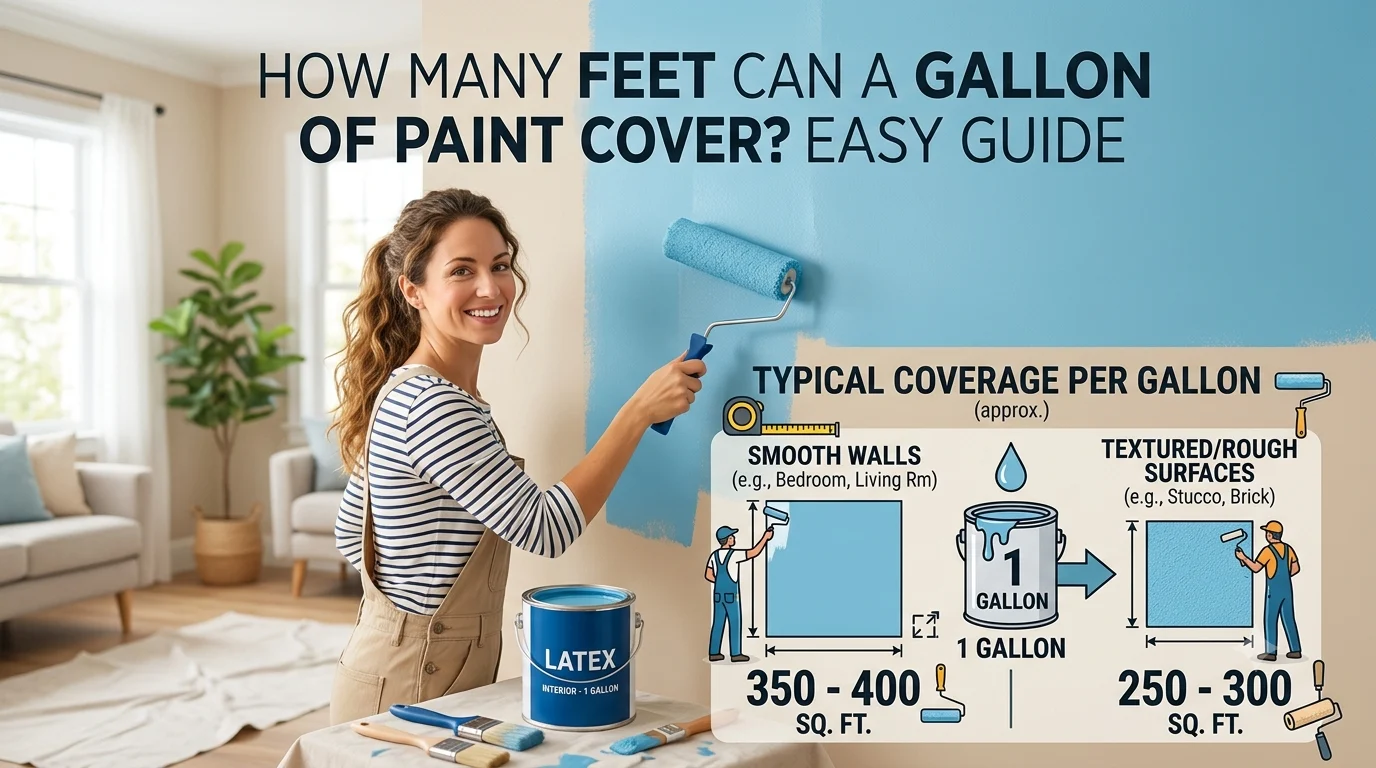
In general, a standard one gallon of paint covers about 350 to 400 square feet of surface area with one coat on a smooth, properly prepared wall. But this number is not fixed. It changes based on surface type, paint quality, and how many coats you apply.
This guide explains everything in simple language so you can confidently plan your next painting project without confusion or guesswork.
Understanding Paint Coverage Basics
Before calculating paint needs, it’s important to understand what coverage actually means.
Paint coverage refers to how much surface area a specific amount of paint can cover. It is measured in square feet, not linear feet.
So when people ask how many feet can a gallon of paint cover, they actually mean square feet of wall or surface area.
Most paint brands provide estimates like:
- 1 gallon = 350–400 sq ft (smooth surface, single coat)
- 2 gallons = 700–800 sq ft
- 5 gallons = 1,750–2,000 sq ft
These are general guidelines, not exact rules.
How Many Feet Can a Gallon of Paint Cover on Average?
On average, one gallon of paint covers 350 to 400 square feet. However, real-life usage can vary depending on where and how you apply it.
Interior Paint Coverage
Interior walls are usually smoother, so paint spreads more evenly.
- Flat paint: 350–400 sq ft
- Eggshell paint: 350–400 sq ft
- Satin paint: 325–375 sq ft
- Semi-gloss: 300–350 sq ft
Interior surfaces generally require less paint compared to exterior walls.
Exterior Paint Coverage
Exterior surfaces are rougher and absorb more paint.
- Smooth siding: 350–400 sq ft
- Wood siding: 250–350 sq ft
- Brick: 200–300 sq ft
- Stucco: 150–250 sq ft
- Concrete: 200–300 sq ft
Outdoor surfaces almost always need more paint.
Paint Coverage Chart (Quick Reference)
| Paint Quantity | Coverage (Single Coat) |
|---|---|
| 1 Quart | 90–100 sq ft |
| 1 Gallon | 350–400 sq ft |
| 2 Gallons | 700–800 sq ft |
| 3 Gallons | 1,050–1,200 sq ft |
| 5 Gallons | 1,750–2,000 sq ft |
Remember: two coats = double the paint needed.
Factors That Affect Paint Coverage
The real answer to how many feet a gallon of paint can cover depends on several important factors.
1. Surface Texture
Smooth walls absorb less paint, while rough surfaces absorb more.
- Smooth drywall = high coverage
- Wood = medium coverage
- Brick or stucco = low coverage
The rougher the surface, the more paint you will need.
2. Type of Paint
Different paints have different thickness and pigment levels.
- Premium paint = better coverage, fewer coats
- Cheap paint = more coats needed
- Primer + paint combo = improved efficiency
High-quality paint often saves money in the long run.
3. Number of Coats
Most projects need at least two coats for a clean finish.
Situations needing extra coats:
- Dark walls → light color
- Stained or uneven walls
- Bright accent colors
- Bare drywall
Each extra coat reduces total coverage.
4. Surface Condition
Old, dusty, or porous surfaces absorb more paint.
Using primer helps:
- Seal surface
- Reduce absorption
- Improve final color
How to Calculate Paint Needed (Simple Method)
You don’t need advanced math. Just follow these steps:
Step 1: Measure Wall Area
Formula:
Height × Width = Square Feet
Example:
- Wall height = 8 ft
- Wall width = 12 ft
8 × 12 = 96 sq ft
Step 2: Subtract Doors and Windows
Remove non-paint areas:
- Door ≈ 21 sq ft
- Window ≈ 15 sq ft
Example:
96 − 21 − 15 = 60 sq ft
Step 3: Divide by Coverage
If paint covers 400 sq ft per gallon:
60 ÷ 400 = 0.15 gallon
So, less than one gallon is needed for that wall.
Real-Life Examples
Example 1: Small Bedroom
- Total wall area: 350 sq ft
- Coverage per gallon: 400 sq ft
Result: 1 gallon is enough for one coat.
Example 2: Medium Living Room
- Total area: 600 sq ft
- Coverage: 400 sq ft per gallon
600 ÷ 400 = 1.5 gallons
For two coats → about 3 gallons needed.
Example 3: Exterior Wall (Brick)
- Area: 400 sq ft
- Coverage: 200 sq ft per gallon (brick)
400 ÷ 200 = 2 gallons
Interior vs Exterior Paint Coverage
| Feature | Interior | Exterior |
|---|---|---|
| Coverage | Higher | Lower |
| Surface | Smooth | Rough |
| Paint Use | Less | More |
| Weather Resistance | Not needed | Required |
Exterior painting always requires more paint due to harsh surfaces.
Common Mistakes People Make
Avoid these errors when estimating paint:
- Ignoring surface texture
- Forgetting multiple coats
- Not using primer
- Miscalculating wall measurements
- Assuming all paints cover the same area
These mistakes often lead to paint shortage.
Expert Tips for Better Coverage
Professional painters follow simple tricks:
- Always clean walls before painting
- Use primer on new or rough surfaces
- Choose high-quality rollers
- Stir paint properly before use
- Buy 10–15% extra paint for safety
These steps improve coverage and finish quality.
Frequently Asked Questions
1. How many square feet does a gallon of paint cover?
A gallon of paint covers about 350 to 400 square feet on average.
2. Does one gallon cover two coats?
No. Two coats usually reduce coverage by half, so one gallon covers about 175–200 sq ft for two coats.
3. How much paint do I need for a 12×12 room?
Usually 1–2 gallons for one coat and 2–3 gallons for two coats.
4. Why does exterior paint cover less area?
Because exterior surfaces are rough, porous, and absorb more paint.
5. Do I need primer before painting?
Yes, especially on new or damaged walls. Primer improves coverage and finish.
Conclusion
So, how many feet can a gallon of paint cover? The simple answer is around 350 to 400 square feet per gallon for one coat, but real-world results depend on surface type, paint quality, and application method.
If you measure carefully, account for texture, and apply proper preparation techniques, you can estimate paint needs accurately and avoid waste. Good planning always leads to a smoother, more professional-looking paint job.