

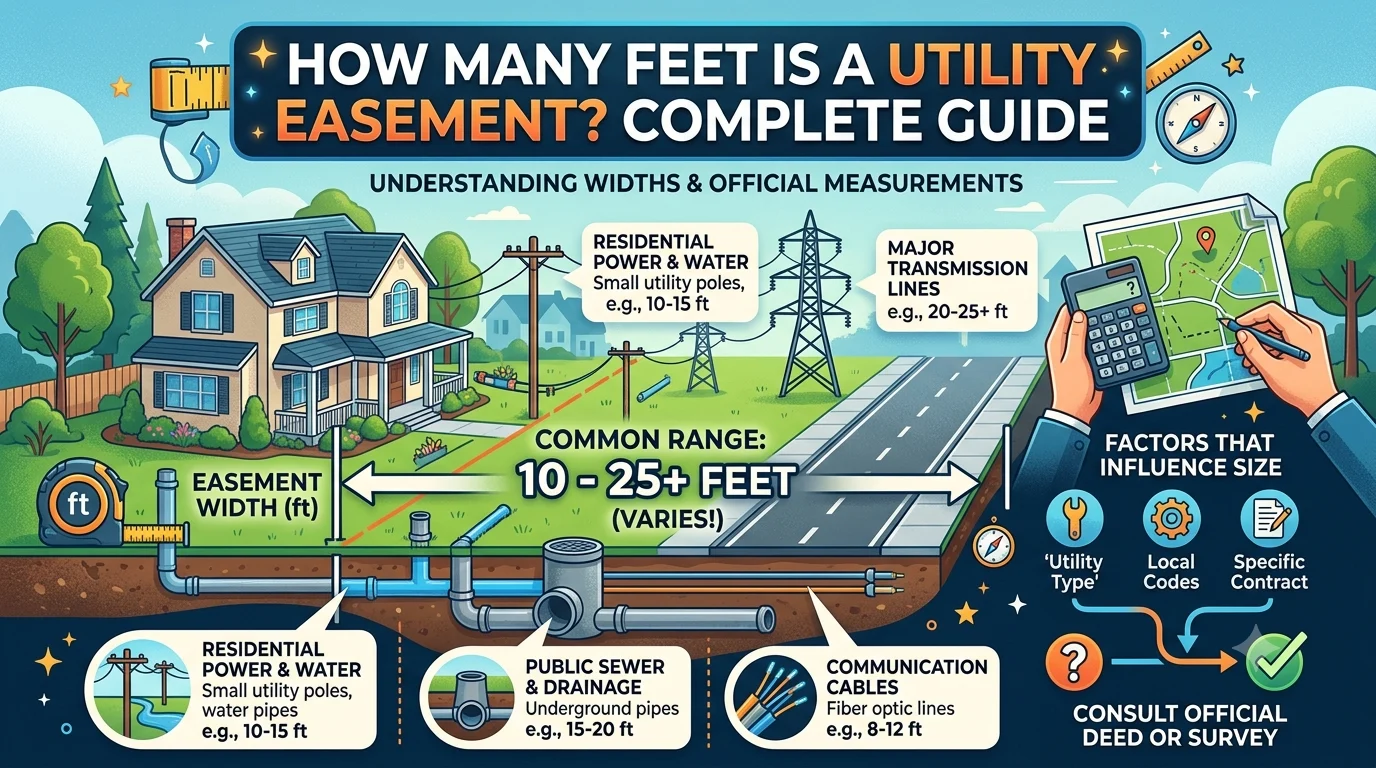
If you own a home or are planning to buy property, you may wonder how many feet is a utility easement. The answer depends on several factors, including the type of utility, local regulations, and the property’s layout. In most residential areas, a utility easement is typically 5 to 20 feet wide, with 10 feet being one of the most common widths. However, larger easements may be required for major utility lines, pipelines, or drainage systems.
Understanding utility easements is important because they can affect where you build structures, plant trees, or install landscaping. While you usually own the land within the easement, utility companies have the legal right to access it for maintenance, repairs, or upgrades. This guide explains everything you need to know about utility easement widths, their purpose, and how they can impact your property.
What Is a Utility Easement?
A utility easement is a legal agreement that gives utility companies or government agencies the right to use a specific portion of private property to install, inspect, repair, and maintain essential infrastructure. These utilities may include:
- Electrical power lines
- Water mains
- Sewer lines
- Natural gas pipelines
- Telephone cables
- Fiber-optic internet lines
- Stormwater drainage systems
Although the property owner retains ownership of the land, the easement ensures utility providers can access their equipment whenever necessary.
How Many Feet Is a Utility Easement?
There is no single standard width for every utility easement. The size varies depending on the type of utility and local requirements. However, the most common residential utility easement widths are:
| Utility Type | Typical Easement Width |
|---|---|
| Electric lines | 5–15 feet |
| Water lines | 10–20 feet |
| Sewer lines | 10–20 feet |
| Gas pipelines | 10–50 feet |
| Telephone and fiber-optic lines | 5–10 feet |
| Drainage easements | 15–30 feet |
| High-voltage transmission lines | 50–200 feet |
For most homeowners, a 10-foot utility easement is the standard, especially along the rear or side property lines.
Why Do Utility Easement Widths Vary?
Utility easement sizes are determined by several factors, including:
Type of Utility
Different utilities require different amounts of space. Underground fiber-optic cables need much less room than large gas pipelines or transmission lines.
Safety Requirements
Gas pipelines and high-voltage electrical lines often require wider easements to maintain safe distances from buildings and vegetation.
Maintenance Access
Utility companies need enough room to bring equipment onto the property for inspections, repairs, or replacements.
Local Regulations
Cities, counties, and municipalities often have their own standards for utility easement widths, so the dimensions can vary by location.
Future Expansion
Some easements are intentionally wider to accommodate future utility upgrades without acquiring additional land.
Common Types of Utility Easements
Electric Easements
Electric companies use these easements to maintain overhead power lines, utility poles, transformers, or underground electrical cables.
Water Easements
Water authorities use these areas to access underground water mains and service lines that supply homes and businesses.
Sewer Easements
Sewer easements allow municipalities to inspect, repair, and replace underground sewer infrastructure.
Gas Easements
Natural gas companies often require larger easements because safety regulations demand additional clearance around gas pipelines.
Telecommunications Easements
Internet, cable television, and telephone providers use these easements to install and maintain communication lines.
Drainage Easements
Drainage easements help direct stormwater away from homes and reduce the risk of flooding.
What Can You Do on a Utility Easement?
Property owners can usually use the easement area, but there are important restrictions.
Activities That Are Usually Allowed
- Planting grass
- Growing flowers
- Installing removable landscaping features
- Mowing the lawn
- Walking across the area
Activities That Are Usually Restricted
- Building garages or sheds
- Constructing swimming pools
- Pouring concrete foundations
- Planting large trees with deep roots
- Installing permanent fences without approval
- Blocking access for utility crews
If utility workers need access, they may remove anything that interferes with maintenance, even if it was installed by the property owner.
How to Find a Utility Easement on Your Property
If you’re unsure whether your property has a utility easement, several resources can help.
Review Your Property Survey
A professional survey typically marks easements and includes their exact dimensions.
Check the Property Deed
Many property deeds contain legal descriptions of recorded easements.
Visit Your Local Planning Office
Municipal planning departments often maintain maps showing utility easements and rights-of-way.
Contact Utility Companies
Local utility providers can often confirm whether their infrastructure crosses your property.
Review the Subdivision Plat
Subdivision maps usually show the location and width of utility easements before homes are built.
How Utility Easements Affect Property Owners
Utility easements can influence many home improvement projects. Before building or landscaping, it’s important to know whether your plans interfere with an easement.
For example, constructing a permanent shed over a sewer easement could require removing the structure if repairs become necessary. Likewise, planting large trees over underground utility lines may lead to root damage or future removal.
By understanding the location of easements before starting a project, homeowners can avoid unnecessary costs and legal issues.
Real-World Examples
Example 1: Backyard Easement
A homeowner has a 10-foot utility easement running along the rear property line. The area contains underground water and sewer pipes. The homeowner can grow grass and flowers but should avoid building a deck or storage shed.
Example 2: Side Yard Easement
A subdivision includes a 5-foot side utility easement for fiber-optic internet cables. Small shrubs are acceptable, but large trees should not be planted because their roots could damage the cables.
Example 3: Transmission Line Easement
A rural property has a 100-foot easement for high-voltage power lines. Building structures within this corridor is generally prohibited due to safety regulations.
Benefits of Utility Easements
Utility easements provide several important advantages:
- Ensure reliable utility services
- Allow quick repairs during emergencies
- Reduce service interruptions
- Support future infrastructure improvements
- Protect public health and safety
Without utility easements, maintaining essential services would be much more difficult and expensive.
Potential Drawbacks
While utility easements are necessary, they can also have disadvantages for property owners.
- Limits where permanent structures can be built
- May reduce landscaping options
- Utility crews can access the property when needed
- Certain improvements may require approval
- Repairs may temporarily disturb landscaping
Understanding these limitations before purchasing property can help avoid surprises later.
Expert Tips
Follow these best practices when dealing with a utility easement:
- Review your property survey before starting any construction.
- Call your local utility locating service before digging.
- Avoid planting large trees over underground utility lines.
- Leave adequate space for maintenance vehicles.
- Consult local zoning officials if you’re planning a major project.
- Keep copies of your survey and deed for future reference.
Common Mistakes to Avoid
Many homeowners unknowingly create problems by:
- Assuming they can build anywhere on their property
- Ignoring recorded easements
- Planting deep-rooted trees over underground utilities
- Installing permanent structures without checking surveys
- Blocking access for utility workers
Avoiding these mistakes can save significant time, money, and frustration.
Frequently Asked Questions
Is a utility easement always 10 feet wide?
No. While 10 feet is common for residential properties, utility easements can range from 5 feet to over 200 feet, depending on the utility type and local regulations.
Can I build a shed on a utility easement?
In most cases, building permanent structures on a utility easement is not recommended and may violate local regulations or utility agreements.
Who owns the land inside a utility easement?
The property owner usually owns the land, but the utility company has the legal right to access and maintain its infrastructure.
Can utility companies remove my landscaping?
Yes. If landscaping blocks access to utility lines or equipment, the utility company may remove it when performing maintenance or repairs.
How do I know if my property has a utility easement?
The easiest way is to review your property survey, deed, subdivision plat, or contact your local planning office or utility provider.
Conclusion
If you’re wondering how many feet is a utility easement, the answer is generally between 5 and 20 feet for most residential properties, with 10 feet being one of the most common widths. However, larger easements are common for gas pipelines, drainage systems, and high-voltage transmission lines.
Before beginning any construction or landscaping project, always verify the exact location and dimensions of utility easements on your property. Checking your survey, deed, or local planning records can help you avoid costly mistakes, protect your investment, and ensure utility providers can safely maintain essential services.