

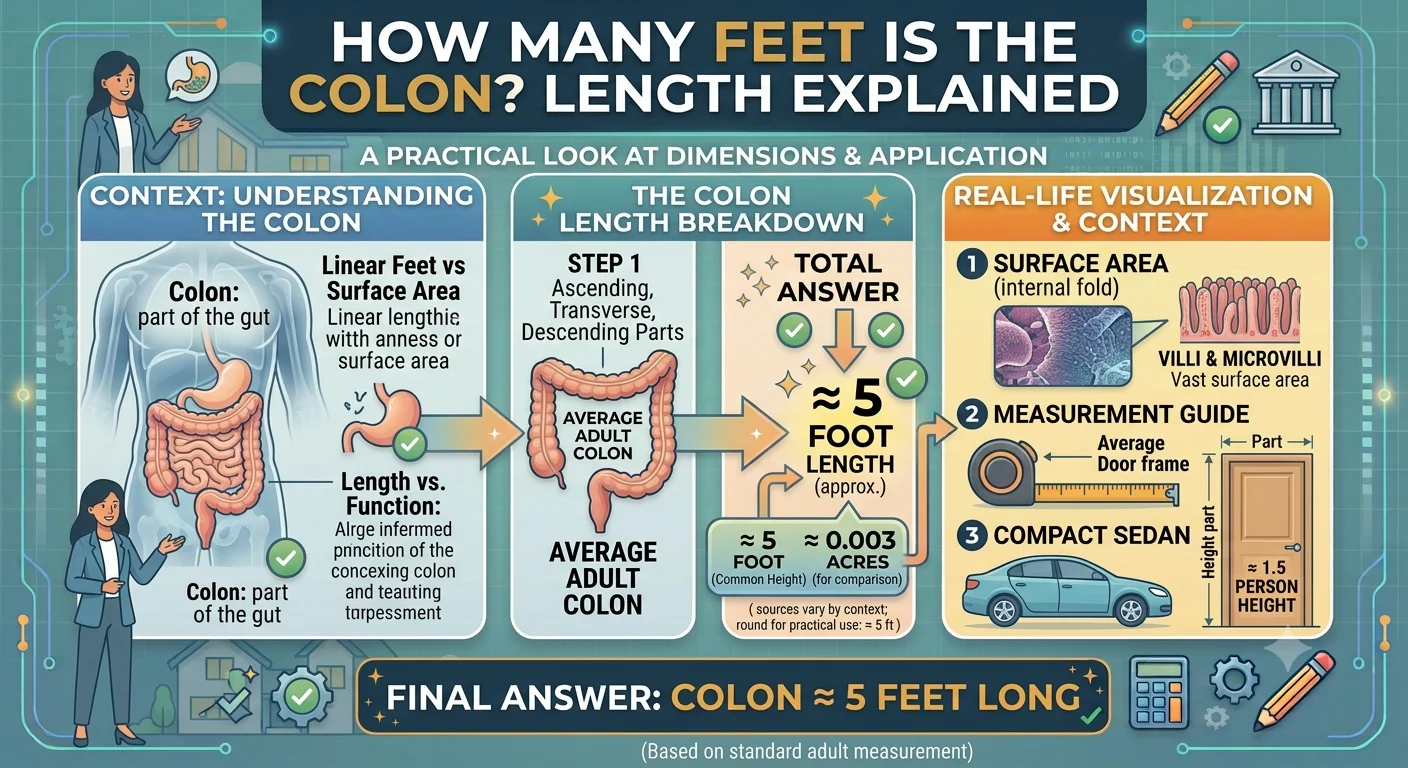
Have you ever wondered how many feet is the colon? It is a common anatomy question, especially for students, patients preparing for medical procedures, or anyone interested in how the digestive system works.
The colon, also called the large intestine, is much longer than many people expect. Although it is packed into your abdomen, it stretches several feet when measured from one end to the other. Understanding its length helps explain how the body absorbs water, stores waste, and prepares stool for elimination.
In this guide, you’ll learn the average length of the human colon, its different sections, what it does, why its length matters, and how to keep it healthy.
Quick Answer
The average adult colon is about 5 feet (1.5 meters) long.
While 5 feet is the typical measurement, the exact length varies from person to person. Some adults have a colon closer to 4.5 feet, while others may have one approaching 6 feet. These differences are completely normal.
Even though it measures around five feet, the colon fits comfortably inside your abdomen because it loops and curves around other organs.
What Is the Colon?
The colon is the largest part of the large intestine. It begins where the small intestine ends and continues until it reaches the rectum.
Its primary functions include:
- Absorbing water from digested food
- Absorbing electrolytes
- Forming solid stool
- Storing waste before bowel movements
- Supporting healthy gut bacteria
Without the colon, your body would lose much more water and would struggle to form normal stool.
How Many Feet Is the Colon in Adults?
Most healthy adults have a colon measuring approximately:
- 5 feet
- 60 inches
- 1.5 meters
- 150 centimeters
Doctors consider this the average colon length. However, several factors can influence the exact size, including:
- Genetics
- Height
- Body structure
- Individual anatomy
- Previous abdominal surgery
Some people naturally have a longer colon, known as a redundant colon. This is often harmless, although it may contribute to constipation in some cases.
Colon Length by Section
The colon is divided into four main sections.
Ascending Colon
- Average length: 8 inches (20 cm)
The ascending colon begins on the right side of the abdomen and travels upward.
Transverse Colon
- Average length: 18 inches (45 cm)
This is the longest section and stretches across the upper abdomen from right to left.
Descending Colon
- Average length: 10 inches (25 cm)
The descending colon moves downward along the left side of the abdomen.
Sigmoid Colon
- Average length: 16 inches (40 cm)
The sigmoid colon is an S-shaped section that connects the colon to the rectum and stores stool before elimination.
Together, these sections total about 5 feet in the average adult.
Colon Length Comparison Table
| Measurement | Average Colon Length |
|---|---|
| Feet | About 5 feet |
| Inches | About 60 inches |
| Meters | About 1.5 meters |
| Centimeters | About 150 cm |
These measurements refer only to the colon and do not include the rectum.
Why Is the Colon So Long?
The colon needs enough length to perform several important tasks efficiently.
Its long structure allows it to:
- Remove water from waste
- Absorb important minerals
- Feed beneficial gut bacteria
- Form stool
- Store waste before bowel movements
Because digestion takes time, the colon’s length gives the body enough opportunity to process waste properly before it leaves the body.
What Does the Colon Do?
Although the small intestine handles most digestion, the colon plays an essential role in overall digestive health.
Absorbs Water
The colon removes most of the remaining water from digested food. This helps prevent dehydration and creates solid stool.
Maintains Electrolyte Balance
It absorbs minerals like sodium and chloride, helping maintain the body’s fluid balance.
Forms Stool
As water is removed, waste becomes more solid and easier to eliminate.
Supports Healthy Gut Bacteria
The colon contains trillions of beneficial bacteria that help break down fiber, produce certain vitamins, and support the immune system.
Stores Waste
The sigmoid colon and rectum temporarily hold stool until the body is ready for a bowel movement.
Does Colon Length Vary?
Yes. Colon length varies naturally among healthy people.
Several factors influence colon size, including:
- Age
- Genetics
- Height
- Body type
- Medical conditions
Some people have extra loops in the colon, resulting in a redundant colon. While this may slightly slow the movement of stool, many people never experience symptoms.
Colon vs. Small Intestine
Many people confuse the colon with the small intestine. However, they are very different organs with different functions.
| Feature | Colon | Small Intestine |
|---|---|---|
| Average Length | About 5 feet | About 22 feet |
| Main Function | Water absorption | Nutrient absorption |
| Width | Wider | Narrower |
| Digestion | Minimal | Most digestion occurs here |
Although the small intestine is much longer, the colon plays a vital role in hydration and waste removal.
Common Colon Problems
Several health conditions can affect the colon.
Constipation
Slow movement of stool through the colon can lead to infrequent bowel movements and discomfort.
Diverticulosis
Small pouches may develop in the colon wall, especially as people age.
Ulcerative Colitis
This inflammatory bowel disease causes long-term inflammation and ulcers in the colon.
Colon Polyps
Polyps are abnormal growths that may become cancerous if left untreated.
Colorectal Cancer
Early detection through regular screening greatly improves treatment success.
How to Keep Your Colon Healthy
Healthy lifestyle habits can support normal colon function and reduce the risk of digestive problems.
Eat More Fiber
Include foods such as:
- Fruits
- Vegetables
- Whole grains
- Beans
- Lentils
Fiber helps move waste smoothly through the digestive tract.
Stay Hydrated
Drinking enough water allows the colon to function properly and helps prevent constipation.
Exercise Regularly
Physical activity stimulates bowel movements and supports digestive health.
Limit Processed Foods
Reducing processed foods and excessive red meat may lower the risk of certain colon diseases.
Avoid Smoking
Smoking increases the risk of colorectal cancer and several other digestive disorders.
Get Recommended Screenings
Routine colon cancer screening becomes increasingly important with age or if you have a family history of colorectal disease.
Common Myths About Colon Length
Myth 1: Everyone Has the Same Colon Length
False. Healthy adults naturally have different colon lengths.
Myth 2: A Longer Colon Always Causes Problems
False. Many people with a longer colon experience no symptoms at all.
Myth 3: The Colon Digests Food
Not exactly. Most digestion takes place in the small intestine. The colon mainly absorbs water and forms stool.
Myth 4: Colon Length Changes Every Year
Adult colon length remains relatively stable unless affected by surgery or certain medical conditions.
Practical Examples
Understanding the colon’s length becomes easier when compared with everyday objects.
- About the length of a tall adult standing from waist to head.
- Roughly the same length as a standard sofa.
- Around the height of a standard doorway when stretched out.
Although it measures about five feet, it folds into several loops to fit neatly inside the abdomen.
Why Knowing Colon Length Matters
Understanding how many feet is the colon helps students, patients, and healthcare professionals better understand digestive health.
Knowing the colon’s length also explains:
- Why waste moves slowly through the large intestine.
- Why hydration affects bowel movements.
- Why fiber is important for digestive health.
- Why doctors recommend colon cancer screening as people age.
Frequently Asked Questions
Is the colon exactly 5 feet long?
No. Five feet is the average. Individual lengths vary based on anatomy and genetics.
Is the colon longer than the small intestine?
No. The small intestine averages about 22 feet, making it much longer than the colon.
Why is the colon called the large intestine?
It is called the large intestine because it has a wider diameter, not because it is longer.
Can a person live without a colon?
Yes. In some medical situations, surgeons remove part or all of the colon. People can still live healthy lives, although digestion changes.
Does colon length affect digestion?
The colon mainly affects water absorption and waste movement rather than nutrient digestion, which mostly occurs in the small intestine.
Conclusion
If you’ve been wondering how many feet is the colon, the answer is simple: the average adult colon measures about 5 feet (1.5 meters) long. Despite being tightly folded inside the abdomen, this remarkable organ performs essential tasks such as absorbing water, supporting healthy gut bacteria, forming stool, and storing waste before elimination.
Maintaining a healthy colon through a fiber-rich diet, regular exercise, proper hydration, and routine medical screenings can help keep your digestive system functioning at its best for years to come.
