
If you’re planning a roofing project, one of the first calculations you’ll need to understand is how many squares of roofing is 1000 square feet. Roofing contractors, suppliers, and manufacturers commonly use a unit called a roofing square rather than discussing roof size solely in square feet.
Understanding roofing squares can help homeowners estimate material costs, compare contractor quotes, and plan roofing projects more accurately. Whether you’re replacing an old roof, installing shingles on a new home, or simply learning how roofing measurements work, knowing how to convert square footage into roofing squares is essential.
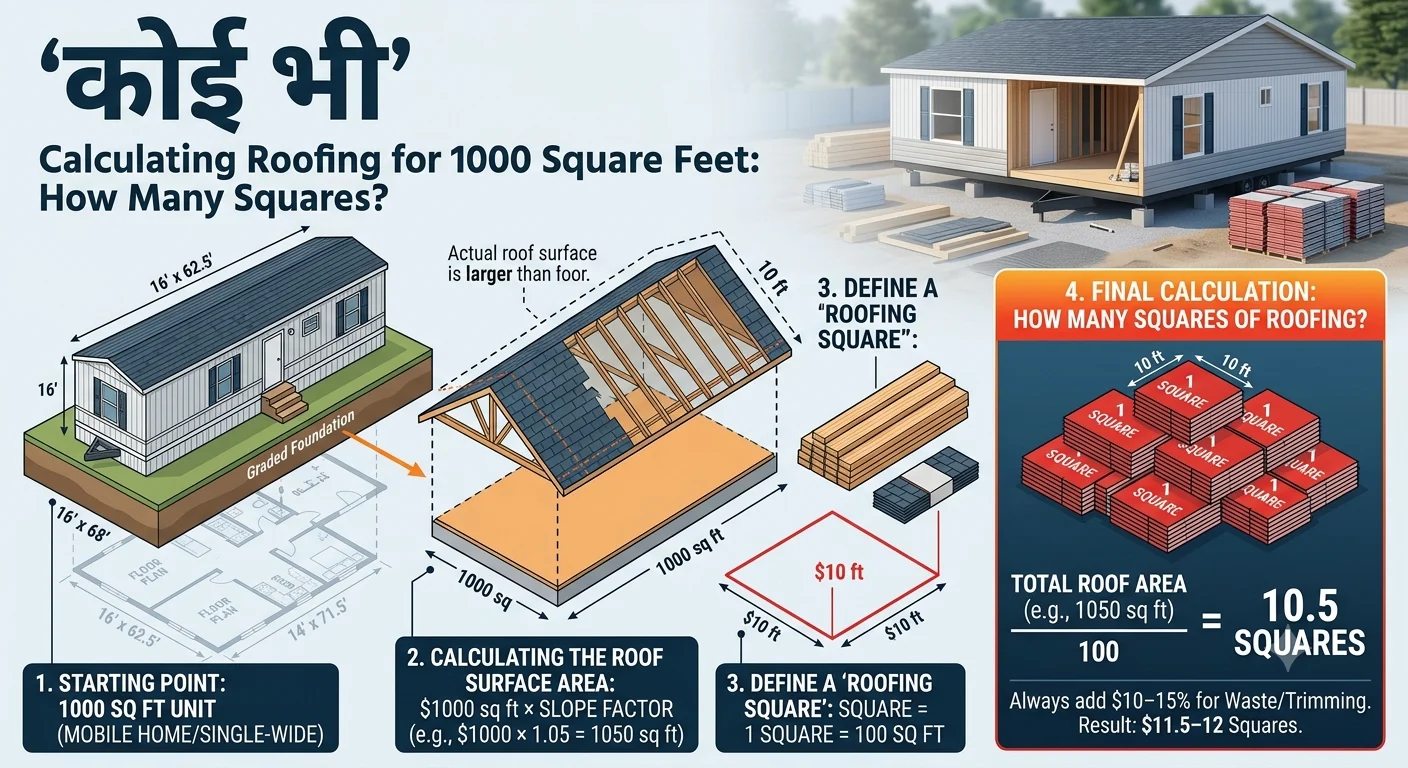
The answer is straightforward: a roofing square equals 100 square feet. Therefore, a roof measuring 1000 square feet contains 10 roofing squares. However, there is more to roofing calculations than this basic conversion. Factors such as roof pitch, waste, and roofing material type can affect the total amount of material required.
What Is a Roofing Square?
A roofing square is a standard unit of measurement used throughout the roofing industry.
One roofing square is equal to 100 square feet of roof surface area. Roofers use this measurement because it simplifies estimating materials and labor costs.
Instead of saying a roof is 1,000 square feet, a contractor might simply say the roof is 10 squares. This makes communication easier between contractors, suppliers, and homeowners.
Roofing squares are used for a variety of roofing materials, including:
- Asphalt shingles
- Metal roofing panels
- Cedar shakes
- Slate roofing
- Composite roofing materials
No matter which roofing material you choose, the roofing square remains the same measurement.
How Many Squares of Roofing Is 1000 Square Feet?
The calculation is simple:
Roofing Squares = Total Square Feet ÷ 100
For a 1000-square-foot roof:
1000 ÷ 100 = 10
Therefore:
1000 square feet = 10 roofing squares
This is the standard conversion used by roofing professionals across the industry.
Roofing Squares Conversion Chart
The chart below shows common roof sizes and their equivalent roofing squares.
| Roof Area (Square Feet) | Roofing Squares |
|---|---|
| 500 | 5 |
| 600 | 6 |
| 700 | 7 |
| 800 | 8 |
| 900 | 9 |
| 1000 | 10 |
| 1200 | 12 |
| 1500 | 15 |
| 1800 | 18 |
| 2000 | 20 |
| 2500 | 25 |
| 3000 | 30 |
This conversion chart can help you quickly estimate roofing squares without performing calculations each time.
How to Calculate Roofing Squares
Calculating roofing squares involves three simple steps.
Step 1: Measure the Roof
Measure the length and width of each roof section.
For example:
- Section 1: 20 feet × 25 feet = 500 square feet
- Section 2: 20 feet × 25 feet = 500 square feet
Step 2: Add All Roof Sections
Combine the square footage of every roof section.
500 + 500 = 1000 square feet
Step 3: Convert to Roofing Squares
Divide the total roof area by 100.
1000 ÷ 100 = 10 roofing squares
This gives you the total roofing squares required before accounting for waste.
Real-World Example
Imagine you own a detached garage with a roof area measuring 1000 square feet.
The roofing calculation would look like this:
| Description | Amount |
|---|---|
| Roof Area | 1000 sq ft |
| Roofing Squares | 10 |
| Shingle Bundles Needed | Approximately 30 |
| Waste Allowance | Additional 10–15% |
This example demonstrates why roofing squares are useful when estimating materials and project costs.
How Roof Pitch Affects Roofing Squares
Many homeowners assume their home’s floor area matches the roof area. In reality, roof pitch can significantly increase the actual roof surface.
A roof with a steep slope covers more surface area than a flat roof with the same footprint.
For example:
| Roof Type | Approximate Roof Area |
|---|---|
| Flat Roof | 1000 sq ft |
| Moderate Pitch | 1050–1150 sq ft |
| Steep Pitch | 1200+ sq ft |
As a result, a house with a 1000-square-foot footprint may require more than 10 roofing squares.
Roof pitch is one reason professional roof measurements are often more accurate than simple ground-level estimates.
Roofing Waste Factor Explained
Every roofing project generates waste.
Materials must be cut around:
- Roof valleys
- Chimneys
- Skylights
- Roof vents
- Dormers
- Roof edges
Because of these cuts, contractors typically add extra materials to their estimates.
Common waste allowances include:
| Roof Complexity | Waste Percentage |
|---|---|
| Simple Roof | 10% |
| Moderate Roof | 12–15% |
| Complex Roof | 15–20% |
For a 1000-square-foot roof:
- Base requirement: 10 squares
- With 10% waste: 11 squares
- With 15% waste: 11.5 squares
Most contractors round up to ensure sufficient materials are available during installation.
How Many Bundles of Shingles Are Needed for 1000 Square Feet?
Most standard asphalt shingles are packaged so that three bundles cover one roofing square.
Since 1000 square feet equals 10 roofing squares:
10 squares × 3 bundles = 30 bundles
Therefore, a typical 1000-square-foot roof requires approximately 30 bundles of shingles.
When accounting for waste:
| Estimate Type | Bundles Required |
|---|---|
| Basic Coverage | 30 |
| With 10% Waste | 33 |
| With 15% Waste | 35 |
Always verify bundle coverage with the manufacturer because some premium shingles may require more or fewer bundles per square.
Common Roofing Materials for a 10-Square Roof
Several roofing materials can be used to cover a 1000-square-foot roof.
Asphalt Shingles
Asphalt shingles are the most popular roofing material in North America.
Benefits include:
- Affordable pricing
- Easy installation
- Wide color selection
- Good durability
Metal Roofing
Metal roofs have become increasingly popular because of their longevity.
Advantages include:
- Long lifespan
- Energy efficiency
- Minimal maintenance
- Weather resistance
Cedar Shakes
Cedar roofing provides a natural and attractive appearance.
Benefits include:
- Rustic aesthetic
- Natural insulation
- Strong curb appeal
Slate Roofing
Slate is considered one of the most durable roofing materials available.
Advantages include:
- Exceptional lifespan
- Premium appearance
- Fire resistance
Regardless of the material chosen, the measurement of 10 roofing squares remains the same for a 1000-square-foot roof.
Benefits of Understanding Roofing Squares
Learning how roofing squares work offers several advantages.
More Accurate Estimates
You can better estimate roofing material costs before starting a project.
Easier Communication
Roofing contractors almost always discuss projects in squares rather than square feet.
Better Budget Planning
Knowing your roof size helps you compare estimates and manage expenses.
Reduced Material Waste
Accurate calculations minimize over-ordering and under-ordering.
Improved Project Management
Understanding roofing measurements helps streamline the entire roofing process.
Common Mistakes When Calculating Roofing Squares
Many homeowners make mistakes when estimating roof size.
Confusing Floor Area With Roof Area
The home’s footprint is not always the same as the roof surface.
Ignoring Roof Pitch
Steeper roofs contain more surface area and require additional materials.
Forgetting Waste Allowances
Ordering exactly 10 squares for a 1000-square-foot roof may not leave enough material for cuts and mistakes.
Measuring Incorrectly
Even small measurement errors can significantly affect roofing estimates.
Overlooking Manufacturer Specifications
Different roofing products may have varying coverage requirements.
Avoiding these mistakes can save both time and money during a roofing project.
Roofing Squares vs Square Feet
Although related, roofing squares and square feet are different units of measurement.
| Measurement | Meaning |
|---|---|
| Square Foot | Area measuring 1 foot by 1 foot |
| Roofing Square | Area measuring 100 square feet |
A roofing square is simply a larger unit designed specifically for roofing projects.
Using roofing squares simplifies material calculations and improves communication across the roofing industry.
Practical Uses of Roofing Square Calculations
Knowing how many roofing squares are in 1000 square feet can help with several tasks:
- Estimating roofing material costs
- Comparing contractor bids
- Calculating labor expenses
- Ordering shingles and accessories
- Planning roof replacement projects
- Evaluating property maintenance budgets
Whether you’re a homeowner or contractor, understanding roofing squares is an important skill.
FAQs
How many roofing squares are in 1000 square feet?
There are exactly 10 roofing squares in 1000 square feet because one roofing square equals 100 square feet.
How many bundles of shingles cover 1000 square feet?
Most asphalt shingles require approximately 30 bundles to cover 1000 square feet.
Does roof pitch affect roofing square calculations?
Yes. A steeper roof has more surface area than a flat roof with the same footprint, which can increase the number of roofing squares required.
Should I add extra roofing materials for waste?
Yes. Most professionals recommend adding 10% to 15% extra material to account for cutting waste and installation errors.
Is a 1000-square-foot house always a 10-square roof?
No. Roof pitch, overhangs, and roof design can increase the total roof area beyond the home’s floor area.
Conclusion
Understanding how many squares of roofing is 1000 square feet is essential when planning a roofing project. Since one roofing square equals 100 square feet, a 1000-square-foot roof contains exactly 10 roofing squares. However, most roofing projects require additional materials due to roof pitch, waste factors, and design complexity.
By accurately measuring your roof, converting square footage into roofing squares, and accounting for waste, you can create more reliable material estimates and avoid costly mistakes. Whether you’re replacing shingles, comparing contractor quotes, or budgeting for a roof replacement, knowing how roofing squares work will help you make informed decisions and keep your project on track.