
Understanding simple measurements helps in both daily life and education. Whether you are calculating room size for a house or trying to understand basic human anatomy, two common questions often appear: how many square feet is 30 by 30 and how many feet is the colon.
At first, these topics seem unrelated. One is about construction and space, and the other is about the human body. But both are based on the same idea—understanding size and measurement in a clear, simple way.
Let’s break everything down in an easy, practical way so you can understand both without confusion.
Understanding the Basics of Measurement
Before jumping into calculations, it’s important to understand what we are actually measuring.
We use different units depending on what we are measuring:
- Feet → used for length (one-dimensional measurement)
- Square feet → used for area (two-dimensional space)
This difference is very important because many people confuse the two.
For example:
- 10 feet = a line or length
- 10 square feet = a space (like a small mat or tile area)
This basic concept will help you understand both topics clearly.
How Many Square Feet is 30 by 30?
Now let’s answer the first question: how many square feet is 30 by 30.
This is a very simple area calculation used in construction, real estate, and interior planning.
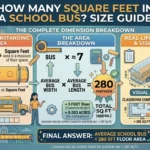
Step-by-Step Calculation
To calculate square feet, we use this formula:
Length × Width = Area
Now apply the values:
- Length = 30 feet
- Width = 30 feet
So:
30 × 30 = 900 square feet
Final Answer:
A 30 by 30 area equals 900 square feet
What Does 900 Square Feet Look Like?
To understand this better, let’s convert it into real-life examples.
A 900 square feet space can be:
- A small family house
- A medium-sized apartment
- A retail shop
- A small office space
- A garage or storage building
It is a square-shaped area, meaning all sides are equal (30 feet each).
Simple Visualization
Imagine:
- A square plot
- Each side is about the length of a small classroom wall
- The total space is enough for 2–3 rooms plus a kitchen
This is why understanding how many square feet is 30 by 30 is useful for builders, buyers, and planners.
Why Square Feet is Important in Real Life
Square feet is one of the most commonly used measurements in real estate and construction.
Here’s why it matters:
1. Property Buying
When buying land or a house, price is often based on square feet.
2. Construction Planning
Builders use square feet to estimate:
- Material cost
- Labor cost
- Design layout
3. Interior Design
Furniture placement depends on available square footage.
So knowing that 30×30 equals 900 sq ft helps in planning accurately.
Common Mistakes in Square Foot Calculation
Many people make simple mistakes when dealing with measurements.
Mistake 1: Confusing Feet with Square Feet
- 30 feet ≠ 30 square feet
- 30×30 = 900 square feet
Mistake 2: Forgetting to Multiply
Some people add instead of multiplying:
- Wrong: 30 + 30 = 60
- Correct: 30 × 30 = 900
Mistake 3: Ignoring Shape
Square feet only applies when measuring area, not length.
Avoiding these mistakes makes calculations accurate and reliable.
How Many Feet is the Colon?
Now let’s move to the second question: how many feet is the colon.
The colon is part of the human digestive system and is also called the large intestine.
What is the Colon?
The colon is a long tube in the body that:
- Absorbs water and salts
- Helps form stool
- Removes waste from the body
It is an important part of digestion and overall health.
Average Length of the Colon
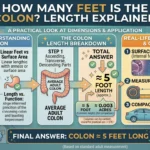
On average, the human colon is:
👉 About 5 feet long
However, this can vary slightly from person to person.
Typical Range:
- Shorter colon: around 4.5 feet
- Average colon: about 5 feet
- Longer colon: up to 6 feet
So when someone asks how many feet is the colon, the simple answer is:
✔ Around 5 feet in most adults
Why the Colon Length Varies
Not everyone has the exact same internal organ size. The colon length may differ because of:
1. Genetics
Some people naturally have longer or shorter digestive systems.
2. Body Size
Larger bodies may have slightly longer intestines.
3. Age and Development
As the body grows, organs also develop differently.
4. Health Conditions
Some medical conditions can slightly affect shape and length.
But overall, the difference is small and usually not medically important.
Colon vs Small Intestine (Simple Comparison)
To understand the colon better, compare it with another important organ:
| Organ | Average Length |
|---|---|
| Small Intestine | ~20 feet |
| Colon (Large Intestine) | ~5 feet |
Key Insight:
Even though the colon is shorter, it plays a very important role in digestion, especially in water absorption and waste formation.
Easy Way to Visualize Colon Length
To imagine 5 feet:
- It is roughly the height of an average adult person
- Or the length of a tall sofa
- Or about one large step repeated multiple times
This helps make the measurement easier to understand without medical confusion.
Why People Search This Question
People often search how many feet is the colon because:
- They are curious about human anatomy
- They are studying biology
- They heard about digestion and want clarity
- They want simple, quick answers
The key is to keep the explanation simple and realistic.
Comparing Both Topics Together
Even though both questions are different, they share one common idea: understanding size.
| Topic | Measurement Type | Answer |
|---|---|---|
| 30×30 area | Square feet (area) | 900 sq ft |
| Colon length | Feet (length) | ~5 feet |
This comparison shows how measurement changes depending on context.
Why Understanding Measurements is Useful
Learning basic measurement helps in many areas of life:
1. Construction and Real Estate
You can understand property size easily.
2. Education
Students can solve math and science questions better.
3. Health Awareness
Basic knowledge of human anatomy improves understanding of the body.
4. Daily Decision Making
From buying furniture to understanding space, measurements are everywhere.
Simple Tips for Better Understanding
Here are some easy tips to avoid confusion:
Tip 1: Always check the unit
- Feet = length
- Square feet = area
Tip 2: Use multiplication for area
Never add length and width when finding space.
Tip 3: Use real-life examples
Comparing numbers with real objects helps memory.
Common Confusions People Face
Confusion 1: Thinking 30×30 means 60 feet
This is incorrect. It actually means 900 square feet.
Confusion 2: Thinking colon length is exact for everyone
It is an average, not a fixed number.
Confusion 3: Mixing biology and math concepts
Both topics are different but require clear thinking.
Final Summary
Understanding simple measurements helps make everyday life easier.
To summarize:
- A 30 by 30 space equals 900 square feet
- The colon is about 5 feet long in an average adult
Both answers are simple, but they show how important measurement is in both construction and human biology.
When you understand these basics clearly, you can handle real-life problems more confidently—whether it’s planning a room or learning about the human body.