
Choosing the right air conditioner size is one of the most important decisions for keeping your home comfortable and energy efficient. A common question homeowners ask is how many square feet will 2 ton AC cool. While a 2-ton air conditioner is commonly recommended for medium-sized spaces, the exact coverage depends on several factors beyond square footage.
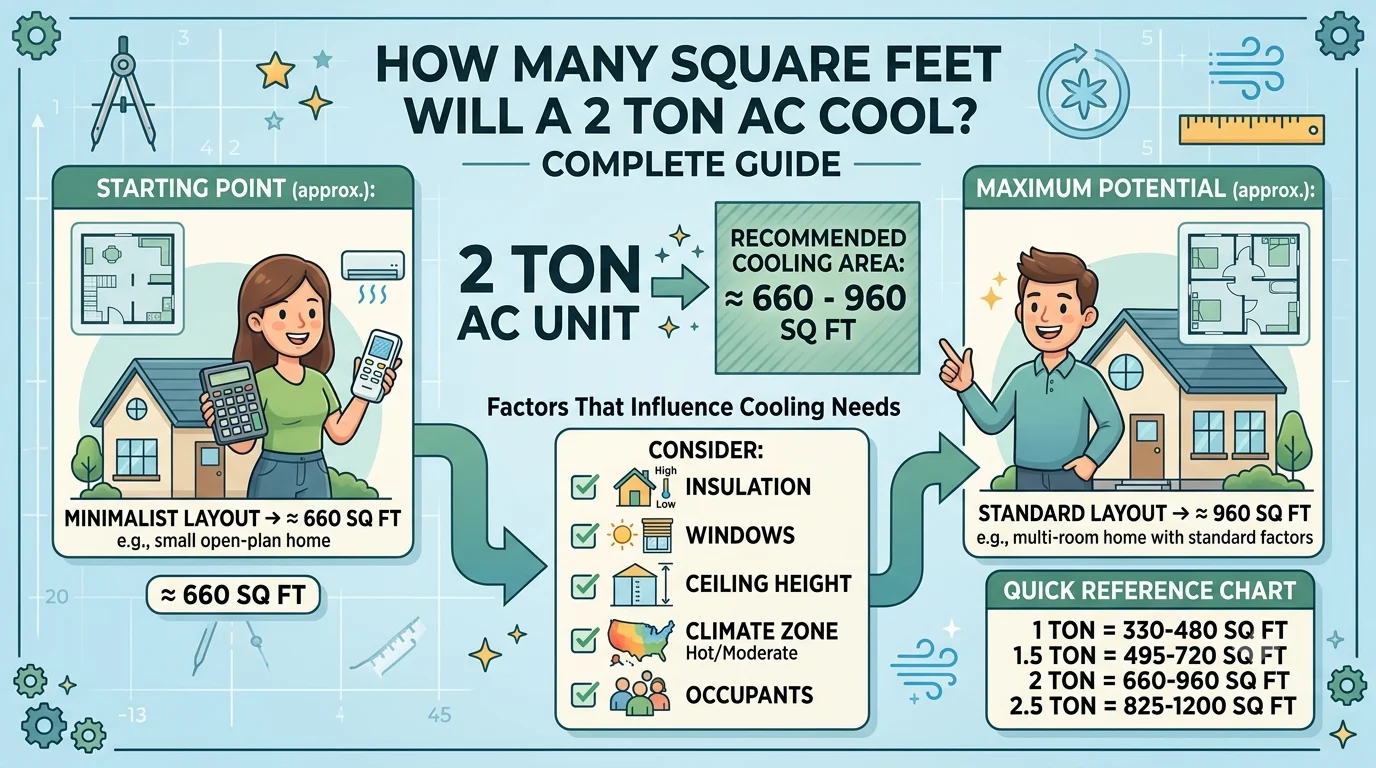
In general, a 2-ton AC can cool approximately 900 to 1,200 square feet under normal conditions. However, insulation quality, ceiling height, climate, windows, sunlight exposure, and the number of occupants all affect the cooling capacity.
This guide explains how much area a 2-ton AC can cool, how HVAC professionals calculate cooling requirements, practical examples, sizing charts, and tips for choosing the right unit for your home.
What Does a 2 Ton AC Mean?
The word “ton” in air conditioning does not refer to the unit’s weight. Instead, it measures cooling capacity.
- 1 Ton AC = 12,000 BTUs per hour
- 2 Ton AC = 24,000 BTUs per hour
- 3 Ton AC = 36,000 BTUs per hour
BTU (British Thermal Unit) measures how much heat an air conditioner removes from a room every hour.
Therefore, a 2-ton AC provides 24,000 BTUs of cooling every hour.
How Many Square Feet Will a 2 Ton AC Cool?
Under standard residential conditions, a 2-ton air conditioner cools approximately 900–1,200 square feet.
Average Coverage Chart
| AC Size | Cooling Capacity | Recommended Area |
|---|---|---|
| 1 Ton | 12,000 BTU | 450–600 sq ft |
| 1.5 Ton | 18,000 BTU | 600–900 sq ft |
| 2 Ton | 24,000 BTU | 900–1,200 sq ft |
| 2.5 Ton | 30,000 BTU | 1,200–1,500 sq ft |
| 3 Ton | 36,000 BTU | 1,500–1,800 sq ft |
These figures assume:
- 8-foot ceilings
- Average insulation
- Moderate climate
- Standard window sizes
- Typical household occupancy
Why the Coverage Range Varies
Many people assume every home needs the same AC size for the same floor area. In reality, homes differ significantly.
Climate
Hotter climates require more cooling.
For example:
- Arizona
- Texas
- Southern Pakistan
- UAE
A home in these regions may need a larger AC than a similar-sized home in a cooler climate.
Insulation
Good insulation keeps cool air inside.
Poor insulation allows heat to enter quickly, increasing cooling demand.
Ceiling Height
Standard recommendations assume:
- 8-foot ceilings
If your ceilings are:
- 10 feet
- 12 feet
- Vaulted
The AC must cool a larger air volume.
Windows
Large windows increase heat gain.
Factors include:
- South-facing windows
- Skylights
- Single-pane glass
- Large sliding doors
Number of Occupants
Each person generates heat.
More occupants mean:
- Higher cooling load
- Longer AC runtime
Appliances
Electronics also generate heat:
- Ovens
- Computers
- Gaming consoles
- TVs
- Refrigerators
How HVAC Professionals Estimate Cooling Needs
A common guideline is:
20 BTUs per square foot
Using this formula:
24,000 BTUs ÷ 20
= 1,200 square feet
However, HVAC contractors adjust this estimate based on:
- Sun exposure
- Local climate
- Ceiling height
- Windows
- Insulation
- Occupancy
- Home orientation
This is known as a Manual J load calculation.
Square Footage Examples
Example 1
House size:
950 square feet
A 2-ton AC is usually an excellent choice.
Example 2
House size:
1,100 square feet
A 2-ton unit typically provides comfortable cooling.
Example 3
House size:
1,250 square feet
A 2-ton AC may work if:
- Excellent insulation
- Mild climate
- Minimal sun exposure
Otherwise, a larger unit may be better.
Example 4
House size:
850 square feet
A 2-ton AC may be oversized unless:
- High ceilings
- Hot climate
- Poor insulation
Coverage by Home Type
| Home Type | Typical Recommendation |
|---|---|
| Apartment | 2 Ton may cool entire unit |
| Condo | Often sufficient |
| Small single-family home | Usually suitable |
| Large open floor plan | May require larger unit |
| Multi-story home | Depends on layout |
Is Bigger Always Better?
No.
Many homeowners think buying a larger AC means faster cooling.
Actually, oversized systems often create problems.
Problems with an Oversized AC
- Short cycling
- Higher electricity bills
- Poor humidity removal
- Uneven temperatures
- More wear on equipment
- Reduced lifespan
A properly sized AC performs better than an oversized one.
Problems with an Undersized AC
A smaller system also creates issues.
Common problems include:
- Runs continuously
- Doesn’t reach desired temperature
- Higher energy consumption
- Faster compressor wear
- Reduced comfort
Correct sizing is essential.
Energy Efficiency Matters
Two 2-ton AC units may have the same cooling capacity but different energy consumption.
Higher SEER ratings use less electricity.
Examples:
| SEER Rating | Efficiency |
|---|---|
| 13 SEER | Basic |
| 15 SEER | Good |
| 16–18 SEER | Better |
| 20+ SEER | Excellent |
Choosing a higher-efficiency model can reduce operating costs over time.
Practical Examples
Living Room
Area:
500 square feet
A 2-ton AC may be oversized unless the room receives intense sunlight.
Small Office
Area:
1,000 square feet
A 2-ton unit is often ideal.
Retail Shop
Area:
1,100 square feet
Additional lighting and customer traffic increase cooling demand.
A professional calculation is recommended.
Restaurant
Restaurants generate significant heat from:
- Cooking equipment
- Staff
- Customers
Even if the floor area is 1,000 square feet, a 2-ton AC may not be sufficient.
Quick Cooling Capacity Chart
| BTUs | Approximate Area |
|---|---|
| 6,000 | 150–250 sq ft |
| 8,000 | 250–350 sq ft |
| 10,000 | 350–450 sq ft |
| 12,000 | 450–600 sq ft |
| 18,000 | 600–900 sq ft |
| 24,000 | 900–1,200 sq ft |
| 30,000 | 1,200–1,500 sq ft |
| 36,000 | 1,500–1,800 sq ft |
Signs Your 2 Ton AC Is Properly Sized
Your AC is likely the right size if it:
- Maintains the thermostat setting
- Runs in regular cycles
- Controls humidity well
- Keeps temperatures consistent
- Uses reasonable electricity
- Doesn’t run continuously
Common Mistakes When Choosing AC Size
Avoid these errors:
Buying Based Only on Square Footage
Many other factors affect cooling needs.
Ignoring Insulation
Poor insulation increases cooling requirements.
Forgetting Ceiling Height
Higher ceilings increase the air volume.
Not Considering Sunlight
West-facing rooms often require additional cooling.
Skipping Professional Load Calculations
Manual J calculations provide the most accurate sizing.
Expert Tips
- Improve insulation before replacing your AC.
- Seal air leaks around doors and windows.
- Use ceiling fans to improve air circulation.
- Keep air filters clean.
- Schedule annual maintenance.
- Close curtains during hot afternoons.
- Install programmable thermostats.
These steps improve comfort while reducing energy costs.
Frequently Asked Questions
How many square feet will a 2 ton AC cool?
A 2-ton air conditioner generally cools 900 to 1,200 square feet, depending on insulation, ceiling height, climate, and sun exposure.
Is a 2 ton AC enough for a 1,200 square foot house?
Yes, in many cases it is. However, very hot climates or poorly insulated homes may require a larger unit.
Can a 2 ton AC cool 1,500 square feet?
Usually not. Most 1,500-square-foot homes require about a 2.5- or 3-ton system, depending on the home’s characteristics.
How many BTUs does a 2 ton AC have?
A 2-ton air conditioner provides 24,000 BTUs per hour of cooling capacity.
Does ceiling height affect AC sizing?
Yes. Higher ceilings increase the volume of air that must be cooled, which may require a larger system.
Conclusion
If you’re wondering how many square feet will 2 ton AC cool, the general answer is 900 to 1,200 square feet under average residential conditions. While this guideline works for many homes, factors such as climate, insulation, ceiling height, windows, occupancy, and sunlight exposure can significantly change the required cooling capacity.
Choosing the correct AC size is essential for comfort, energy efficiency, and long-term reliability. Rather than relying solely on square footage, consider a professional load calculation to ensure your air conditioner matches your home’s unique cooling needs.