
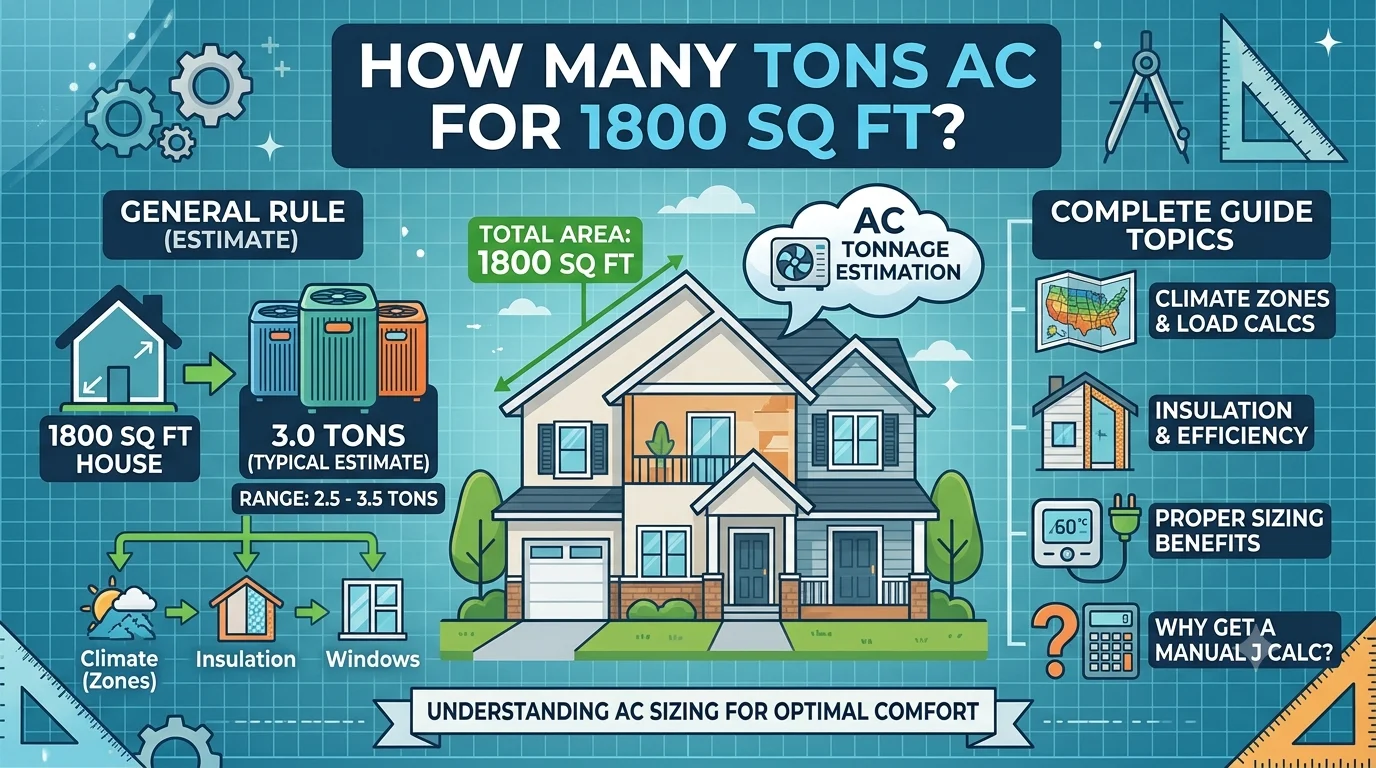
Choosing the correct air conditioner size is one of the most important decisions when cooling your home. If you’ve been wondering how many tons AC for 1800 square feet, the simple answer is that a 3-ton air conditioner is the right choice for most homes. However, the ideal AC size depends on several factors, including your local climate, insulation quality, ceiling height, window size, and the overall layout of your home.
An air conditioner that is too small will struggle to cool your home and run almost continuously, increasing electricity bills and reducing comfort. On the other hand, an oversized unit cools the home too quickly without removing enough humidity, resulting in frequent cycling and unnecessary wear on the system.
This guide explains how AC tonnage works, how to calculate the correct size for an 1,800-square-foot home, and what factors can affect your cooling needs.
What Does AC Tonnage Mean?
Many homeowners mistakenly believe that an air conditioner’s tonnage refers to its weight. In reality, tonnage measures the cooling capacity of an AC system.
One ton of air conditioning equals 12,000 BTUs (British Thermal Units) per hour. BTUs measure how much heat an air conditioner can remove from your home in one hour.
Here is a quick reference:
| AC Size | Cooling Capacity |
|---|---|
| 1 Ton | 12,000 BTU |
| 1.5 Ton | 18,000 BTU |
| 2 Ton | 24,000 BTU |
| 2.5 Ton | 30,000 BTU |
| 3 Ton | 36,000 BTU |
| 3.5 Ton | 42,000 BTU |
| 4 Ton | 48,000 BTU |
| 5 Ton | 60,000 BTU |
Understanding AC tonnage helps you choose a system that provides efficient and comfortable cooling without wasting energy.
How Many Tons AC for 1800 Square Feet?
For most homes, a 3-ton air conditioner (36,000 BTUs) is recommended for an 1,800-square-foot house.
This recommendation assumes:
- Standard 8-foot ceilings
- Average insulation
- Moderate climate
- Typical number of windows
- Average household occupancy
While a 3-ton system is suitable for most situations, some homes may require a slightly smaller or larger unit depending on their unique characteristics.
AC Size Chart by Home Square Footage
The following chart provides a general estimate for residential air conditioner sizing.
| Home Size | Recommended AC Size |
|---|---|
| 1,000 sq ft | 2 Ton |
| 1,200 sq ft | 2 Ton |
| 1,400 sq ft | 2.5 Ton |
| 1,600 sq ft | 2.5–3 Ton |
| 1,800 sq ft | 3 Ton |
| 2,000 sq ft | 3–3.5 Ton |
| 2,200 sq ft | 3.5 Ton |
| 2,500 sq ft | 4 Ton |
Remember that these recommendations are estimates. Professional HVAC contractors use detailed calculations before selecting the correct system.
How Is the Correct AC Size Calculated?
A common rule of thumb is that homes require approximately 20 BTUs per square foot.
For an 1,800-square-foot home:
1,800 × 20 = 36,000 BTUs
Since one ton equals 12,000 BTUs:
36,000 ÷ 12,000 = 3 tons
This simple calculation explains why a 3-ton air conditioner is commonly recommended.
However, square footage alone does not provide the complete picture. HVAC professionals perform a load calculation that considers many additional factors.
Factors That Affect AC Size
Climate
Homes located in hotter climates need more cooling capacity than homes in cooler regions. Areas with long, hot summers often require larger AC systems.
Insulation
Well-insulated homes retain cool air much better than poorly insulated homes.
If your home has:
- Modern insulation
- Energy-efficient windows
- Sealed air leaks
you may require slightly less cooling capacity.
Ceiling Height
Most sizing recommendations assume 8-foot ceilings.
Homes with:
- 9-foot ceilings
- 10-foot ceilings
- Vaulted ceilings
contain more air volume and may require a larger air conditioner.
Window Size and Direction
Large windows allow more sunlight into your home.
Homes with:
- Large glass panels
- South-facing windows
- Skylights
often experience greater heat gain.
Sun Exposure
A home surrounded by trees stays cooler than one that receives direct sunlight all day.
Greater sun exposure usually increases cooling requirements.
Number of Occupants
Every person generates body heat.
Homes with larger families typically require more cooling than homes with only one or two occupants.
Kitchen and Appliances
Cooking appliances, ovens, dryers, and electronics all produce heat inside the home.
If your household frequently cooks or uses many heat-producing appliances, cooling demand increases.
Air Leaks
Older homes often lose cooled air through:
- Doors
- Windows
- Attic spaces
- Crawl spaces
Sealing these leaks improves energy efficiency and reduces the load on your air conditioner.
Why Choosing the Right AC Size Matters
Proper AC sizing provides several important benefits.
Better Comfort
A correctly sized air conditioner maintains a consistent indoor temperature throughout your home.
Lower Energy Bills
An appropriately sized system runs more efficiently and uses less electricity.
Better Humidity Control
The right-sized AC removes excess moisture while cooling your home, making indoor air feel more comfortable.
Longer Equipment Life
Because the system doesn’t overwork itself or cycle excessively, it typically lasts longer.
Problems with an Oversized Air Conditioner
Many homeowners believe buying the biggest AC available will cool their home faster.
In reality, an oversized system creates several problems.
These include:
- Short cycling
- Higher energy consumption
- Poor humidity removal
- Uneven cooling
- Increased wear on components
- More frequent repairs
Choosing a larger unit than necessary usually reduces efficiency instead of improving comfort.
Problems with an Undersized Air Conditioner
An air conditioner that is too small also causes issues.
Common problems include:
- Continuous operation
- High electricity bills
- Difficulty cooling during hot weather
- Uneven room temperatures
- Increased strain on the compressor
- Shorter equipment lifespan
A properly sized system avoids these problems while delivering reliable performance.
Central AC vs. Mini-Split for 1,800 Square Feet
Depending on your home’s layout, you may choose between a central air conditioning system and ductless mini-splits.
| Feature | Central AC | Mini-Split |
|---|---|---|
| Best For | Whole-home cooling | Zoned cooling |
| Ductwork | Required | Not required |
| Energy Efficiency | High | Very high |
| Installation Cost | Moderate | Higher |
| Flexibility | Lower | Higher |
Homes with existing ductwork usually benefit from central AC, while homes without ducts may find mini-splits more practical.
Real-World Examples
Example 1: Average Home
An 1,800-square-foot home with standard insulation, average windows, and an 8-foot ceiling will generally perform well with a 3-ton air conditioner.
Example 2: Energy-Efficient Home
If the same-sized home has excellent insulation, energy-efficient windows, and is located in a mild climate, a 2.5-ton unit may provide adequate cooling.
Example 3: Hot Climate Home
A home in a very hot region with large windows and high ceilings may require a 3.5-ton system to maintain comfortable indoor temperatures.
Expert Tips for Choosing the Right AC
Before purchasing a new air conditioner, keep these recommendations in mind:
- Schedule a professional HVAC load calculation.
- Improve insulation before replacing your AC.
- Seal air leaks around doors and windows.
- Choose an energy-efficient unit with a high SEER2 rating.
- Replace air filters regularly.
- Keep outdoor condenser units clean.
- Consider inverter technology for quieter and more efficient operation.
These steps can significantly improve cooling performance while reducing long-term operating costs.
Common Mistakes to Avoid
Many homeowners make simple mistakes when selecting an air conditioner.
Avoid the following:
- Choosing AC size based only on square footage
- Buying the largest system available
- Ignoring insulation quality
- Forgetting ceiling height
- Overlooking window placement
- Skipping professional load calculations
- Neglecting ductwork condition
Taking the time to choose the correct size ensures better efficiency and long-term satisfaction.
Frequently Asked Questions
Is a 3-ton AC enough for 1,800 square feet?
Yes. A 3-ton air conditioner is generally the recommended size for most 1,800-square-foot homes with average insulation and standard ceiling heights.
Can a 2.5-ton AC cool an 1,800-square-foot house?
Yes, if the home is highly energy-efficient, has excellent insulation, and is located in a cooler climate. Otherwise, a 3-ton system is usually more appropriate.
How many BTUs do I need for 1,800 square feet?
Most homes require approximately 36,000 BTUs, which is equal to a 3-ton air conditioning system.
Does insulation affect AC size?
Absolutely. Better insulation reduces heat gain, allowing your home to stay cooler with less cooling capacity.
Should I choose a larger AC just to be safe?
No. Oversized air conditioners often perform worse than correctly sized systems because they cycle too frequently and remove less humidity.
Conclusion
If you’re wondering how many tons AC for 1800 square feet, the answer for most homes is a 3-ton air conditioner, or approximately 36,000 BTUs. This size provides an excellent balance of cooling performance, energy efficiency, and indoor comfort for homes with average insulation and standard ceiling heights. However, factors such as climate, insulation, window placement, ceiling height, occupancy, and sun exposure can all influence the ideal system size. Before purchasing a new air conditioner, it’s always wise to have a professional HVAC load calculation performed to ensure you select the most efficient and effective unit for your specific home.