
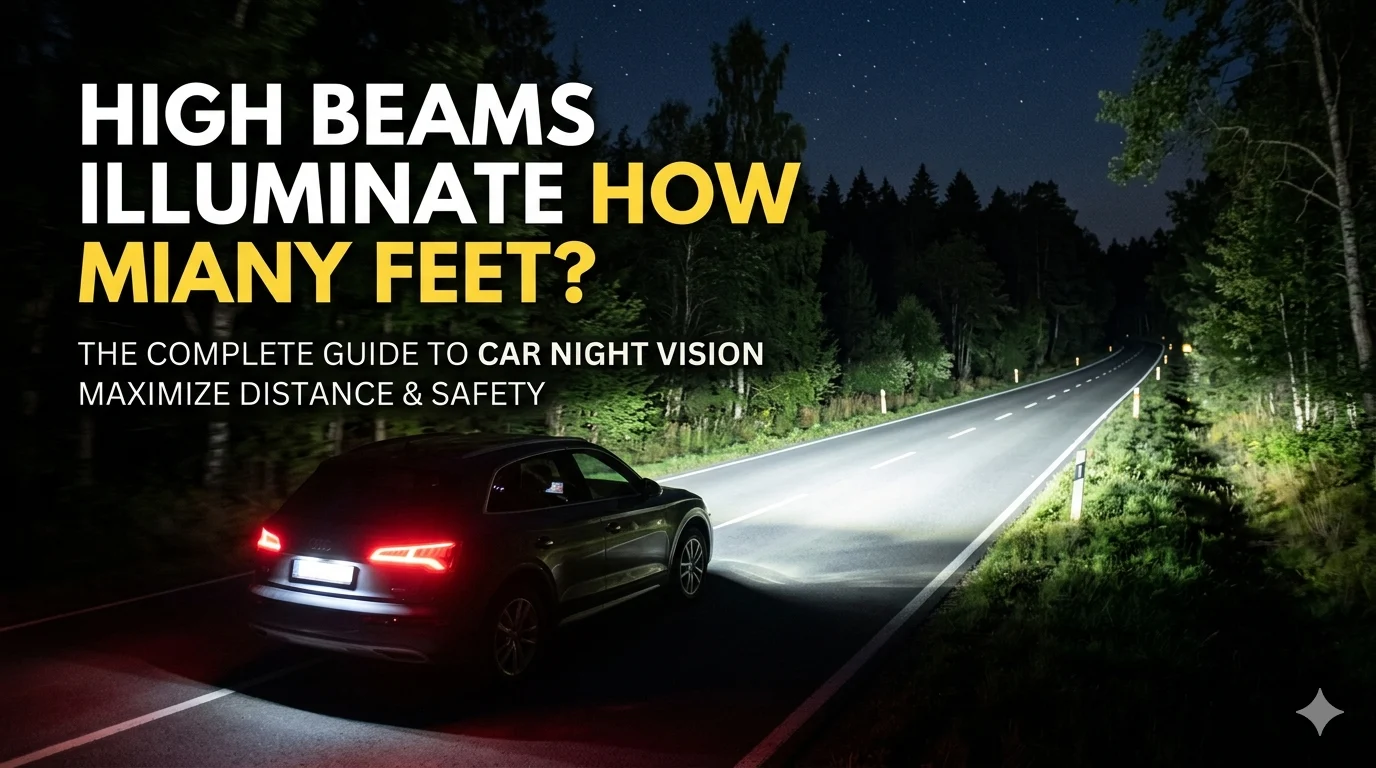
Driving at night can feel challenging, especially when visibility drops and roads become harder to judge. One of the most common questions drivers ask is high beams illuminate how many feet and whether they provide enough distance for safe driving.
Understanding headlight range is not just a technical detail—it directly affects your reaction time, braking distance, and overall road safety. High beams are designed to give maximum visibility, but the actual distance they cover depends on several important factors like weather, road type, and vehicle design.
In this guide, we will break down exactly how far high beams illuminate, how they compare to low beams, and how you can use them safely in real driving conditions.
High Beams Illuminate How Many Feet in Ideal Conditions
Under normal and clear conditions, high beams typically illuminate between 350 to 500 feet ahead of the vehicle. This range can vary depending on the car model, headlight quality, and alignment.
Typical Distance Range Explained
- Average distance: 350–500 feet
- Premium vehicles: Up to 600 feet
- Older vehicles: Around 300–400 feet
To put this into perspective, 500 feet is roughly the length of 1.5 football fields. This gives drivers significantly more time to react to obstacles, animals, or sudden road hazards.
However, it’s important to understand that this is not a fixed number. The real answer to high beams illuminate how many feet depends heavily on external conditions.
Why Distance Varies by Vehicle
Not all headlights are built the same. Several design and technology differences impact illumination range:
- LED headlights often produce longer and sharper beams
- Halogen bulbs may have shorter and softer reach
- Proper alignment can increase usable distance
- Dirty or foggy lenses reduce beam effectiveness
Even small differences in headlight setup can change how far you actually see at night.
High Beam vs Low Beam: Key Differences
To understand visibility better, it’s important to compare high beams with low beams.
| Feature | High Beams | Low Beams |
|---|---|---|
| Distance | 350–500 feet | 150–200 feet |
| Light Spread | Wide and strong | Focused and limited |
| Usage | Dark, empty roads | City traffic, highways |
| Glare Risk | High | Low |
High beams are designed for maximum distance, but they also create glare for oncoming drivers, which is why they must be used carefully.
When to Use Each Beam
Use high beams when:
- Driving on dark rural roads
- No oncoming traffic is present
- Roads are poorly lit
Use low beams when:
- Driving in cities or traffic
- Vehicles are approaching from opposite direction
- Weather conditions are poor (fog, rain, snow)
Factors That Affect High Beam Distance
Even though high beams can reach up to 500 feet, several real-world factors can reduce or increase this range.
Weather Conditions
Weather is one of the biggest visibility blockers:
- Fog can reduce visibility to less than 100 feet
- Rain scatters light and reduces clarity
- Dust or smoke blocks beam penetration
In poor weather, high beams may actually reduce visibility by reflecting light back into your eyes.
Road Conditions
The type of road also matters:
- Open highways allow maximum beam usage
- Curved or hilly roads limit forward visibility
- Tree-lined roads may block light spread
Headlight Type and Alignment
Modern vehicles use different lighting systems:
- LED and HID lights provide longer reach
- Halogen lights offer shorter range
- Misaligned headlights reduce effective distance significantly
Proper alignment ensures light is directed where it is needed most.
Vehicle Speed and Reaction Time
Even if high beams illuminate 500 feet, your safety depends on speed.
- At 60 mph, a car travels ~88 feet per second
- 500 feet gives roughly 5–6 seconds of reaction time
That time window is critical for avoiding accidents.
Safe Driving Distance Using High Beams
A key part of understanding high beams illuminate how many feet is connecting it to stopping distance.
Stopping distance includes:
- Reaction time distance
- Braking distance
At higher speeds, your stopping distance may exceed your headlight range if you are not careful.
Real-World Safety Scenario
Imagine driving at night on a highway:
- Speed: 65 mph
- Visibility: 400 feet using high beams
- Sudden obstacle appears
You may have only a few seconds to react. If your speed is too high, even high beams won’t give enough time to stop safely.
This is why safe driving is not just about visibility—it’s about speed control.
Common Mistakes Drivers Make with High Beams
Many drivers misuse high beams without realizing it. Here are the most common mistakes:
- Using high beams in traffic
- Forgetting to switch to low beams
- Driving too fast at night
- Ignoring headlight maintenance
- Not adjusting headlights after modifications
These mistakes not only reduce safety but can also blind other drivers.
Expert Tips for Better Night Driving Visibility
To maximize safety and visibility at night, follow these expert tips:
- Keep headlights clean and clear
- Check beam alignment regularly
- Slow down in unfamiliar areas
- Avoid staring directly into oncoming headlights
- Use high beams only in open, dark roads
- Replace dim bulbs early
Small adjustments can greatly improve how far and clearly you see.
Legal and Safety Considerations for High Beams
Different regions have rules about high beam usage. Generally:
- High beams must be dimmed within 500 feet of oncoming traffic
- They must be lowered when following another vehicle closely
- Improper use can lead to fines in some areas
These rules exist to prevent glare-related accidents and improve road safety for everyone.
Conclusion
So, high beams illuminate how many feet? In most cases, high beams typically illuminate around 350 to 500 feet ahead, depending on vehicle type, weather, and road conditions.
However, visibility distance alone does not guarantee safety. Your speed, reaction time, and driving behavior play an equally important role.
High beams are a powerful tool for night driving, but they must be used responsibly. When combined with safe driving habits, they significantly improve road visibility and reduce accident risk.