

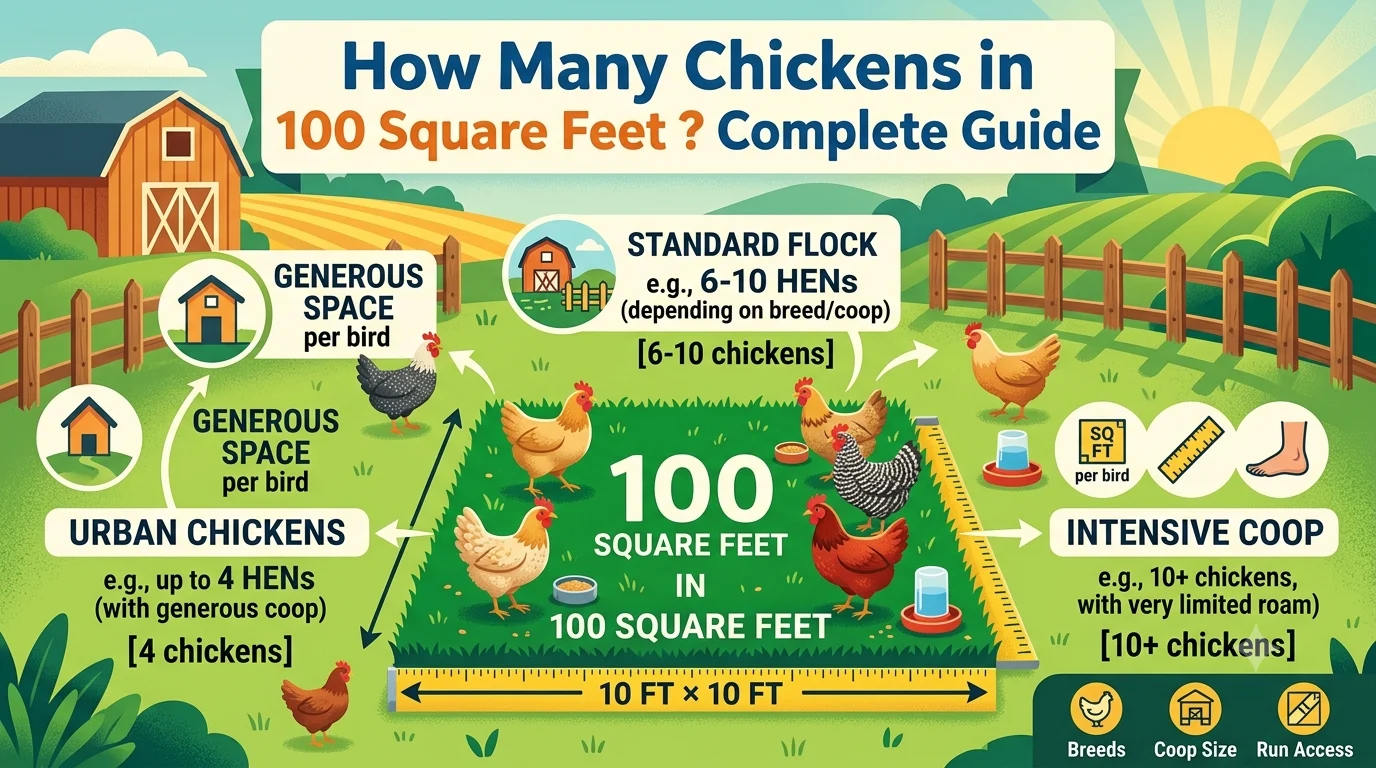
Keeping chickens in a limited space is possible, but the number of birds you can raise depends on more than just the size of your coop. If you’re wondering how many chickens in 100 square feet, the answer varies based on whether the space is indoors, outdoors, free-range, or part of a permanent run.
A general guideline is that 100 square feet can comfortably accommodate 10 to 25 chickens, depending on the setup. Backyard flocks with an outdoor run can keep more birds than a fully enclosed coop because chickens have more room to move, forage, and exercise.
This guide explains recommended space requirements, provides practical examples, and helps you decide the ideal flock size for healthy, productive chickens.
How Many Chickens in 100 Square Feet?
The answer depends on how the 100 square feet is being used.
| Space Type | Recommended Space Per Chicken | Chickens in 100 Square Feet |
|---|---|---|
| Indoor Coop Only | 8–10 sq ft | 10–12 chickens |
| Standard Coop | 4 sq ft | 25 chickens |
| Outdoor Run | 8–10 sq ft | 10–12 chickens |
| Free-Range with Coop | 3–4 sq ft in coop | 20–25 chickens |
For most backyard chicken owners, 10 to 15 chickens is considered the safest and most comfortable number for a 100-square-foot area.
Understanding Chicken Space Requirements
Chickens need enough room to:
- Walk comfortably
- Stretch their wings
- Access food and water
- Roost at night
- Lay eggs without stress
- Avoid bullying and pecking
Too little space increases stress, disease, feather pecking, and poor egg production.
That’s why experienced poultry keepers recommend planning your flock around both coop space and outdoor run space.
Indoor Coop Space Guidelines
The coop is where chickens sleep, lay eggs, and stay during bad weather.
General recommendations include:
| Chicken Type | Space Needed Per Bird |
|---|---|
| Bantam Chickens | 2–3 sq ft |
| Standard Layers | 4 sq ft |
| Large Breeds | 5–6 sq ft |
| Heavy Dual-Purpose Breeds | 6–8 sq ft |
If your entire 100 square feet is enclosed coop space:
- 25 average laying hens fit comfortably.
- About 18–20 larger breeds are ideal.
- Around 15 giant breeds are more realistic.
Outdoor Run Requirements
When chickens spend much of the day outside, they need additional room.
Recommended outdoor run space:
- Minimum: 8 sq ft per chicken
- Better: 10 sq ft
- Excellent: 15–20 sq ft
If your 100 square feet is an outdoor run:
- 10 chickens have plenty of room.
- 12 chickens can work with good management.
- More than 15 chickens usually leads to overcrowding unless they free-range regularly.
How Free-Range Chickens Change the Numbers
If chickens spend most of the day roaming your yard, they rely less on the run.
In this case:
- Coop space becomes the main consideration.
- Outdoor exercise reduces stress.
- Birds stay healthier.
- Grass has time to recover.
A 100-square-foot coop can comfortably support 20 to 25 free-range chickens.
Chicken Breed Makes a Difference
Not every chicken breed needs the same amount of room.
Small Breeds
Examples include:
- Serama
- Dutch Bantam
- Sebright
These birds need less space.
A 100-square-foot coop may hold 30 or more bantams comfortably.
Medium Breeds
Popular examples include:
- Rhode Island Red
- Plymouth Rock
- Australorp
- ISA Brown
- Leghorn
These usually require about 4 square feet each.
A flock of 25 birds fits well indoors.
Large Breeds
Examples include:
- Jersey Giant
- Brahma
- Cochin
Because of their size, expect around 15–18 chickens in the same area.
Factors That Affect Stocking Density
Several factors determine how many chickens your space can realistically support.
Ventilation
Fresh air reduces moisture and ammonia.
Poor ventilation means fewer chickens should be kept.
Climate
Cold climates often require more indoor space because birds stay inside longer.
Hot climates benefit from extra outdoor room and shade.
Breed Temperament
Active breeds need more room.
Calm breeds tolerate smaller spaces better.
Feeding Stations
Enough feeders prevent competition.
A crowded feeding area causes stress even if the total square footage seems adequate.
Water Access
Multiple waterers reduce fighting and ensure every bird stays hydrated.
Example Flock Sizes
Here are practical examples.
Small Family Flock
- 6 hens
- Plenty of room
- Easy maintenance
- Excellent egg production
Medium Backyard Flock
- 10 hens
- Comfortable living conditions
- Easy cleaning
- Good balance between space and productivity
Large Hobby Flock
- 15 hens
- Requires careful cleaning
- Additional enrichment recommended
Maximum Capacity
- Around 25 average hens
- Works only with excellent ventilation, frequent cleaning, and outdoor access.
Egg Production Expectations
The number of eggs depends on breed, age, and season.
Approximate yearly production:
| Number of Hens | Average Eggs Per Day |
|---|---|
| 6 | 4–5 |
| 10 | 7–9 |
| 15 | 10–13 |
| 20 | 14–17 |
| 25 | 17–22 |
These estimates assume healthy laying breeds.
Signs Your Coop Is Overcrowded
Watch for these warning signs:
- Feather pecking
- Bullying
- Dirty eggs
- Strong ammonia smell
- Increased illness
- Loud fighting
- Reduced egg production
- Dirty water
- Rapid bedding buildup
If these problems appear, reduce flock size or expand available space.
Benefits of Giving Chickens More Space
Extra space offers many advantages.
Healthier Birds
Better airflow reduces disease risk.
Cleaner Coop
Less waste accumulates each day.
Better Egg Production
Relaxed hens usually lay more consistently.
Reduced Aggression
More personal space means less fighting.
Easier Maintenance
Cleaning becomes faster and less frequent.
Common Mistakes to Avoid
Many beginners underestimate how much room chickens need.
Avoid these common errors:
- Using only minimum space recommendations.
- Forgetting outdoor run requirements.
- Buying too many chicks at once.
- Ignoring ventilation.
- Providing too few nesting boxes.
- Having only one feeder.
- Overlooking future flock growth.
Planning ahead saves money and prevents overcrowding.
Practical Example
Imagine you have:
- A 100-square-foot coop
- A 300-square-foot outdoor run
You could comfortably keep:
- 20 laying hens
- 2 roosters (if local regulations allow)
- Plenty of nesting boxes
- Multiple feeders
- Adequate roost space
This setup provides a healthy environment for most backyard flocks.
Expert Tips for Raising Chickens in Limited Space
Experienced poultry keepers recommend:
- Build larger than you think you’ll need.
- Use vertical roosting space.
- Add dust-bathing areas.
- Rotate outdoor runs if possible.
- Keep bedding dry.
- Install predator-proof fencing.
- Clean feeders weekly.
- Refresh water daily.
- Inspect birds regularly for signs of stress.
These habits improve flock health even in smaller spaces.
Indoor vs Outdoor Space Comparison
| Feature | Indoor Coop | Outdoor Run |
|---|---|---|
| Sleeping | Yes | No |
| Egg Laying | Yes | No |
| Exercise | Limited | Excellent |
| Foraging | Minimal | Good |
| Ventilation Needed | High | Moderate |
| Cleaning Frequency | Higher | Lower |
A balanced combination of both provides the best environment.
Frequently Asked Questions
Can 20 chickens live in 100 square feet?
Yes, if the 100 square feet refers to coop space and the chickens also have a spacious outdoor run or free-range access. If it’s their only space, 20 birds may feel crowded.
Is 100 square feet enough for 10 chickens?
Absolutely. Ten chickens have ample room in a 100-square-foot area, especially when they also have access to an outdoor run.
How much run space do 10 chickens need?
Most experts recommend 80 to 100 square feet of outdoor run space for 10 chickens, though more is always better.
How many nesting boxes are needed for 10 chickens?
Three to four nesting boxes are generally enough because hens do not all lay eggs at the same time.
Does chicken breed affect space requirements?
Yes. Bantams require less space, while large breeds such as Brahmas and Jersey Giants need considerably more room than standard laying hens.
Conclusion
If you’re asking how many chickens in 100 square feet, the ideal answer depends on whether the area is used as a coop, an outdoor run, or part of a free-range system. For most backyard setups, 10 to 15 chickens provide a comfortable balance between space, health, and productivity. A well-designed 100-square-foot coop with access to an outdoor run can house 20 to 25 average-sized chickens, while larger breeds require more room. Prioritizing proper ventilation, cleanliness, and adequate feeding space will help your flock stay healthy, reduce stress, and produce eggs consistently.