

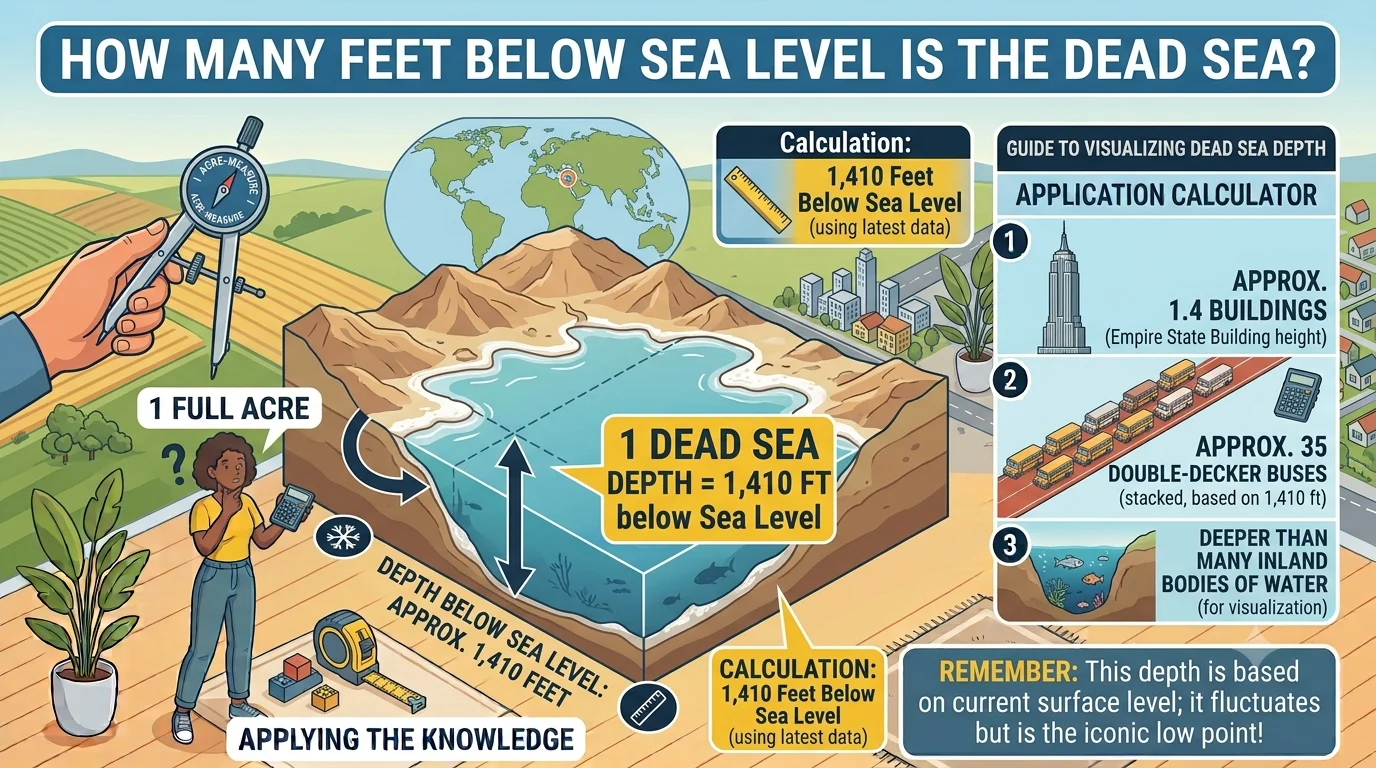
If you’ve ever wondered how many feet below sea level is the Dead Sea, the answer is approximately 1,410 feet (430 meters) below mean sea level. This remarkable elevation makes the Dead Sea the lowest exposed land surface on Earth. Located between Jordan and Israel in the Jordan Rift Valley, the Dead Sea is famous for its extremely salty water, mineral-rich mud, and the unique experience of floating effortlessly on its surface.
Although the Dead Sea is called a sea, it is actually a hypersaline lake. Its elevation changes slightly over time because the water level continues to decline due to evaporation and reduced water flowing into it. Scientists regularly monitor these changes using modern surveying techniques, but it consistently remains the world’s lowest land elevation.
Understanding why the Dead Sea lies so far below sea level helps explain its unusual climate, geological history, and worldwide importance. Whether you’re a student, traveler, or simply curious about geography, learning about the Dead Sea reveals one of Earth’s most fascinating natural wonders.
The Simple Answer
The Dead Sea is approximately 1,410 feet (430 meters) below sea level. While the exact measurement changes slightly from year to year, this figure is widely accepted and regularly updated by researchers.
Here are some key facts:
Feature| Measurement
Elevation below sea level| About 1,410 feet (430 meters)
Maximum depth| About 997 feet (304 meters)
Length| About 31 miles (50 kilometers)
Width| About 9 miles (15 kilometers)
Surface area| Around 234 square miles (605 square kilometers)
Salt concentration| Nearly 10 times saltier than most oceans
These measurements make the Dead Sea one of the most extraordinary natural landmarks on the planet.
What Is the Dead Sea?
Despite its name, the Dead Sea is not an ocean or sea. It is a landlocked hypersaline lake located in the Jordan Rift Valley between Jordan and Israel, with the West Bank along part of its western shore.
Most of its water comes from the Jordan River. Unlike rivers that eventually flow into oceans, the Dead Sea has no outlet. Water enters the basin but cannot escape except through evaporation. As the water evaporates under the region’s hot desert climate, dissolved minerals remain behind, steadily increasing the lake’s salinity.
Because of its high salt concentration, very few plants or animals can survive in the water. This is the reason it became known as the “Dead Sea.” However, certain microorganisms and bacteria have adapted to these harsh conditions.
Why Is the Dead Sea Below Sea Level?
The Dead Sea’s exceptionally low elevation is the result of millions of years of geological activity.
The lake sits within the Jordan Rift Valley, which formed as tectonic plates shifted and created a deep depression in Earth’s crust. Over time, rivers carried water into this basin, but because there was no outlet to the sea, the water became trapped.
Several natural factors explain its low elevation:
- Movement of tectonic plates created a deep geological basin.
- Water from the Jordan River flows into the lake.
- There is no river flowing out of the Dead Sea.
- High desert temperatures cause intense evaporation.
- Minerals accumulate while water disappears.
Together, these processes created the world’s lowest exposed land surface.
How Scientists Measure the Dead Sea’s Elevation
Measuring the elevation of the Dead Sea requires advanced technology because the water level changes over time.
Scientists use several methods:
- GPS surveying
- Satellite imagery
- Laser elevation mapping
- Hydrological monitoring
- Ground-based surveying equipment
Measurements are compared with mean sea level to determine the lake’s elevation accurately. Because the water level continues to decline, scientists regularly update official figures.
Why the Dead Sea Keeps Shrinking
One of the biggest environmental concerns surrounding the Dead Sea is that its water level continues to fall every year.
The primary reasons include:
- Reduced flow from the Jordan River.
- Water diversion for agriculture and drinking supplies.
- Mineral extraction by industries.
- High evaporation caused by the hot desert climate.
- Limited rainfall throughout the region.
As the shoreline recedes, large sinkholes have formed around the lake. These sinkholes develop when underground salt layers dissolve after freshwater replaces salty groundwater, causing the ground above to collapse.
Many scientists and governments are studying ways to slow or reverse the shrinking of the Dead Sea while protecting its unique ecosystem.
How the Dead Sea Compares With Other Low-Elevation Places
The Dead Sea stands out among the world’s lowest locations.
Location| Approximate Elevation
Dead Sea| -1,410 feet (-430 meters)
Badwater Basin, Death Valley| -282 feet (-86 meters)
Salton Sea| About -236 feet (-72 meters)
Caspian Sea Surface| About -92 feet (-28 meters)
This comparison clearly shows that the Dead Sea is far lower than other famous below-sea-level locations.
Why People Float So Easily
One of the Dead Sea’s biggest attractions is that visitors can float effortlessly.
This happens because the water contains an extremely high concentration of dissolved salts and minerals. The dense water provides greater buoyancy than ordinary freshwater or seawater, allowing the human body to remain on the surface with little effort.
Floating in the Dead Sea has become one of the most recognizable travel experiences in the world.
The Minerals Found in the Dead Sea
The Dead Sea contains a unique blend of naturally occurring minerals, including:
- Magnesium
- Potassium
- Calcium
- Sodium
- Bromide
- Chloride
These minerals have made the area famous for spa treatments, skincare products, and therapeutic tourism. Mineral-rich mud from the Dead Sea is commonly used in cosmetic and wellness products around the world.
Climate Around the Dead Sea
The Dead Sea experiences a hot desert climate.
Visitors can generally expect:
- Hot, dry summers
- Mild winters
- Very little rainfall
- Low humidity
- High evaporation rates
- Many sunny days throughout the year
These conditions contribute to the lake’s continued loss of water and high salt concentration.
Why the Dead Sea Is So Important
The Dead Sea is significant for many reasons.
It is an important geological landmark because it helps scientists understand tectonic activity and Earth’s changing landscape. It also serves as a valuable environmental research site where experts study climate change, water management, and shrinking lakes.
The region is equally important for tourism. Visitors come from around the world to experience floating in the salty water, applying mineral-rich mud, and enjoying nearby historical and cultural attractions.
Additionally, the Dead Sea supports industries that produce cosmetics, mineral products, and health-related goods using its unique natural resources.
Interesting Facts About the Dead Sea
Here are some fascinating facts:
- It is the lowest exposed land surface on Earth.
- It lies about 1,410 feet below sea level.
- It is nearly ten times saltier than the average ocean.
- Most fish cannot survive in its water.
- People can float naturally without swimming.
- The shoreline continues to recede each year.
- Thousands of sinkholes have formed around the lake.
- It attracts millions of visitors over time because of its unique natural features.
Practical Examples to Understand the Elevation
An elevation of about 1,410 feet below sea level can be difficult to picture.
Consider these comparisons:
- It is deeper than the height of many skyscrapers.
- It is roughly equivalent to stacking several football fields vertically.
- If placed at sea level, much of the surrounding landscape would still remain below the ocean’s surface.
These comparisons help illustrate just how extraordinary the Dead Sea’s location really is.
Common Misconceptions
Several myths surround the Dead Sea.
One common misconception is that it is completely lifeless. While fish and most aquatic plants cannot survive there, certain microorganisms can live in its salty environment.
Another myth is that the Dead Sea never changes. In reality, its water level has been declining for decades, making ongoing scientific monitoring essential.
Some people also believe it is an ocean because of its name, but it is actually a landlocked hypersaline lake.
Expert Tips for Visitors
If you plan to visit the Dead Sea, keep these tips in mind:
- Avoid getting the salty water in your eyes.
- Do not shave immediately before entering the water.
- Limit your floating time to avoid skin irritation.
- Drink plenty of water to stay hydrated.
- Wear water shoes because salt crystals can be sharp.
- Rinse off after leaving the water.
These simple precautions can help make your visit safer and more enjoyable.
Final Thoughts
The answer to how many feet below sea level is the Dead Sea is approximately 1,410 feet (430 meters) below mean sea level. This extraordinary elevation makes it the lowest exposed land surface on Earth and one of the planet’s most fascinating natural wonders.
Its unique location, remarkable salt concentration, mineral-rich waters, and geological history continue to attract scientists, travelers, and nature enthusiasts alike. Although the Dead Sea is shrinking because of reduced water inflow and ongoing evaporation, it remains an iconic destination that highlights the incredible diversity of Earth’s landscapes. Whether you’re exploring geography, planning a trip, or satisfying your curiosity, the Dead Sea offers an unforgettable example of how natural forces can shape our world.