

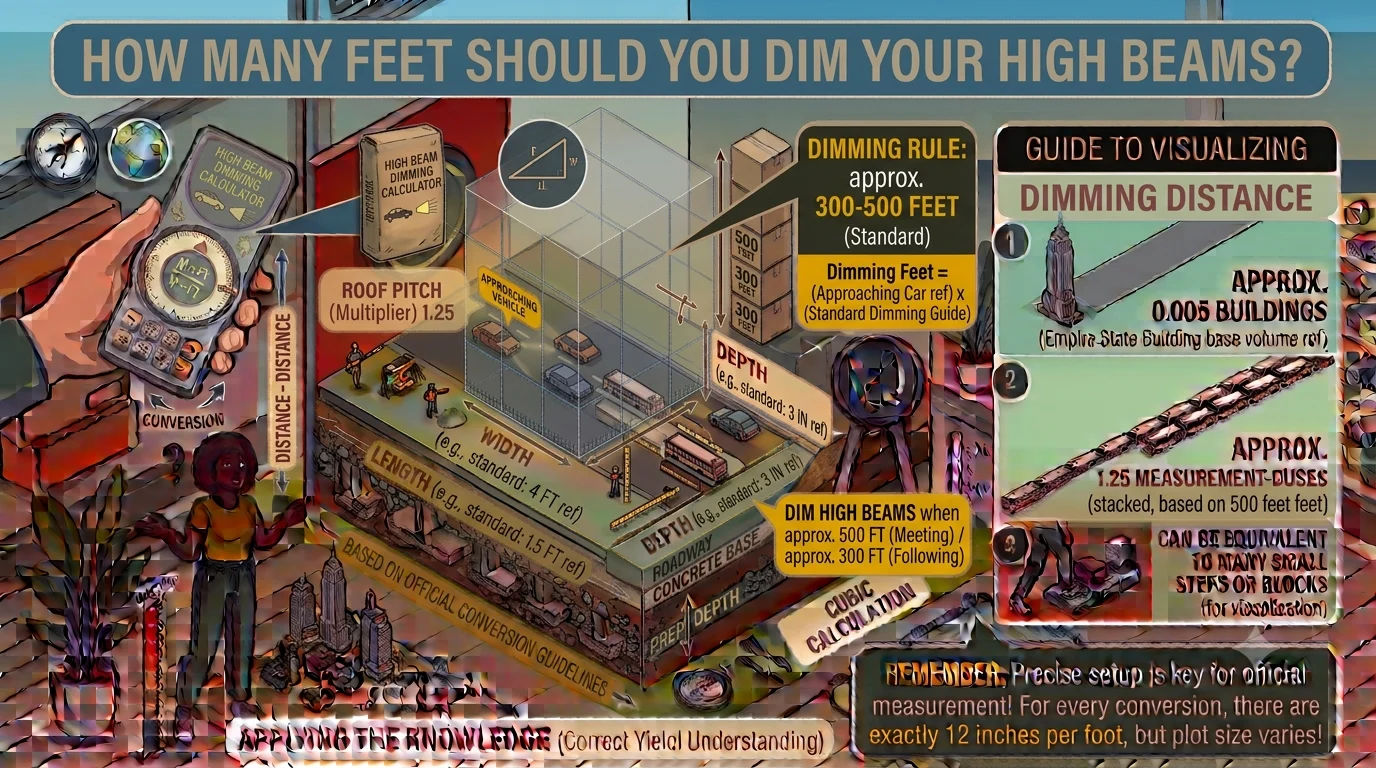
Driving at night requires good visibility, but it also requires responsibility toward other drivers. Many people wonder, how many feet should you dim your high beams when another vehicle approaches or when driving behind someone. Using high beams at the wrong time can create dangerous glare and make it harder for other drivers to see the road.
In most situations, you should dim your high beams when an oncoming vehicle is within about 500 feet. When you are following another vehicle, you should switch to low beams when you are within about 200 feet. These distances help reduce glare and allow everyone on the road to drive more safely.
High beams are useful tools when used correctly. They help drivers see farther on dark roads, identify obstacles earlier, and improve nighttime awareness. However, they should only be used when they do not affect other drivers.
Understanding High Beam Headlights
High beam headlights are designed to provide a stronger and longer light range compared with normal headlights. They allow drivers to see farther ahead on roads with limited lighting.
They are especially helpful when driving on:
- Dark rural roads
- Roads without streetlights
- Empty highways
- Areas with limited visibility
However, high beams can become dangerous when used near other vehicles. The bright light can reflect into another driver’s eyes or mirrors, causing temporary discomfort and reducing their ability to react quickly.
This is why knowing when to dim high beams is an important part of safe driving.
How Many Feet Should You Dim Your High Beams?
The recommended distance depends on the situation.
When an Oncoming Vehicle Approaches
You should dim your high beams when an oncoming vehicle is about 500 feet away.
This gives the other driver enough time to adjust without being affected by intense glare. Turning off high beams early is safer than waiting until the vehicle gets very close.
For example, if you are driving on a dark country road and see headlights approaching in the distance, switch to low beams before the vehicle reaches the 500-foot range.
When Following Another Vehicle
When driving behind another vehicle, you should dim your high beams when you are within about 200 feet.
Your headlights may shine into the other driver’s mirrors, creating glare and making it uncomfortable for them to see clearly.
This rule applies when following:
- Cars
- Trucks
- Motorcycles
- Buses
Even if your headlights are not directly facing the driver, the reflection through mirrors can still affect their vision.
Why You Should Dim High Beams Around Other Drivers
High beams improve your own visibility, but they can reduce visibility for others.
A driver affected by bright headlights may experience:
- Temporary blindness
- Eye strain
- Difficulty judging distance
- Slower reaction time
- Reduced ability to see road hazards
Night driving already reduces visibility, so unnecessary glare creates additional risks.
Responsible drivers use high beams when needed but switch to low beams when other people could be affected.
High Beams vs Low Beams
Understanding the difference between high beams and low beams helps drivers choose the correct lighting.
Feature| High Beams| Low Beams
Light distance| Longer range| Shorter range
Brightness| Higher intensity| Moderate intensity
Best use| Dark roads with no traffic| Normal nighttime driving
Effect on others| Can cause glare| Less distracting
Weather use| Not recommended in fog| Better for poor weather
High beams are not meant to replace normal headlights. They are an additional tool for situations where extra visibility is needed.
When Should You Use High Beams?
High beams are most useful when the road ahead is dark and there are no nearby vehicles.
Good situations for high beams include:
Empty Rural Roads
Country roads often have limited lighting. High beams can help you see:
- Animals crossing the road
- Sharp turns
- Road signs
- Unexpected obstacles
Always be ready to switch back to low beams when another vehicle appears.
Dark Roads Without Streetlights
On roads with little outside lighting, high beams can help you identify hazards earlier.
They allow you to see farther ahead and prepare for changes in the road.
Areas With Poor Visibility
When there are no vehicles nearby, high beams can improve your awareness in areas where normal headlights may not provide enough distance.
When Should You Avoid Using High Beams?
There are several situations where high beams are not the best choice.
Heavy Traffic
High beams can disturb multiple drivers when many vehicles are nearby. Use low beams instead.
City Driving
Most city roads have streetlights, traffic signals, and other sources of illumination. High beams are usually unnecessary.
Fog, Rain, or Snow
Many drivers think brighter lights are better during bad weather, but high beams can actually make visibility worse.
The bright light reflects off water droplets, snow, or fog particles and creates glare.
During poor weather:
- Use low beams
- Reduce speed
- Increase following distance
- Stay alert
Step-by-Step Guide to Using High Beams Correctly
Follow these steps to use your headlights safely.
Step 1: Check the Road Conditions
Before turning on high beams, consider:
- Is the road dark?
- Are there vehicles nearby?
- Is visibility reduced?
- Are there streetlights?
Only use high beams when they provide a real benefit.
Step 2: Turn On High Beams When Safe
If the road is empty and dark, high beams can improve visibility.
Step 3: Watch for Other Vehicles
Pay attention to:
- Headlights approaching from the front
- Vehicles ahead of you
- Cars entering the road
Step 4: Dim Your Lights Early
Do not wait until another driver flashes their headlights at you. Switch to low beams before your lights become distracting.
Step 5: Return to High Beams When Appropriate
Once the road is clear again, you can safely use high beams if needed.
Common High Beam Mistakes Drivers Make
Many drivers misuse high beams without realizing it. Some common mistakes include:
Leaving High Beams On Around Other Vehicles
This is one of the most frequent errors. A driver may forget to switch back to low beams after activating high beams.
Using High Beams in Fog
High beams often create more glare in fog and make it harder to see.
Not Checking Headlight Settings
Some drivers accidentally leave high beams activated because they do not notice the dashboard indicator.
Driving With Dirty Headlights
Dirty or damaged headlights reduce visibility and can affect how light reaches the road.
Looking Directly at Bright Headlights
When another vehicle approaches, avoid staring into its lights. Look slightly toward the right side of your lane while maintaining awareness.
Benefits of Using High Beams Properly
When used correctly, high beams provide several advantages:
- Better visibility on dark roads
- Earlier detection of hazards
- Improved confidence during nighttime driving
- Safer driving in areas without streetlights
They are especially helpful for drivers traveling through rural areas where unexpected obstacles may appear.
Drawbacks of Misusing High Beams
Using high beams incorrectly can create problems, including:
- Blinding other drivers
- Increasing accident risk
- Creating unnecessary distractions
- Reducing safety for pedestrians and cyclists
The goal is not to avoid high beams completely. The goal is to use them at the right time.
Expert Tips for Safer Night Driving
Good headlight habits should be combined with other nighttime driving practices.
Follow these tips:
- Keep headlights clean and clear.
- Check that headlights are properly aimed.
- Reduce speed when visibility is limited.
- Avoid driving while extremely tired.
- Maintain a safe following distance.
- Keep your windshield clean to reduce glare.
- Replace weak or damaged bulbs quickly.
Good visibility comes from both proper lighting and careful driving behavior.
Frequently Asked Questions
How many feet should you dim your high beams for an approaching car?
You should generally dim your high beams when an oncoming vehicle is about 500 feet away. This reduces glare and helps both drivers maintain visibility.
How far behind another car should you turn off high beams?
You should usually switch to low beams when you are within about 200 feet behind another vehicle to prevent glare in their mirrors.
Are high beams brighter than low beams?
Yes. High beams produce a stronger light beam that reaches farther ahead than low beams.
Can you use high beams in bad weather?
High beams are usually not recommended in fog, heavy rain, or snow because the light can reflect back and reduce visibility.
Why do other drivers flash their headlights at me?
They may be warning you that your high beams are affecting their vision or reminding you to switch to low beams.
Conclusion
Knowing how many feet should you dim your high beams helps you become a safer and more considerate driver. In general, dim high beams when an oncoming vehicle is around 500 feet away and when following another vehicle within about 200 feet.
High beams are valuable for dark roads and areas with poor lighting, but they must be used carefully. By switching between high and low beams at the correct times, maintaining your headlights, and practicing safe nighttime driving habits, you can improve visibility while protecting everyone on the road.