
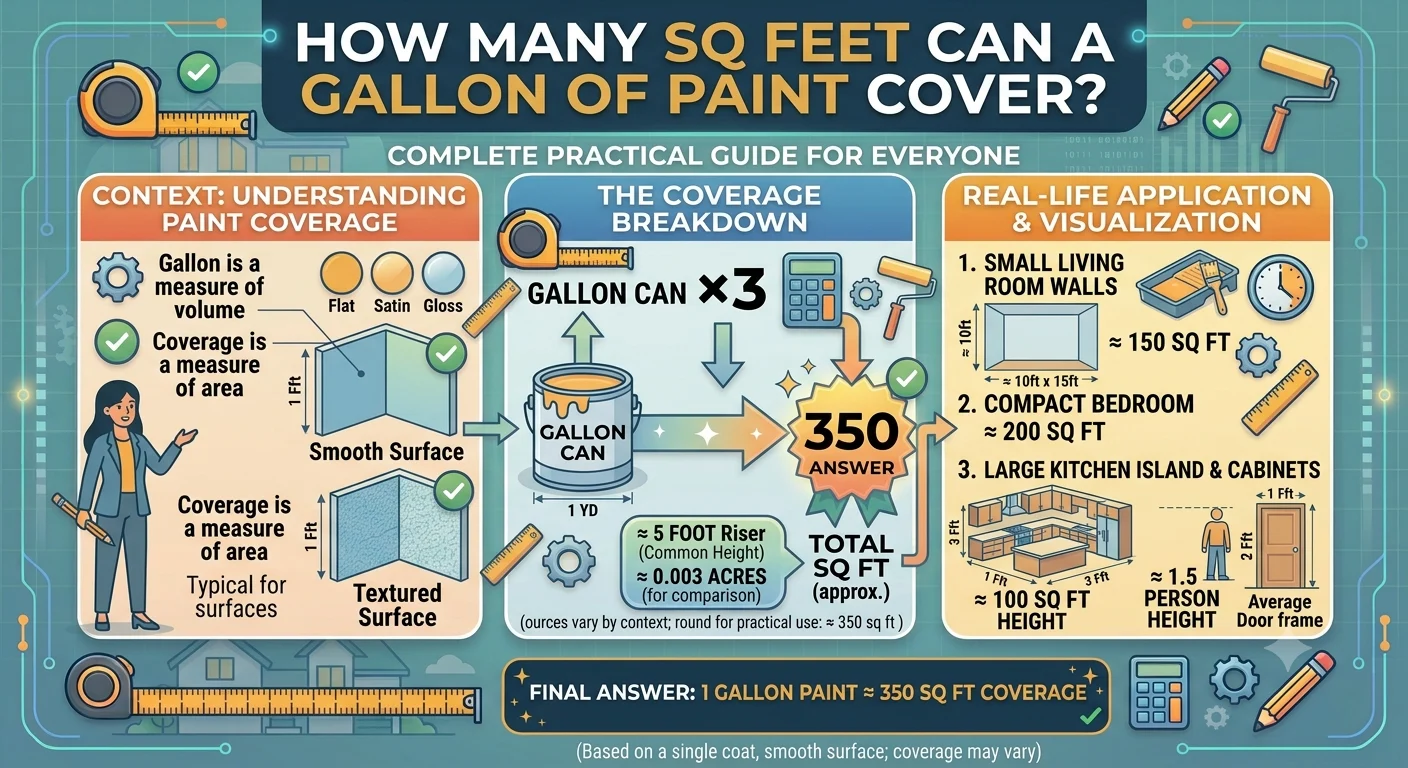
Painting a room or an entire home starts with one important question: how many sq feet can a gallon of paint cover? Knowing the answer helps you buy the right amount of paint, avoid waste, and stay within your budget.
On average, one gallon of paint covers 350 to 400 square feet with a single coat on a smooth, properly prepared surface. However, the actual coverage depends on several factors, including the type of surface, paint quality, texture, and whether you’re applying one or two coats.
In this guide, you’ll learn how paint coverage works, how to calculate your paint needs, what affects coverage, and practical tips to get the best results.
Understanding How Many Sq Feet Can a Gallon of Paint Cover
Most paint manufacturers state that one gallon of interior or exterior paint covers between 350 and 400 square feet per coat.
Here’s a quick reference:
| Paint Amount | Approximate Coverage |
|---|---|
| 1 Quart | 90–100 sq ft |
| 1 Gallon | 350–400 sq ft |
| 2 Gallons | 700–800 sq ft |
| 5 Gallons | 1,750–2,000 sq ft |
These estimates assume:
- One coat
- Smooth surface
- Properly primed wall
- Standard application with a roller or brush
If you’re painting rough surfaces like brick or stucco, coverage will be lower.
Why Paint Coverage Varies
Many people assume every gallon covers exactly 400 square feet, but that’s rarely the case.
Several factors affect paint coverage.
Surface Texture
Smooth drywall requires less paint.
Rough surfaces absorb more paint because they have more surface area.
Examples include:
- Brick
- Stucco
- Concrete block
- Textured ceilings
These surfaces may reduce coverage to 250–300 square feet per gallon.
New vs Previously Painted Walls
Fresh drywall absorbs paint quickly.
Using primer first reduces paint absorption and improves coverage.
Previously painted walls usually require less paint.
Paint Quality
Higher-quality paints often:
- Cover better
- Require fewer coats
- Spread more evenly
Although premium paint costs more, it can reduce the total amount needed.
Paint Color
Changing from dark to light colors usually requires multiple coats.
For example:
- Black to white
- Red to beige
- Navy blue to cream
In these cases, expect to use more paint.
Application Method
Coverage also depends on how the paint is applied.
| Application Method | Coverage |
|---|---|
| Roller | Excellent |
| Brush | Good |
| Paint Sprayer | Lowest due to overspray |
Sprayers often waste 10–30% more paint than rollers.
How to Calculate Paint Coverage
Calculating paint requirements is simple.
Step 1: Measure Wall Width
Measure each wall in feet.
Example:
Wall A = 12 ft
Wall B = 12 ft
Wall C = 15 ft
Wall D = 15 ft
Total width:
12 + 12 + 15 + 15 = 54 ft
Step 2: Measure Wall Height
Assume wall height is:
8 feet
Step 3: Calculate Square Footage
Formula:
Wall Width × Wall Height
54 × 8 = 432 square feet
Step 4: Subtract Windows and Doors
Example:
Door:
3 × 7 = 21 sq ft
Two windows:
3 × 5 × 2 = 30 sq ft
Total openings:
51 sq ft
Net paint area:
432 − 51 = 381 square feet
Step 5: Divide by Paint Coverage
381 ÷ 400 = 0.95 gallons
You’ll need about 1 gallon for one coat.
For two coats:
381 × 2 = 762 sq ft
762 ÷ 400 = 1.9 gallons
Round up to 2 gallons.
Paint Coverage Chart
| Surface Area | Paint Needed (1 Coat) |
|---|---|
| 100 sq ft | 1 Quart |
| 200 sq ft | Half Gallon |
| 350 sq ft | 1 Gallon |
| 400 sq ft | 1 Gallon |
| 700 sq ft | 2 Gallons |
| 1,200 sq ft | 3 Gallons |
| 2,000 sq ft | 5 Gallons |
Interior Paint Coverage
Interior paint usually covers:
- Living rooms
- Bedrooms
- Kitchens
- Bathrooms
- Hallways
Average coverage:
350–400 sq ft per gallon
If walls are clean and already painted, you may get closer to 400 sq ft.
Exterior Paint Coverage
Exterior walls often absorb more paint because of:
- Sun damage
- Weathering
- Rough siding
- Wood grain
Typical coverage:
250–350 sq ft per gallon
Primer Coverage
Primer generally covers:
200–300 square feet per gallon
Highly porous surfaces may require additional primer.
Examples:
- New drywall
- Raw wood
- Concrete
- Brick
How Many Coats Do You Need?
One coat may be enough if:
- Painting the same color
- High-quality paint
- Previously painted wall
- Minor touch-ups
Two coats are recommended when:
- Changing colors
- Painting new drywall
- Covering stains
- Painting exterior surfaces
Professional painters almost always recommend two coats for the best finish.
Real-World Paint Coverage Examples
Example 1
Bedroom
Dimensions:
12 × 12 feet
Wall height:
8 feet
Wall area:
384 sq ft
Subtract windows and doors:
45 sq ft
Paintable area:
339 sq ft
Paint needed:
1 gallon
Example 2
Large Living Room
Dimensions:
20 × 18 feet
Wall height:
9 feet
Wall area:
684 sq ft
Subtract openings:
70 sq ft
Total:
614 sq ft
Paint required:
2 gallons for one coat
4 gallons for two coats
Example 3
Garage
Dimensions:
24 × 24 feet
Wall height:
9 feet
Wall area:
864 sq ft
Coverage:
3 gallons for one coat
Common Paint Coverage Mistakes
Avoid these mistakes:
Not Measuring Properly
Guessing almost always leads to buying too much or too little paint.
Forgetting Extra Coats
Many homeowners calculate only one coat.
Most projects need two.
Ignoring Surface Texture
Textured walls use much more paint.
Skipping Primer
Without primer, new drywall absorbs paint rapidly.
Buying the Exact Amount
Always buy about 10% extra for:
- Touch-ups
- Mistakes
- Future repairs
Tips to Maximize Paint Coverage
Professional painters recommend:
- Clean walls first
- Fill holes and cracks
- Sand rough areas
- Use primer when needed
- Buy quality paint
- Use good rollers
- Apply even coats
- Avoid overloading the roller
These simple steps help paint spread farther and produce a smoother finish.
Paint Coverage Comparison
| Surface Type | Average Coverage |
|---|---|
| Smooth drywall | 350–400 sq ft |
| Painted wall | 350–400 sq ft |
| New drywall | 250–350 sq ft |
| Brick | 200–300 sq ft |
| Concrete | 250–300 sq ft |
| Stucco | 200–300 sq ft |
| Wood siding | 250–350 sq ft |
How Much Paint Should You Buy?
Here’s a quick guide.
| Paintable Area | Recommended Paint |
|---|---|
| 300 sq ft | 1 Gallon |
| 600 sq ft | 2 Gallons |
| 900 sq ft | 3 Gallons |
| 1,200 sq ft | 4 Gallons |
| 1,800 sq ft | 5 Gallons |
If applying two coats, simply double these amounts.
Expert Tips
- Always read the manufacturer’s coverage estimate on the paint can.
- Mix multiple cans together for color consistency on large projects.
- Keep leftover paint for future touch-ups.
- Paint in moderate temperatures for better results.
- Allow each coat to dry fully before applying the next one.
- Test the paint on a small section before covering an entire room.
Frequently Asked Questions
How many sq feet can a gallon of paint cover?
A gallon of paint typically covers 350 to 400 square feet with one coat on a smooth surface.
Does primer count as a coat?
No. Primer prepares the surface but does not replace the finish coat.
How many coats should I apply?
Most painting projects look best with two coats, especially when changing colors or painting new walls.
Does textured drywall use more paint?
Yes. Textured surfaces absorb more paint, reducing coverage to around 250–300 square feet per gallon.
Should I buy extra paint?
Yes. Buying about 10% extra ensures you have enough for touch-ups and minor repairs later.
Conclusion
Knowing how many sq feet can a gallon of paint cover helps you plan your painting project with confidence. In most cases, one gallon covers between 350 and 400 square feet per coat, but actual coverage depends on the surface texture, paint quality, application method, and the number of coats needed. By measuring your walls accurately, accounting for doors and windows, and choosing the right paint, you can avoid unnecessary costs and achieve a professional-looking finish. Whether you’re painting a single room or your entire home, careful planning ensures better results and less wasted paint.