

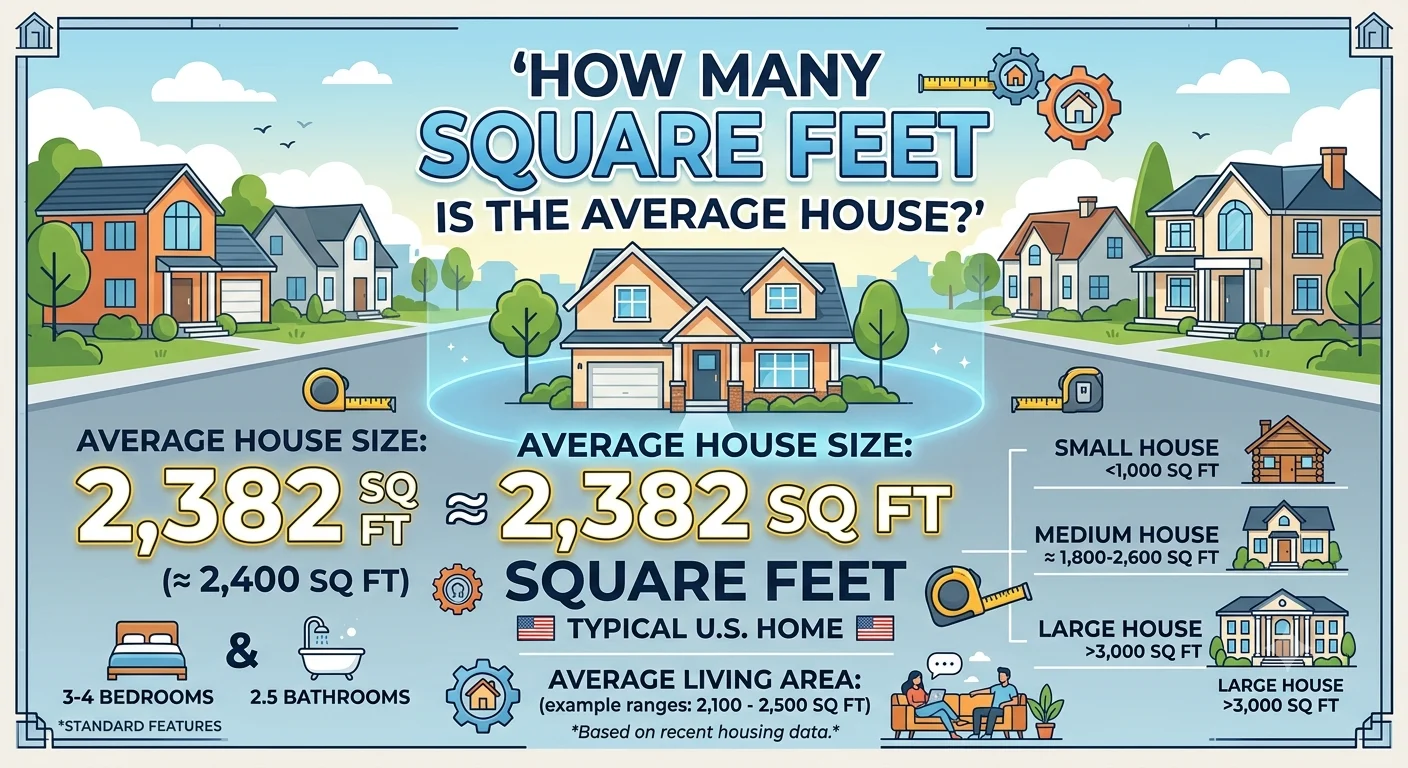
If you are planning to buy a home, build a house, or compare different properties, one of the first questions you may ask is how many square feet is average house. Understanding average home size helps you estimate how much living space you need, compare real estate options, and make better decisions about your budget.
The average house size depends on several factors, including location, family size, construction trends, and lifestyle preferences. A home that feels spacious for one family may feel too small for another. While national averages provide a useful reference point, the best house size is the one that matches your daily needs.
In the United States, the average newly built single-family house is around 2,300 to 2,500 square feet. However, many existing homes are smaller, often ranging between 1,800 and 2,000 square feet. Around the world, average house sizes vary greatly because of differences in land availability, population density, and housing costs.
This guide explains average house square footage, common home sizes, room dimensions, factors affecting home size, and how to choose the right amount of space for your lifestyle.
What Is the Average House Size?
The average house size refers to the typical amount of floor space inside a residential property. This measurement is usually calculated in square feet (sq ft) and includes areas such as bedrooms, living rooms, kitchens, bathrooms, hallways, and other finished indoor spaces.
For many modern homes, the average size depends on whether you are looking at newly constructed houses or older properties.
| Type of House | Average Square Feet |
|---|---|
| Tiny house | 100–400 sq ft |
| Small house | 800–1,200 sq ft |
| Average existing home | 1,800–2,000 sq ft |
| Average new single-family home | 2,300–2,500 sq ft |
| Large home | 3,000+ sq ft |
A 2,000-square-foot home is considered comfortable for many families, while homes above 3,000 square feet are usually considered larger properties.
Average House Size in the United States
The United States has some of the largest average homes in the world. Over the past several decades, American houses have grown larger due to increased demand for extra bedrooms, home offices, entertainment areas, and storage spaces.
Today, the average newly built house in the U.S. is approximately 2,300–2,500 square feet.
Common features of an average American home include:
- Three to four bedrooms
- Two or more bathrooms
- Kitchen and dining area
- Living room
- Laundry room
- Garage
- Storage areas
However, house size differs significantly depending on the state. Homes in cities with expensive land prices are often smaller, while suburban and rural areas typically have larger properties.
Average House Size Around the World
House sizes are not the same everywhere. Some countries have larger homes because land is more available, while others have smaller homes because urban space is limited.
| Country | Average Home Size |
|---|---|
| United States | 2,300–2,500 sq ft |
| Canada | Around 1,900 sq ft |
| Australia | Around 2,000+ sq ft |
| United Kingdom | Around 800–900 sq ft |
| Japan | Around 1,000–1,300 sq ft |
| Germany | Around 1,100–1,300 sq ft |
Countries with higher population density usually have smaller homes because land is more expensive and limited.
Average House Size by Number of Bedrooms
The number of bedrooms is one of the biggest factors affecting total square footage.
A one-bedroom home requires much less space than a four-bedroom family house.
| Number of Bedrooms | Typical Square Footage |
|---|---|
| 1 bedroom | 600–900 sq ft |
| 2 bedrooms | 800–1,200 sq ft |
| 3 bedrooms | 1,200–2,000 sq ft |
| 4 bedrooms | 2,000–3,000 sq ft |
| 5+ bedrooms | 3,000+ sq ft |
A three-bedroom house is one of the most common choices because it provides enough space for families while remaining affordable.
Average House Size Based on Family Size
The ideal home size depends greatly on how many people live in the house.
| Household Size | Recommended Space |
|---|---|
| One person | 600–900 sq ft |
| Couple | 800–1,200 sq ft |
| Family of three | 1,200–1,600 sq ft |
| Family of four | 1,600–2,200 sq ft |
| Large family | 2,200+ sq ft |
A smaller home with an efficient design can often feel more comfortable than a larger home with poor space planning.
Why Have Houses Become Bigger Over Time?
House sizes have changed significantly over the years. Many homes built today are larger than homes built 50 or 100 years ago.
Several reasons explain this growth:
More Home Offices
Remote work has increased demand for dedicated office spaces.
Larger Kitchens
Modern homeowners often prefer open kitchens with islands, dining areas, and additional storage.
More Bathrooms
Many newer homes include multiple bathrooms for convenience.
More Storage Space
Garages, walk-in closets, and storage rooms have become important features.
Lifestyle Changes
People often want entertainment rooms, gyms, hobby spaces, and guest rooms.
However, rising construction costs and expensive housing markets have recently increased interest in smaller, more efficient homes.
Factors That Determine Average House Size
Several factors influence how large homes are in different areas.
Location
Location is one of the biggest influences on house size. Urban areas usually have smaller homes because land costs are higher.
Budget
Your budget determines how much square footage you can afford. Larger homes usually come with higher purchase prices, maintenance expenses, and utility costs.
Family Requirements
A family with children may need additional bedrooms, play areas, and storage space.
Lifestyle
Someone who works from home may need an office, while someone who spends most of their time outdoors may prefer a smaller home.
Future Plans
Many homeowners consider future needs, such as growing families or aging parents, when choosing house size.
Average House Size Compared to Tiny Homes
Tiny homes have become popular among people who prefer simple living and lower costs.
| Feature | Tiny House | Average House |
|---|---|---|
| Size | 100–400 sq ft | 2,000+ sq ft |
| Cost | Lower | Higher |
| Maintenance | Easier | More demanding |
| Storage | Limited | More available |
| Energy Costs | Lower | Higher |
Tiny homes can be practical for individuals or couples, but larger families usually need more living space.
Average House Size Compared to Apartments
Apartments are generally smaller than detached houses because they share walls and maximize limited space.
| Property Type | Average Size |
|---|---|
| Studio apartment | 400–600 sq ft |
| One-bedroom apartment | 600–900 sq ft |
| Two-bedroom apartment | 900–1,200 sq ft |
| Three-bedroom apartment | 1,200–1,600 sq ft |
| Single-family house | 1,800–2,500+ sq ft |
Houses usually provide more privacy, outdoor space, and storage, while apartments often offer lower maintenance and lower costs.
How Much Space Does Each Room Need?
Understanding typical room sizes can help you estimate whether a home will feel comfortable.
| Room | Average Size |
|---|---|
| Living room | 200–400 sq ft |
| Kitchen | 120–250 sq ft |
| Primary bedroom | 180–300 sq ft |
| Bedroom | 100–180 sq ft |
| Bathroom | 40–100 sq ft |
| Home office | 80–150 sq ft |
| Laundry room | 30–60 sq ft |
A well-designed 1,800-square-foot home may feel larger than a poorly planned 2,500-square-foot house.
Is a Bigger House Always Better?
A larger home offers advantages, but bigger is not always better.
Benefits of a Larger House
- More personal space
- Extra bedrooms
- Larger storage areas
- Space for guests
- Room for hobbies and activities
Drawbacks of a Larger House
- Higher purchase cost
- Increased electricity bills
- More cleaning
- More maintenance
- Higher taxes and insurance costs
The best home size is one that provides comfort without creating unnecessary financial pressure.
How to Choose the Right House Size
Instead of choosing a house based only on average numbers, consider your personal needs.
Ask yourself:
- How many people will live in the home?
- Do you need a home office?
- Will your family grow?
- Do you frequently host guests?
- How much maintenance can you handle?
- What fits your budget comfortably?
A practical home with an efficient layout is usually a better choice than a large house with unused rooms.
Common Mistakes When Estimating House Size
Many buyers focus only on square footage and overlook other important factors.
Ignoring the Layout
The design of a home can make a major difference. Open layouts often make smaller homes feel larger.
Forgetting Storage
A home without enough closets or storage areas can quickly feel crowded.
Buying More Space Than Needed
Extra rooms increase costs even if they are rarely used.
Not Considering Future Needs
A home should support your lifestyle for several years, not just your current situation.
Frequently Asked Questions
How many square feet is the average house?
The average newly built house in the United States is around 2,300 to 2,500 square feet, while many existing homes average around 1,800 to 2,000 square feet.
Is a 1,500-square-foot house considered small?
A 1,500-square-foot house is considered medium-sized in many areas and can comfortably fit a small family with a good layout.
Is 2,000 square feet enough for a family of four?
Yes, a 2,000-square-foot home is often comfortable for a family of four and can provide multiple bedrooms, living areas, and storage space.
What size house is considered large?
Homes above 3,000 square feet are generally considered large, although this depends on location and local housing standards.
Does square footage affect home value?
Yes, square footage can affect home value, but location, condition, design, and neighborhood are also major factors.
Conclusion
Knowing how many square feet is average house gives you a better understanding of housing sizes and helps you make smarter decisions when buying or building a home. The average house size varies depending on location, family needs, budget, and lifestyle.
While many modern homes range between 1,800 and 2,500 square feet, the perfect house size is not always the largest one you can afford. A well-designed home with efficient use of space can provide greater comfort and value than a much larger property.
The right house size should match your daily life, financial goals, and future plans. By focusing on functionality instead of just square footage, you can choose a home that truly works for you.