

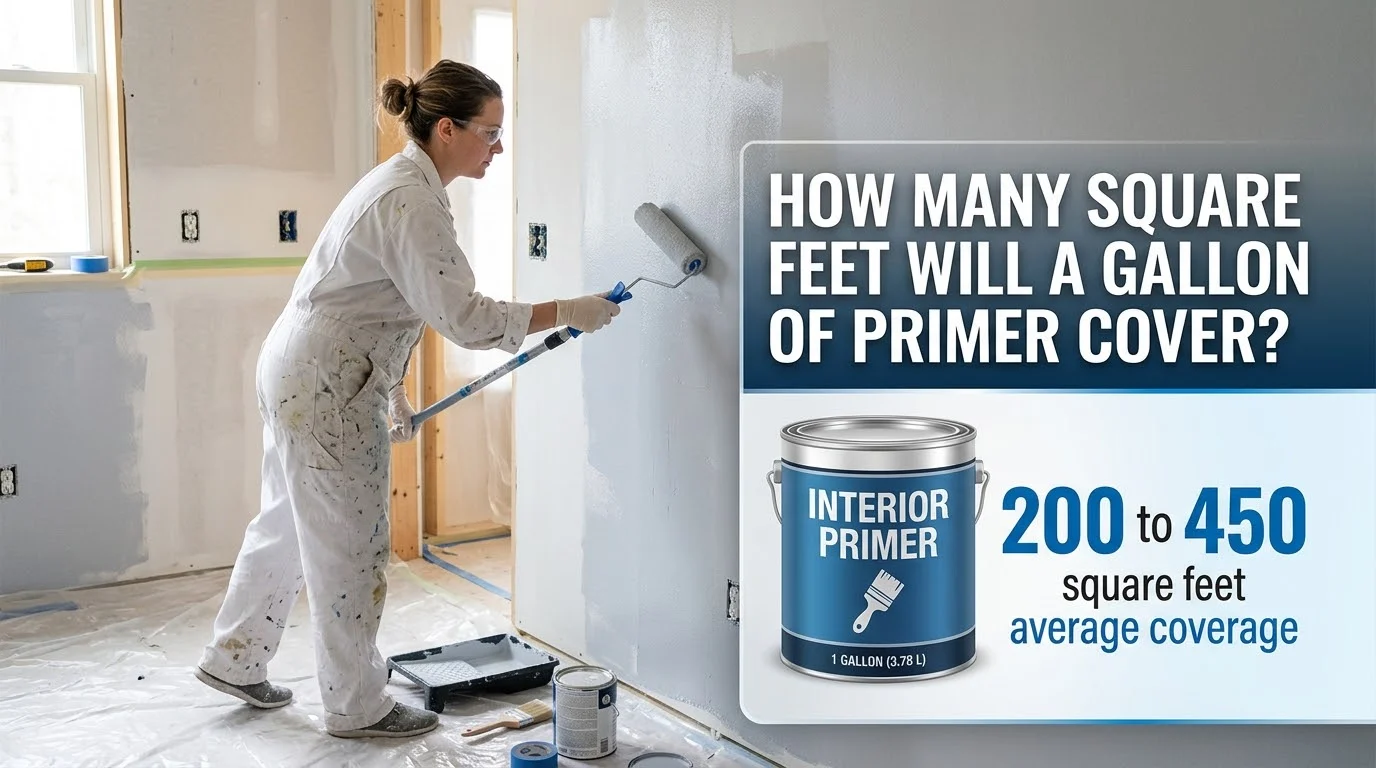
If you’re planning a painting project, one of the first questions you’ll probably ask is, how many square feet will a gallon of primer cover? Buying the right amount of primer helps you avoid unnecessary trips to the store and prevents overspending on materials you may not need.
In general, one gallon of primer covers between 200 and 400 square feet with a single coat. The exact coverage depends on the type of surface, the condition of the material, the primer formula, and the application method. Smooth, previously painted walls typically require less primer, while porous surfaces like new drywall or bare wood absorb more product.
This guide explains everything you need to know about primer coverage, including factors that affect it, how to calculate your needs, practical examples, and expert tips for getting the best results.
What Is Primer and Why Do You Need It?
Primer is a preparatory coating applied before painting. It creates a stable, uniform surface that helps paint adhere better and last longer. It can also hide stains, seal porous materials, and improve the appearance of the final paint coat.
Primer is especially important when painting:
- New drywall
- Bare wood
- Masonry and concrete
- Repaired or patched walls
- Surfaces with stains
- Walls changing from dark to light colors
- Glossy or slick finishes
Applying primer before painting often reduces the number of paint coats needed and improves the overall durability of the finish.
How Many Square Feet Will a Gallon of Primer Cover?
The average gallon of primer covers between 200 and 400 square feet. Here is a quick overview based on common surface types.
| Surface Type | Average Coverage Per Gallon |
|---|---|
| Smooth painted walls | 350–400 sq ft |
| New drywall | 200–300 sq ft |
| Bare wood | 200–300 sq ft |
| Concrete or masonry | 200–250 sq ft |
| Textured walls | 250–350 sq ft |
| Exterior siding | 250–350 sq ft |
For most interior painting projects, assuming around 300 square feet per gallon provides a safe estimate.
What Affects Primer Coverage?
Several factors determine how much area a gallon of primer can cover.
Surface Porosity
Porous materials absorb primer quickly. Fresh drywall, untreated wood, and concrete all require more product than sealed or previously painted surfaces.
Surface Texture
Rough or textured walls have more total surface area than smooth walls. This means they need additional primer to achieve even coverage.
Type of Primer
Different primer formulations offer different coverage rates.
- Latex primer: 300–400 square feet per gallon
- Oil-based primer: 250–350 square feet per gallon
- Shellac primer: 200–300 square feet per gallon
- Stain-blocking primer: 200–300 square feet per gallon
Always check the product label because manufacturers may provide specific coverage estimates.
Application Method
The tool you use also affects coverage.
| Application Method | Efficiency |
|---|---|
| Roller | High |
| Brush | Moderate |
| Paint sprayer | Lower due to overspray |
Sprayers can use 10–20% more primer because of overspray and product loss.
Number of Coats
One coat of primer is enough for many projects, but highly porous surfaces or dramatic color changes may require a second coat, doubling the amount of primer needed.
How to Calculate How Much Primer You Need
Estimating primer quantity is simple if you know the size of the area you plan to paint.
Step 1: Measure the Surface
Measure the length and height of each wall, then multiply them together.
Formula:
Square Feet = Length × Height
For example, a wall that is 12 feet long and 8 feet high has:
12 × 8 = 96 square feet.
Repeat this process for every wall and add the totals together.
Step 2: Subtract Doors and Windows
For a more accurate estimate, subtract large openings.
- Standard door: approximately 20 square feet
- Standard window: approximately 15 square feet
You can skip this step for small projects, but it helps when calculating materials for an entire home.
Step 3: Divide by the Coverage Rate
Divide the total square footage by the estimated coverage per gallon.
For example:
- Total wall area: 900 square feet
- Primer coverage: 300 square feet per gallon
900 ÷ 300 = 3
You would need about 3 gallons of primer.
Always round up to ensure you have enough product for touch-ups and waste.
Primer Coverage Chart
Use this chart for a quick estimate of how much primer you may need.
| Total Area to Prime | Estimated Primer Needed |
|---|---|
| 200 sq ft | 1 gallon |
| 400 sq ft | 1–2 gallons |
| 600 sq ft | 2 gallons |
| 800 sq ft | 3 gallons |
| 1,000 sq ft | 3–4 gallons |
| 1,200 sq ft | 4 gallons |
| 1,500 sq ft | 5 gallons |
| 2,000 sq ft | 6–7 gallons |
These estimates assume one coat under average conditions.
Practical Examples
Example 1: Priming a Small Bedroom
Imagine you have a bedroom that measures 12 feet by 12 feet with 8-foot ceilings.
Wall area calculation:
- Two walls: 12 × 8 × 2 = 192 square feet
- Two walls: 12 × 8 × 2 = 192 square feet
Total wall area = 384 square feet.
Subtract one door and one window:
384 − 35 = 349 square feet.
At an average coverage rate of 350 square feet per gallon, one gallon of primer should be enough.
Example 2: New Drywall Project
Suppose you’re finishing a basement with 800 square feet of fresh drywall.
New drywall is highly absorbent, so assume 250 square feet of coverage per gallon.
800 ÷ 250 = 3.2
Round up to 4 gallons of primer.
Example 3: Exterior Wood Siding
A home’s exterior siding measures 1,200 square feet. Since weathered wood absorbs more primer, estimate around 275 square feet per gallon.
1,200 ÷ 275 = 4.36
You should purchase 5 gallons of primer to complete the project comfortably.
Primer vs. Paint Coverage
Although primer and paint look similar, they do not always cover the same amount of area.
| Feature | Primer | Paint |
|---|---|---|
| Average Coverage | 200–400 sq ft/gallon | 300–400 sq ft/gallon |
| Main Purpose | Seal and prepare surfaces | Add color and protection |
| Absorption | Higher | Lower |
| Typical Coats | 1 | 2 |
Primer is designed to soak into and seal surfaces, which is why it may cover less area than paint.
Does New Drywall Need More Primer?
Yes. New drywall is one of the most absorbent materials used in residential construction. The paper facing and drywall compound can quickly soak up primer, reducing its spread rate.
For new drywall:
- Expect 200–300 square feet of coverage per gallon.
- Use a drywall-specific primer for the best results.
- Apply one complete coat before painting.
Skipping primer on new drywall can lead to uneven paint absorption and a blotchy final appearance.
Tips to Maximize Primer Coverage
A few simple techniques can help you get the most out of each gallon.
Clean the Surface
Dust, grease, and dirt can interfere with proper adhesion. Always clean the surface before priming.
Repair Cracks and Holes
Fill imperfections before applying primer. This creates a smoother finish and prevents excessive absorption.
Choose the Right Roller
Using the correct roller nap for your wall texture helps spread primer evenly without wasting material.
Avoid Applying Too Much at Once
A heavy coat can cause drips and uneven drying. Apply a consistent, even layer instead.
Stir the Primer Well
Proper mixing ensures the ingredients are evenly distributed throughout the container.
Follow Product Instructions
Different primers have different recommended coverage rates and drying times. Always read the manufacturer’s guidelines before starting.
Common Mistakes to Avoid
Many people overestimate or underestimate how much primer they need. Here are some of the most common mistakes:
- Forgetting to account for porous surfaces.
- Assuming primer covers the same area as paint.
- Ignoring textured walls and ceilings.
- Not planning for a second coat when necessary.
- Failing to round up the estimated amount.
Adding a small safety margin can prevent running out of primer before the project is complete.
Is One Coat of Primer Enough?
For many painting jobs, one coat is all you need. However, two coats may be recommended if:
- The surface is highly porous.
- You are covering dark colors with lighter paint.
- The wall has stains or smoke damage.
- You are priming bare wood or repaired drywall patches.
After the first coat dries, inspect the surface. If it still looks uneven or patchy, apply another coat before painting.
Estimating Primer for an Entire House
If you are painting an entire home, use the total wall and ceiling square footage to estimate the amount of primer needed.
Here are some rough guidelines:
| Home Size | Estimated Primer Needed |
|---|---|
| 1,000 sq ft home | 3–4 gallons |
| 1,500 sq ft home | 5–6 gallons |
| 2,000 sq ft home | 6–8 gallons |
| 2,500 sq ft home | 8–10 gallons |
Actual usage depends on wall height, room layout, and the condition of the surfaces.
Expert Tips for Better Results
Professional painters often follow these best practices:
- Always use primer on new drywall and bare wood.
- Purchase all primer for the project at one time to ensure consistency.
- Save leftover primer for future repairs and touch-ups.
- Invest in a high-quality primer, as it can reduce the amount of paint required later.
- Allow the primer to dry completely before applying the first coat of paint.
These simple steps can improve the appearance and durability of your finished paint job.
Frequently Asked Questions
How many square feet does one gallon of primer usually cover?
A gallon of primer generally covers between 200 and 400 square feet, depending on the type and condition of the surface.
How much primer do I need for 500 square feet?
For an average wall, you will likely need around 1.5 to 2 gallons of primer. Rounding up to 2 gallons is usually the safest option.
Do textured walls use more primer?
Yes. Textured walls have more surface area and typically require additional primer compared to smooth walls.
Can I skip primer on previously painted walls?
If the surface is in good condition and you are repainting with a similar color, you may not need primer. However, primer is recommended for repairs, stains, or significant color changes.
Does primer reduce the amount of paint needed?
Yes. Primer seals the surface and creates a uniform base, allowing the paint to cover more evenly and often reducing the number of paint coats required.
Conclusion
Understanding how many square feet will a gallon of primer cover is essential for planning any painting project. In most situations, one gallon covers between 200 and 400 square feet, with the exact amount depending on the surface material, texture, primer type, and application method.
By measuring your walls accurately, considering the condition of the surface, and using the proper coverage estimates, you can determine exactly how much primer you need. Whether you’re painting a single room, finishing new drywall, or tackling an entire house, proper preparation and accurate calculations will save time, reduce waste, and help you achieve a smooth, long-lasting finish.