
When planning a home, buying furniture, or comparing properties, one common question people ask is: how many square feet is the average room?
The answer depends on the type of room, the size of the home, and even the country where the home is located. However, most average residential rooms in modern homes range from 120 to 300 square feet.
Bedrooms are usually smaller, while living rooms and master suites tend to be larger. Understanding average room sizes helps homeowners make smarter decisions about furniture placement, renovations, real estate purchases, and space planning.
What Does Square Footage Mean?
Square footage refers to the total floor area inside a space. It is measured in square feet and helps determine how large or small a room is.
For example, a room that is 10 feet wide and 12 feet long has:
That means the room has 120 square feet of floor space.
How Square Feet Are Calculated
The formula is simple:
If a room is rectangular or square, measuring is easy. You only need:
- A tape measure
- Length
- Width
Why Room Size Matters
Room size affects:
- Furniture arrangement
- Comfort
- Property value
- Interior design
- Storage options
- Rental pricing
A room that is too small may feel cramped, while a room that is too large may feel empty without proper design.
How Many Square Feet Is the Average Room?
The average room size depends on the room type. Here is a closer look at common residential spaces.
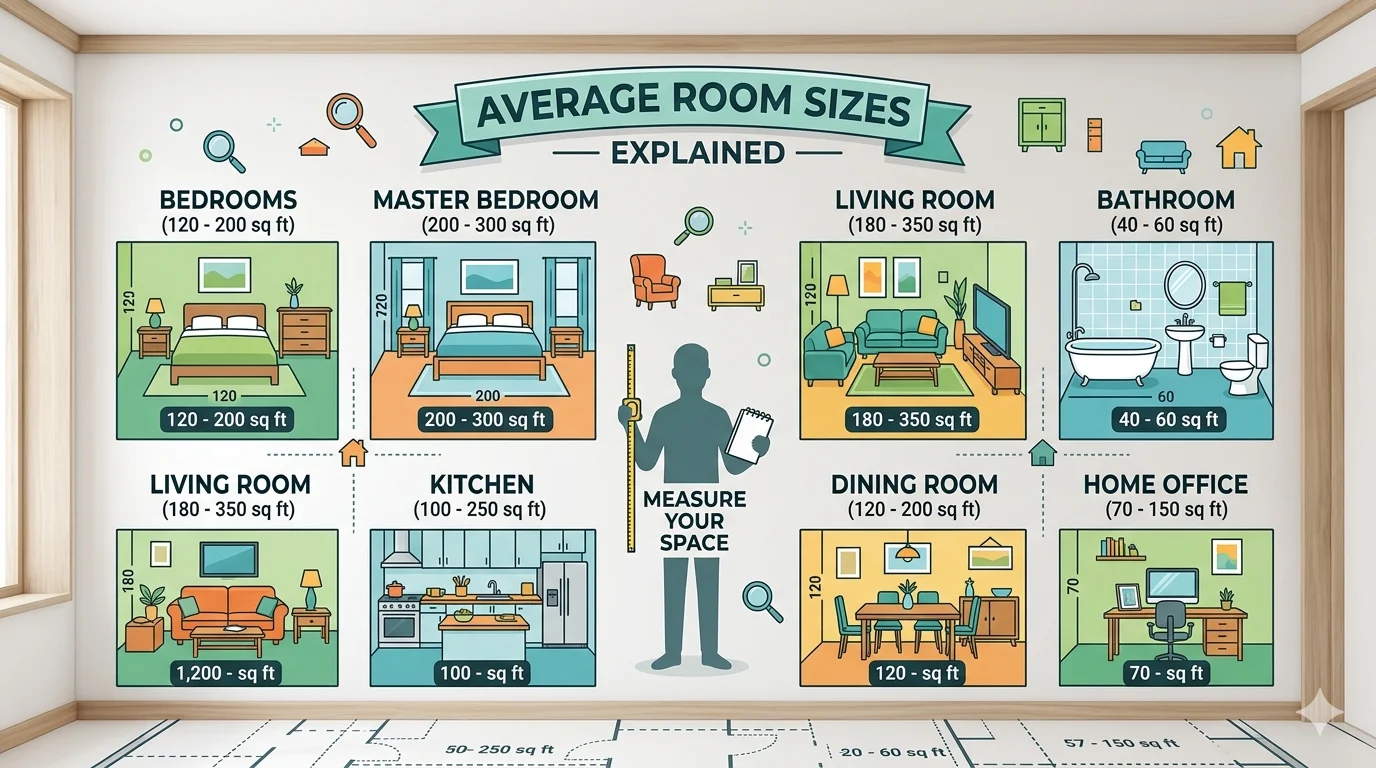
Average Bedroom Size
A standard bedroom in most homes measures between:
- 120 to 200 square feet
Common bedroom dimensions include:
- 10×12 feet
- 11×13 feet
- 12×14 feet
Small guest rooms may only have 100 square feet, while master bedrooms can exceed 250 square feet.
Average Living Room Size
Living rooms are usually the largest shared spaces in a home.
Average size:
- 180 to 350 square feet
Common dimensions:
- 12×15 feet
- 14×18 feet
- 16×20 feet
Larger homes may have open-concept living rooms that exceed 400 square feet.
Average Kitchen Size
Modern kitchens vary widely depending on layout.
Average kitchen size:
- 100 to 250 square feet
Common layouts include:
- Galley kitchen
- L-shaped kitchen
- U-shaped kitchen
- Open kitchen with island
Apartments often have smaller kitchens around 70–100 square feet.
Average Bathroom Size
Bathrooms are usually smaller but highly functional.
Average bathroom sizes:
- Half bathroom: 15–20 square feet
- Full bathroom: 40–60 square feet
- Master bathroom: 100+ square feet
A small bathroom can still feel comfortable with efficient design.
Average Dining Room Size
Dining rooms typically range between:
- 120 and 200 square feet
This size usually accommodates:
- Dining table
- Chairs
- Side cabinet
- Walking space
Average Office Size
Home offices became more common after remote work increased worldwide.
Average home office size:
- 70 to 150 square feet
Compact offices work well for:
- Laptop setups
- Online meetings
- Small storage units
Average Room Size Chart
| Room Type | Average Square Feet | Common Dimensions |
|---|---|---|
| Bedroom | 120–200 sq ft | 10×12 ft |
| Master Bedroom | 200–300 sq ft | 14×16 ft |
| Living Room | 180–350 sq ft | 14×18 ft |
| Kitchen | 100–250 sq ft | 10×12 ft |
| Bathroom | 40–60 sq ft | 5×8 ft |
| Dining Room | 120–200 sq ft | 12×14 ft |
| Home Office | 70–150 sq ft | 8×10 ft |
This chart gives a general idea of how many square feet is the average room in modern homes.
Standard Room Dimensions in Modern Homes
Home sizes have changed over time. Modern homes often prioritize open spaces and multifunctional rooms.
Small Homes and Apartments
Apartments and tiny homes typically have:
- Smaller bedrooms
- Compact kitchens
- Combined living and dining areas
Average room sizes may range from:
- 70 to 150 square feet
These homes focus on efficient layouts.
Medium-Sized Family Homes
Family homes usually feature:
- Standard bedrooms
- Separate dining rooms
- Larger living spaces
Average room sizes:
- 120 to 250 square feet
These homes balance comfort and affordability.
Luxury Homes
Luxury properties often include:
- Oversized master suites
- Large entertainment rooms
- Spacious kitchens
Room sizes can exceed:
- 400 square feet
High-end homes prioritize openness and premium design.
How to Measure Room Square Footage
Measuring room square footage is easier than many people think.
Simple Formula
Use this formula:
Where:
- A = area
- l = length
- w = width
Example:
A room measuring 15 feet by 12 feet equals:
Measuring Irregular Rooms
For irregular rooms:
- Divide the room into smaller rectangles
- Measure each section separately
- Add the totals together
This method provides more accurate square footage.
Why Average Room Size Is Important
Knowing average room dimensions can help in several ways.
Furniture Planning
Before buying furniture, you should know:
- Available walking space
- Bed placement
- Sofa size compatibility
- Storage capacity
Oversized furniture can make a room feel crowded.
Real Estate Value
Larger rooms often increase:
- Home value
- Buyer interest
- Rental demand
However, layout quality matters just as much as raw square footage.
Renovation Planning
Room measurements help when:
- Installing flooring
- Painting walls
- Remodeling kitchens
- Expanding living areas
Accurate measurements reduce material waste and costs.
Common Mistakes When Measuring Room Size
Many people make simple errors while measuring rooms.
Ignoring Closets
Some calculations include closets while others do not. Always clarify what is included.
Measuring Only One Wall
Rooms are not always perfectly square. Measure both dimensions carefully.
Forgetting Alcoves and Corners
Small sections can significantly affect total square footage.
Using Rounded Numbers
Precise measurements improve accuracy, especially during renovations.
Tips for Making Small Rooms Feel Bigger
Even small rooms can feel spacious with smart design.
Use Light Colors
White and soft neutral shades reflect light and create openness.
Add Mirrors
Mirrors visually expand the room.
Choose Multi-Functional Furniture
Examples include:
- Storage beds
- Foldable desks
- Sofa beds
Reduce Clutter
Minimal decoration often makes rooms feel larger.
Improve Natural Lighting
Large windows and sheer curtains help rooms feel airy.
Comparing Average Room Sizes Around the World
Room sizes vary by country and housing style.
United States
Homes in the United States generally have larger rooms than many countries.
Average bedrooms:
- 120–200 sq ft
Living rooms:
- 200+ sq ft
Europe
European apartments are often smaller due to urban density.
Average rooms:
- 80–150 sq ft
Asia
Dense cities in Asia usually feature compact living spaces.
Many apartments prioritize:
- Smart storage
- Multi-use rooms
- Space-saving furniture
Practical Examples of Room Sizes
Understanding square footage becomes easier with real examples.
100 Square Feet
A 10×10 room:
- Small bedroom
- Compact office
- Kids room
150 Square Feet
A 10×15 room:
- Standard bedroom
- Small living room
200 Square Feet
A 14×14 room:
- Large bedroom
- Comfortable office
300 Square Feet
A 15×20 room:
- Spacious living room
- Studio apartment section
How Builders Decide Room Sizes
Builders consider several factors:
- Home budget
- Lot size
- Buyer demand
- Construction costs
- Modern design trends
Open floor plans are popular because they make homes feel larger without adding more square footage.
Average Room Size vs Usable Space
A room may have large square footage but poor usability.
For example:
- Too many doors reduce furniture space
- Low ceilings can make rooms feel cramped
- Awkward layouts affect comfort
Functional layout matters just as much as size.
Frequently Asked Questions
What is considered a standard room size?
A standard room is usually between 120 and 200 square feet, depending on its purpose.
Is a 10×10 room small?
Yes, a 10×10 room is considered small but still functional for a bedroom or office.
How many square feet is a large bedroom?
A large bedroom is typically over 200 square feet.
What is the average living room size?
Most living rooms range from 180 to 350 square feet.
How do I calculate square footage quickly?
Multiply the room length by the width in feet.
Conclusion
Understanding how many square feet is the average room helps you make better decisions when buying furniture, planning renovations, designing interiors, or comparing homes.
Most standard residential rooms range between 120 and 300 square feet, depending on the room type and home style. Bedrooms are generally smaller, while living rooms and master suites provide more open space.
By learning how to measure square footage accurately and understanding standard room dimensions, you can create a more comfortable, functional, and visually appealing living environment.